Photo by Elsa Olofsson
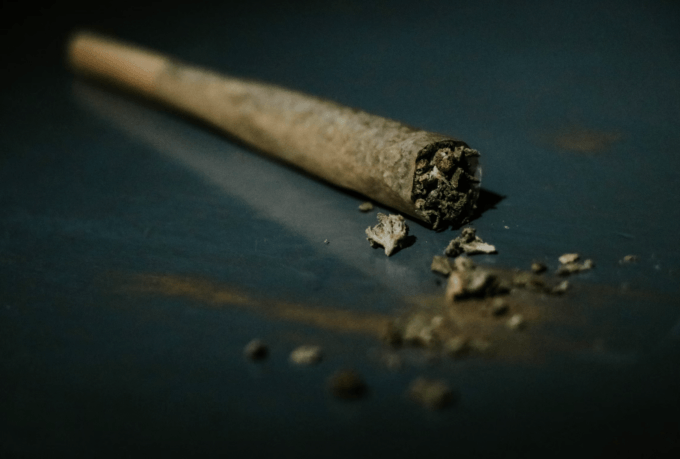
I live in an apartment building in New York City and, a couple of months ago, a head shop opened on the ground floor of the building next door. It is no run-down pot shop, but a sophisticated marijuana dispensary offering a wide selection of – and some very pricy — once-illegal “weed” as well as all a host of accessories.
In 2021, NY state made “cannabis” legal for those 21-years and older. According to the city, an adult can “possess up to three ounces of cannabis and up to 24 grams of concentrated cannabis outside your home for personal use in New York.”
The city notes: “You can buy cannabis at adult-use or medical dispensaries licensed by the state Office of Cannabis Management (OCM).” And adds:
“There are many unlicensed stores advertising and selling cannabis products. Products from unlicensed stores are being sold unlawfully. Unlicensed shops do not have regulated quality control measures and standards for their products. Products sold at unlicensed shops may contain harmful ingredients. They have also been found to contain inaccurate labeling of ingredients.”
Going further, it warns: “Under federal law, cannabis possession and use in all forms is still illegal. It is illegal to cross state or country borders with any cannabis product, even if you have a prescription for it or are traveling to another state where cannabis is legal.”
According to one source, there are 282 pot shops in the city and the state’s OCM reports that there are 717 “adult-use cannabis dispensaries” in the state. (In comparison, there are approximately 1,325 liquor/wine shops in the city.)
New York is not alone in decriminalizing marijuana. In the U.S., 24 states and the District of Columbia permit non-medical adult marijuana and the psychoactive chemical THC (Tetrahydrocannabinol); in addition, 41 states and the District of Columbia permit comprehensive medical marijuana programs.
The federal Food and Drug Administration (FDA) has long outlawed marijuana, identifying it a Schedule I drug under the Controlled Substances Act. However, on December 25, Pres. Donald Trump issued Executive Order 14370 that noted,
“In 2023, the Food and Drug Administration (FDA) completed a review of the landscape of medical use of marijuana and found scientific support for its use to treat anorexia related to a medical condition, nausea and vomiting, and pain.”
In April 2026, the Justice Department (under Acting Attorney General Todd Blanche) issued an order that placed FDA-approved products containing marijuana and marijuana products regulated by a state medical marijuana license in Schedule III, a lower level of physical or psychological dependency.
Traditionalists and Christian conservatives long railed against vice in every form, be it alcohol consumption, gambling, prostitution, birth control or obscenity in the arts. The Young Men’s Christian Association (YMCA), the Women’s Christian Temperance Alliance (WCTA) and the Ku Klux Klan (KKK), among others, championed this movement. The Prohibition Party was founded in 1869 and was the first political party to accept women as party members; the male-only Anti-Saloon League (ASL) was established in 1898. (004) Anti-immigration proponents assailed Germans, Irish, Catholics and Jews as un-Americans for drinking alcoholic beverages.
The temperance campaign gained legitimacy during WW-I and in the wake of the 1918 influenza epidemic in which an estimated 650,000 Americans died, including 30,000 New Yorkers. The campaign culminated in not only the adoption of the 18th Amendment establishing Prohibition but also the 19th Amendment – promoted by Christian women – giving women the vote.
It was a tumultuous era, one marked by social disruption that included a wave of strikes, political bombings and what became known as the first Red Scare. It included the Palmer Raids and the deportation of nearly 300 “aliens,” including anarchists Emma Goldman and Alexander Berkman.
Woodrow Wilson vetoed the National Prohibition Act, but a very conservative Congress quickly overrode his veto. Prohibition outlaws the manufacturing, distribution, importing, exporting and sale of intoxicating alcoholic beverages. It did not outlaw the personal consumption of said beverages or the use of alcohol in medicines. Prohibition went into effect on January 17, 1920, and was repealed on December 5, 1933.
In the face of Prohibition’s failure to prevent popular alcohol consumption, four years after its repeal, the federal government imposed prohibitions against the distribution, sale, and consumption of marijuana. As Alessandro Clark-Ansani argues in his scholarly study, “The Unconstitutional Racial Animus behind Federal Marijuana Criminalization,”:
“Marijuana was first criminalized in response to growing anti-Mexican and anti-Black sentiment through the Marihuana Tax Act of 1937, which created draconian fines and even imprisonment terms for those who engaged in the sale of marijuana without getting appropriate government documentation, effectively making it illegal.”
Hemp, the plant from which cannabis comes, has for centuries been used for the production of sails, rope and clothing. But nearly 90 years ago, federal authorities classified marijuana as a Title 1 drug and it is only beginning to be reclassified. But dope smoking long persisted as part of some “communities,” be they Hispanic, Black and the music scene. However, the 1960s counterculture of sex, drugs and rock-&-roll, marijuana found a new life among those with long hair, who wore funky clothes and opposed the war in Vietnam.
Today, marijuana’s status is changing due to the significant increase of dope smoking. The National Institutes of Health (NIH) reported, “In 2025, adults in the United States reported using cannabis at or near record-high levels, continuing a long-term trend of increasing use.” The National Center of Drug Abuse Statistics (NCDAS) finds that 133.7 million (51%) of American adults have tried marijuana at least once, and 61.5 million (23%) of American adults used marijuana in 2024; Fox News reports, “an estimated 21.4 million Americans used marijuana daily or near-daily in 2025, surpassing the 19.9 million who smoked cigarettes every day.”
However, and most troubling, younger people are also smoking weed. The NCDAS notes, “25.7% of 12th-graders used marijuana at least once in 2025.” It warns, “Nearly 4,200 individuals ages 12-20 try marijuana for the first time every day, highlighting its widespread exposure among youth.”
Americans like to get buzzed. The Substance Abuse and Mental Health Services Administration (SAMHSA) found that in 2024, among people aged 12 years or older, nearly half (46.6%) drank alcohol, about one-fifth (16.7%) used a tobacco product, 10 percent vaped nicotine and one-fifth (16.7%) used an illicit drug. Marijuana use increased from 19 percent in 2021 to 22.3 percent in 2024; and the use of hallucinogens increased from 2.7 percent in 2021 to 3.6 percent in 2024.
So, when you next visit your local pot shop and don’t get busted, you might have to thank Trump. While he has insisted that he’s never smoked the evil weed, one can only wonder if he had to inhale the good stuff before he issued his Executive Order?