
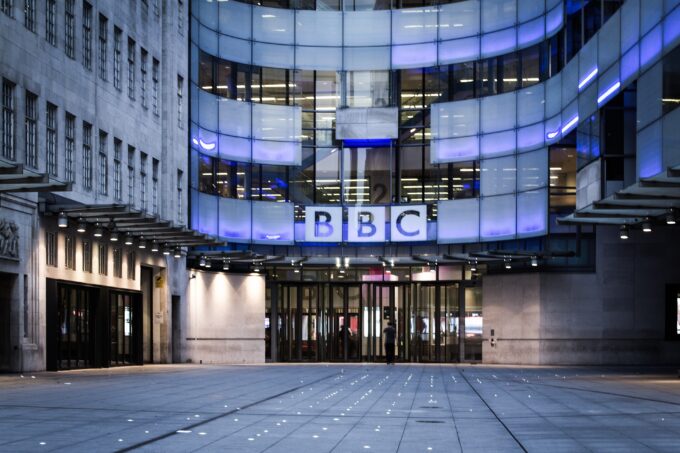
Photograph Source: Alexander Svensson – CC BY 2.0
A poorly edited speech. Two senior BBC scalps. A $10 billion lawsuit. What began as a serious editorial error has become a test of whether a big-shot president can turn a legitimate grievance into a weapon against the press.
The BBC got its editing wrong. It apologized and lost two senior executives. Even when someone is entitled to pursue legal action if they think they have been defamed, it is a massive jump to be demanding $10 billion in compensation. Can the cost of defending journalism become a punishment in itself?
The case has all the ingredients of a spectacular legal shoot-out: institutional humiliation, presidential grievance and a $10 billion claim whose scale demands scrutiny.
With a trial provisionally scheduled for February 2027, Trump could yet face questions under oath. For a man accustomed to controlling the terms of every encounter, that prospect may be less comfortable than another round of public denunciations.
And surely there are more relaxing ways of spending your time than suing the BBC for $10 billion. You could play golf or watch television, one of the few activities that apparently engages the president without requiring him to be the center of attention.
Indeed, he could watch the BBC. I hear Killing Eve remains popular in America.
But—joking aside—there is no real point in defending journalism by pretending bad journalism is good.
On 6 January 2021, Trump addressed supporters in Washington before they marched towards the Capitol, where Congress was preparing to certify Biden’s victory. In one passage, Trump spoke of marching there and cheering on elected representatives. More than 50 minutes later, he declared: “And we fight. We fight like hell.”
The BBC’s Panorama documentary, Tr
The BBC was right to apologize. Director-general Tim Davie and head of news Deborah Turness resigned after the controversy erupted in November 2025. Chairman Samir Shah acknowledged an error of judgement, and the corporation said the documentary would not be rebroadcast in that form.
Two senior executives gone. An institutional reputation bruised. An apology issued. But Trump wanted more. His lawyers demanded a retraction, an apology and compensation. The apology arrived. The money did not.
In December 2025, Trump sued in Florida, seeking $5 billion for defamation and another $5 billion under the state’s law on deceptive and unfair trade practices. The BBC argues that the case cannot properly be heard there because the programme was not distributed on its US platforms and was unavailable through its services in the United States. Trump disputes this, arguing that it was promoted internationally and accessible to American viewers.
The court must decide whether the legal requirements for the case to proceed are satisfied. The BBC’s public-service status does not, on its own, immunize it from a viable legal claim. The corporation must defend the proceedings and establish any applicable legal grounds for dismissal.
But another issue has complicated things: Trump’s own participation in the process.
According to the BBC’s latest court filing, its lawyers have asked the judge to compel Trump to attend a deposition after an agreed date was cancelled and no replacement date was provided.
The controversy intensified when Trump cited “matters of national importance” as the reason he could not attend an agreed deposition, while reportedly travelling to Mar-a-Lago for a fundraising event on the same day.
There may be genuine complications in arranging the deposition of a sitting president. Nor will a dispute over discovery establish that his underlying claim lacks merit. Nevertheless, the optics are bad. Trump sued because he says the BBC misrepresented his words, yet the corporation has had to seek the court’s assistance to obtain testimony from the man whose words lie at the centre of the dispute.
If you insist that others answer for their conduct, you must expect to answer questions yourself. Holding the presidency does not confer blanket immunity from civil litigation over unofficial conduct, although a sitting president’s duties may raise legitimate questions about the timing and arrangements for a deposition.
The wider significance goes beyond one documentary. ABC News agreed in December 2024 to pay $15 million towards Trump’s presidential library and museum, plus legal costs, to settle a defamation action. Paramount subsequently agreed to pay $16 million to settle his lawsuit over a 60 Minutes interview with Kamala Harris, without admitting wrongdoing.
Neither settlement establishes liability, nor does either prove that the litigation was meant to intimidate the press. But the cumulative effect deserves some attention. Not to mention those accusatory outbursts aimed at reporters during recent press conferences.
A newsroom does not need to lose in court to feel the pain of being sued. Legal fees mount, editors spend time with lawyers, and owners must decide whether an uncomfortable story is worth the financial and reputational hit. The next editor may become more cautious; the next lawyer may advise against publishing a story that would otherwise serve the public interest.
The powerful do not need to win every case for this tactic to succeed. The threat itself becomes part of the punishment.
This matters for the BBC, a publicly funded broadcaster whose credibility relies on so-called editorial independence. Remember, an entire nation was brought up, in part, by the BBC. That status does not make it immune from accountability. Public trust requires mistakes to be acknowledged and corrected. But an admission of error should not become an invitation to a financial roasting.
The BBC will learn from its failure. Its editing of Trump’s speech was consequential because the events of 6 January concerned the transfer of power, a foundational principle of American democracy. The corporation was right to acknowledge the seriousness of its mistake.
But democratic accountability cannot stop at the newsroom door. It also needs the powerful to accept scrutiny, courts to apply the law fairly and journalists to remain able to investigate public figures without risking the financial survival of their organizations.
Okay, not every lawsuit brought by a powerful person is an attack on press freedom. Some can be legitimate. Journalists can cause harm, even, and public figures don’t forfeit their rights simply because they are powerful or unpopular. Yet the resources available to a president and a newsroom are rarely comparable. Even where the law treats them equally, the practical burden of defending a claim can be profoundly unequal.
That is why the scale of Trump’s demand matters and why ten billion dollars raises questions. Whether the sum can be justified is for the court to decide. Whether journalism should be chilled by this is a question for the rest of us.
There is also a vast difference between correcting an error and kneeling in front of power.
Trump may yet persuade a court that the editing caused him harm. For once, though, the ending is not his to write.


