
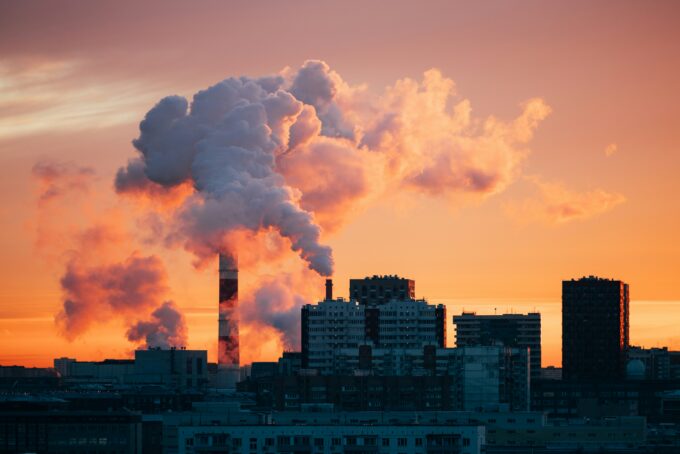
Image by Roman Z.
Climate change has turned vicious; it’s on the nightly news way too much to ignore, whether a massive avalanche destroying an entire town in Nepal or severe drought and record-low water levels in the summer of 2026 causing major disruptions, power plant cutbacks, and partial shipping freezes along the Danube River, or America’s two largest water reservoirs Lake Mead and Lake Powell sitting at historic lows of 21% and 26% respectively with 40 million people holding their breath. It is not going to get any better. It’s destined to get worse. El Niño is simply awful.
“El Niño is firmly established and will intensify into a very strong event in the coming months, with big impacts on rainfall and temperature patterns and associated risks of (1) floods (2) drought, and (3) extreme heat.” (World Meteorological Organization d/d September 3, 2026)
The Statistics Nobody Wants to Hear
Climate change and its kissing cousin global warming are on a warpath that nobody expected when 195 nations signed on to reducing greenhouse gas emissions (GHG) Paris/2015, at the time expecting the possibility of +1.5°C above pre-industrial to hit no sooner than 2050, widely considered “a line in the sand leading to catastrophe.” But, surprise, surprise +1.5°C is already here, early to the party. And catastrophe came along for the ride.
It’s gonna get worse, in large measure because of two irrefutable statistics (1) global annual CO2 emissions (2) population growth.
To counteract global warming, worldwide renewable energy installations have grown by 415% since 2000. But it has not budged the biggest problem facing humankind, too much CO2 in the atmosphere, which is a result of the Gordian Knot squeeze. Here’s why…
Global Population Overshoot
Global population reached 2 billion people in 1927. It took thousands of years for that number to finally populate the planet. By 2000, global population reached 6.1 billion. Then, it only took 26 years to add another 2 billion people with 8.3 billion in 2026. So, what previously took thousands of years suddenly happened in only 26 years. That’s exceptionally fast growth for masses of protoplasm. Those two billion newbies sucked up all the additional energy from +415% renewables, and then some.
Where’s Paul Ehrlich, The Population Bomb (1968) when you really need him?
In the face of that 415% growth of renewables since 2000, global CO2 emissions skyrocketed. Intuitively, +415% renewables should reduce global emissions, but not this time; emissions took off like a rocket.
Global Annual CO2 Emissions (primarily from burning fossil fuels coal, oil, gas and the primary source of excessive planetary warming)
1975 – 16.0 gigatons (billion metric tons)
2000 – 25.0 gigatons (56% increase in 25 years)
2026 – 42.4 gigatons (70% increase in 25 years)
In other words, as renewable energy installations around the world flew off the shelves, global CO2 emissions that are the primary cause of global warming accelerated by 56% over the 25-year-span 1975 to 2000 but accelerated even more +70% (Ouch!) over the 25-years 2000 to 2026, as the world’s oil & gas industry put the pedal to the metal. World petroleum production has increased 42% since 2000, destroying the trumpeted Paris’15 agreement among 195 nations to reduce CO2 emissions. It’s a bust!
Hence, there are two primary factors behind runaway climate change (1) population growth/overshoot (2) rapidly accelerating CO2 emissions, with no end in sight. This spells a panorama of a future dystopian world led by extraordinarily high levels of rugged individualistic rampant capitalism that fails to address the common good while richly rewarding a select few, commonly known as “the 1%.” This is the new world order.
Moreover, serving to emphasize the ironclad grip of the Climate Change Gordian Knot a recent study d/d March 27, 2026 in the highly respected publication Environmental Research Letters analyzed more than two centuries of global population records, finding Earth cannot keep up with the way we are using resources. The optimal sustainable global human population is 2.5 billion.
“Today’s economies predicated on uninterrupted growth apparently do not recognize the regenerative constraints of sustained population expansion, because fossil fuels artificially make up the difference. Nor do economies anticipate the looming reductions in regenerative capacity as climate disruptions intensify. The tragedy is that human endeavor has short-circuited the ultimately inevitable corrective feedback loops carrying capacity imposes, without replacing them with humane and environmentally friendly corrective feedback,” Ibid.
Which is a fancy way of saying fossil fuels, in a twisted way, are a Trojan Horse that deludes society into positive assumptions of economic and human population growth ad infinitum.
Democratizing the Economy
A hopeful solution (maybe) to the Climate Change Gordian Knot is discussed in a recent article in The Guardian, We Can Move Beyond the Capitalist Model and Save the Climate – Here Are the Three Steps by Jason Hickel and Yanis Varoufakis d/d Feb. 12, 2026.
“By capitalism we do not mean markets, trade, and entrepreneurship, which have been around for thousands of years before the rise of capitalism. By capitalism we mean something very odd and very specific: an economic system that boils down to a dictatorship run by the tiny minority who control capital – the big banks, the major corporations and the 1% who own the majority of investible assets,” Ibid.
The three steps mentioned in the article essentially call for a new financial structure that penalizes destructive private investments but enables public finance for “public purposes” or investments consistent with common, sustainable prosperity. Secondly, extensive use of what’s called “deliberative democracy” to determine goals for public use of funds. Thirdly, democratizing corporations in a “Great Corporate Reform Act” operated by a principle of “one employee, one share, one vote.”
The Hickel/Varoufakis solution is basically a rallying call for socialism. It is obviously quite idealistic. Nevertheless, Americans appear to be leaning in that direction. A recent Time Magazine article proves the point: Socialism is More Popular Than Ever in the U.S. According to Polls, Time d/d September 25, 2026: “Forty-three percent of Americans have a positive view of socialism, the highest share since Gallup began tracking the measure since 2010. The latest survey, conducted Aug. 3-24, found that socialism has gained ground over time as several market-oriented economic concepts have lost favor. It now ranks ahead of big business, which has fallen to a positive rating of 35% from a peak of 58% in 2012.”
Undoubtedly, socialism is gaining favor because the public has been exposed to billionaires like never before, the entire cabinet, for example, and it’s leaving a bitter taste.
If it comes to pass, i.e. socialism, would it have the wherewithal and tenacity and consensual reach to bring all nations together at 20-30 times the Marshall Plan that rebuilt Europe post-WWII to meaningfully tackle Direct Air Capture (DAC) removal of CO2, above and beyond the capabilities of current immature inadequate technological peashooters aimed at DAC?
For example, according to the World Resources Institute, global operational capacity for DAC is tiny with approximately three dozen plants globally capturing a small fraction of a percent of CO2 emissions. The world’s largest facility in Iceland, cost $15M, captures about 36,000 tons of CO2 per year (or nearly zero % of annual emissions, yawn!) versus 40-50 billion tons emitted per year, hmm. That’s a very small peashooter. In essence, DAC is inefficient, very-very expensive and very energy-intensive, which severely diminishes any potential. It goes without saying, plants and trees do this “for free.”
China has planted over 66 billion trees in the desert of northern China with a goal of planting 100 billion trees in what’s locally referred to as the Great Green Wall. That’s wonderful and necessary because: “Wildfires now destroy twice as much tree cover per year as two decades ago, a crisis fueled by climate change.” (The Latest Data Confirms: Forest Fires Are Getting Worse d/d Aug. 4, 2026 World Resources Institute)
Alas, many climate scientists agree that only by removing CO2 that’s already in the atmosphere is it possible to successfully challenge global warming, which is already a nightmare. But how to do it?
Inauspiciously, the Climate Change Gordian Knot remains, tightening, threatening more than ever before.


