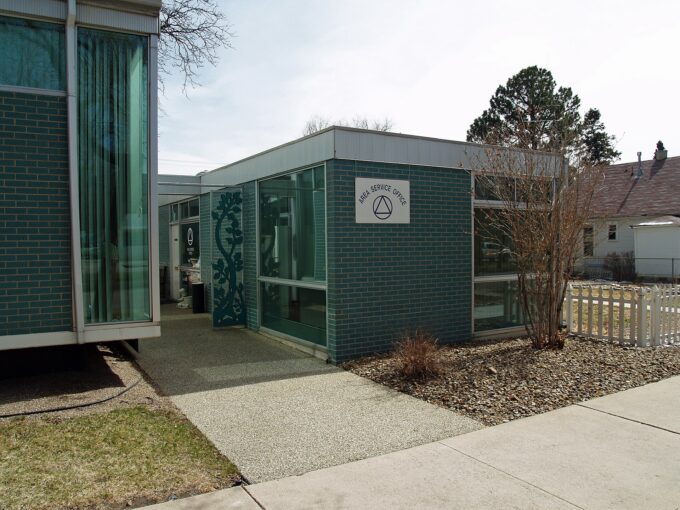
Photograph Source: David Shankbone – CC BY-SA 3.0
Twelve Step programs like Alcoholics Anonymous, Narcotics Anonymous and Cocaine Anonymous are free, self-supporting and do not advertise. That’s why many do not know about them…and their success rate.
Instituted in the 1930s, such programs promote no drugs and use no psychiatric or psychology experts. Instead, they rely on peer-to-peer healing—one recovered person helping another—and spiritual concepts. They make no money for anyone.
Sadly, in the last decade, drugmakers and health insurers, perturbed by all that non-remunerated care, have installed Medication-Assisted Treatment (MAT) programs in hospitals and clinics. Such programs are predicated on prescription drug use instead of peer-to-peer recovery and spiritual principles and they are the antithesis of Twelve Step recovery.
Unethical drugmakers and health insurers have monetized such recovery into a $42 billion a year industry—some luring patients with kickbacks, fabricating addictions and keeping clients drugged to force relapse.
In October, the Wall Street Journal reported on such diagnosis profiteering–sometimes called patient brokering—noting that some Southern California drug-rehab operators were charged with submitting over $1.6 billion in related fraudulent insurance claims.
The industry invasion into formerly free care is why people who once called themselves alcoholics and drug addicts now say they are “dually diagnosed” with “major depressive disorder,” have “bipolar disorder” and are “on the spectrum.”
New, judgement-call (no lab or blood test) self-diagnosed mental diseases like autism and bipolar disorder are the third big Wall Street boom, after GLP-1 agonist weight loss drugs and large molecule, biologics for autoimmune conditions like Skyrizi. In addition to online solicitations and influencer podcasts, hard copy magazines and clubs solicit people to self-diagnose with mental conditions.
While the “chemical imbalance” theory of mental disorders that industry employed to sell prescription drugs was categorically disproven in 2022, it lives on in a lot of suggestible people who have been serenaded with Ask Your Doctor ads for decades.
“The chemical imbalance that causes my illness is very difficult to regulate,” wrote a victim on the web site Medium. “One minute, I’m full of energy, euphoric, oblivious to the world around me, impulsive and reckless. The next, I feel desolate, depressed, or apathetic.” Before the selling of disease “awareness” campaigns, such variations were called “life.”
Patient advocacy/disease groups like the National Alliance on Mental Illness (NAMI), the American Foundation for Suicide Prevention (AFSP) radio campaigns like “I’m Listening,” and “Love your Mind”—all of whom receive drug industry funding—do the heavy lifting for drugmakers selling such drug-treatable diseases. So do “health” sites like StatNews which lamented, in 2024, that not enough recovering opioid addicts were taking drugs like methadone and buprenorphine and ridiculed the Twelve Step admonishment that recovering people should not seek an “easier, softer way” with drugs.
Still, the biggest threat to free, Twelve Step recovery might be the U.S. government itself.
The head of National Institute on Drug Abuse (NIDA), Nora Volkow, actually kicks the basic precept and premise of Twelve Step drug and alcohol recovery—abstinence—to the curb.
In a newsletter she wrote “There is increasing scientific evidence to support the clinical benefits of reduced substance use and its viability as a path to recovery for some patients…The FDA has historically favored abstinence as the endpoint in trials to develop medications for substance use disorders…But abstinence is a high bar.”
Ask Your Doctor ads and disease advertising designed to convince healthy people they might be sick are, of course, unethical and flagrant misuse of health care resources. When it comes to addictions and alcoholism, they are especially unethical because they obscure the availability of free and drug free Twelve Step recovery programs.