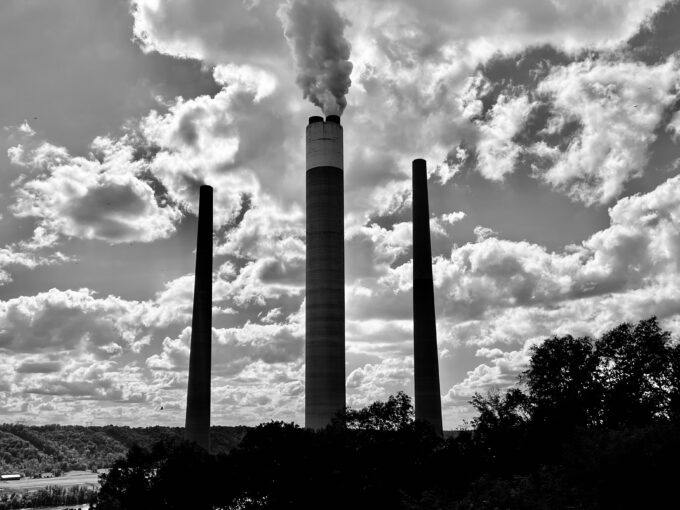
Clifty Creek Coal Power Plant, Madison, Indiana. Photo: Jeffrey St. Clair.
The Trump administration has announced it will no longer limit emissions from power plants, one of the largest sources of carbon dioxide and other greenhouse gases in the US. Combined with the administration’s stance that power plant emissions are not detrimental to public health, the announcement has far-reaching consequences for the public. And this latest decision is just one of many regulatory rollbacks carried out by Trump’s Environmental Protection Agency (EPA) that show disregard for Americans’ health and safety.
EPA Administrator Lee Zeldin revealed the latest proposal at the G20 Energy Abundance Ministerial in Houston on September 14. The plan has two components: The first part rescinds a set of standards proposed by the Biden administration for coal and gas plants that required them to install emissions-capture technology. The move was estimated to prevent up to 1.38 billion metric tons of pollution through 2047 — the equivalent of taking 328 million cars off the road. The Trump administration, however, has argued that complying with the standards would cost businesses billions. Zeldin also said the Supreme Court’s decision in West Virginia v. EPA bars the government from using regulations to push markets toward renewable energy.
But the market has been moving away from coal for decades. That shift has been attributed to lower implementation costs for renewable technologies and renewables’ ability to adapt instantly to grid demand. The recent rise in coal-powered electricity, on the other hand, has been mainly attributed to Trump’s push to reopen plants.
Figure 1
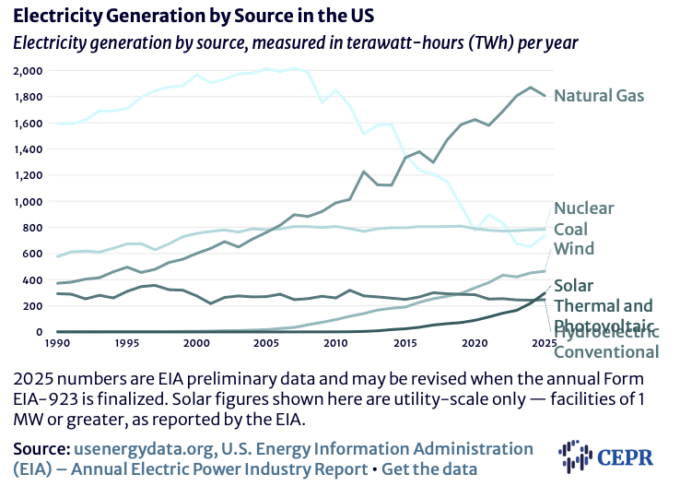
In fact, the EPA’s argument that Biden-era regulations influenced the market’s direction is ironic, given that the Trump administration is doing everything in its power to push the market toward coal, even shutting down or canceling renewable projects across the US.
The second part of EPA’s plan contends that power plant greenhouse gas emissions — which include carbon dioxide, sulfur dioxide, nitrogen oxides, mercury, and particulate matter — pose no danger to public health or the environment, and if that’s true, the agency has no legal mandate to regulate them under the Clean Air Act. The problem with that argument is that the EPA’s own analysis under Trump found that repealing Clean Air Act limits would result in thousands of premature deaths and cost the US billions in health care costs. And that’s just data from the administration itself. There is plenty of research linking air pollution from carbon dioxide and other greenhouse gases to public health issues, especially from coal.
It doesn’t appear the Trump administration will change on this issue, but future administrations have an opportunity to undo this mess. As part of CEPR’s Majority Agenda, we have called for the federal government to reinstate federal grants and permits for clean energy projects and reinstate the Biden-era regulations that require new and existing coal and natural gas plants to either capture 90 percent of their carbon emissions by 2032 or retire by 2039.
While Trump may view climate change as a “hoax” and see regulations as an unnecessary strain on corporations, compromising the public’s health and safety represents an even greater burden. The federal government has a duty to protect its citizens, not corporate interests.
This first appeared on CEPR.