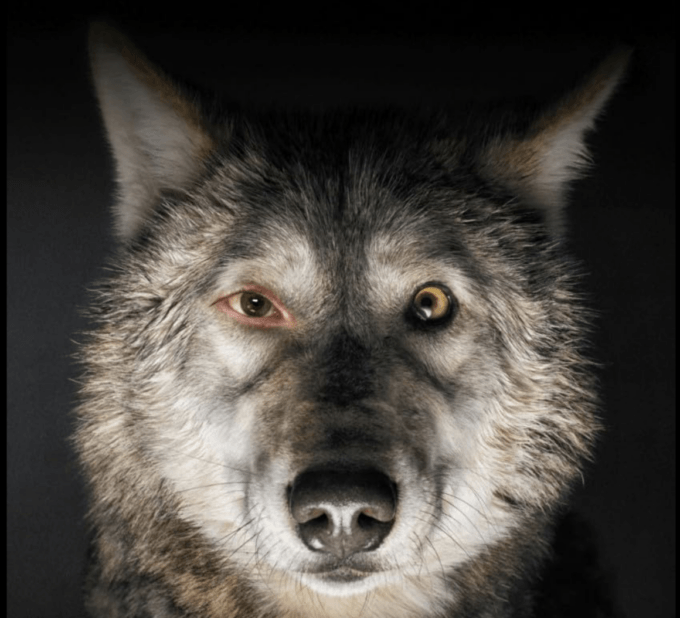
From the poster for Agnieszki Holland’s “Spoor.” (Detail)
I’m an animal liberationist and a cinephile. There’s not much I love more than when these two passions intersect. While I’ve read enough Marxist texts to believe culture largely runs downstream of economics, I’ve been inspired by anti-speciesist, narrative films like Rupert Wyatt’s Rise of the Planet of the Apes and Darren Aronofsky’s Noah. So I set out to ask relevant thinkers and activists what their favorite movies are that tell a fictional story with animal-rights themes.
Lee Hall, author of On Their Own Terms: Animal Liberation for the 21st Century, highlighted the 1971 cult classic, Harold and Maude, directed by Hal Ashby. Specifically, Hall pointed to lines delivered by Ruth Gordon’s character:
You know, at one time, I used to break into pet shops to liberate the canaries. But I decided that was an idea way before its time. Zoos are full, prisons are overflowing… Oh my, how the world still dearly loves a cage.
Hall was a teenager when they first saw the film. Hall hadn’t thought much about social movements or advocacy at that point, but, in retrospect, believed the quoted observation got them thinking about our culture as one of cages, and laid the foundation for their future veganism. Hall didn’t believe it was a coincidence that, in addition to animal law, they worked in and taught immigration and refugee law. Gordon’s lines had struck a nerve.
Paul Shapiro, who wrote Clean Meat: How Growing Meat Without Animals Will Revolutionize Dinner and the World, struggled to choose between Bong Joon Ho’s Okja, from 2017, and Agnieszka Holland’s Spoor, released the same year. Shapiro couldn’t recall the circumstances of when and how he first watched these films, but he had already been involved in the animal-protection field for quite some time.
“[Okja] makes you care about one animal as an individual, then confronts you with the system that treats animals like her as products,” Shapiro said. “Spoor takes a very different approach: it’s a dark, unsettling story about a woman whose concern for animals is dismissed by the people around her… What has stayed with me is how differently they reach the viewer: Okja through the bond between Mija and Okja, and Spoor through its anger at how readily people disregard animals and those who defend them.”
Meanwhile, Emilia Leese, co-author of Think Like a Vegan: Embracing Ethics in a Plant-Powered World, recalled being emotionally devastated as a young child at the movie theater by John Guillermin’s 1976 remake of King Kong. She was upset by the unfair treatment faced by the titular creature, who was simply trying to live his life before he was captured and killed by humans.
“I cried and cried,” she said. “I remember it perfectly. The adults around me tried to comfort me by saying it was fiction, but I couldn’t shake seeing the truth of Kong’s plight reflected in that of real other animals, and the injustice of it all. Had my circumstances been different, maybe I’d be saying today that I’d been vegan since I was six years old. But that had to wait until my 40s. My interpretation of the film now is completely unchanged from when I was six.”
The President of the Christian Animal Rights Association, Matthew A. King, singled out Ferdinand, a 2017 animated feature directed by Carlos Saldanha. It’s loosely based on a 1936 children’s book, The Story of Ferdinand, written by Munro Leaf and illustrated by Robert Lawson. King saw the movie not long after going vegan and appreciated its implied criticism of bullfighting and the slaughter of animals for food.
Jasmin Singer, perhaps best known as a host of the Our Hen House podcast, named Denis Henry Hennelly’s Bold Native as her favorite narrative film with animal-rights themes. She particularly enjoyed how the 2010 movie contrasted different forms of animal activism, like underground action and reform work, and critically examined repressive legislation, such as the Animal Enterprise Terrorism Act.
“I saw it at Let Live, an animal rights conference in Portland, Oregon that no longer exists,” Singer said. “This was around 2010, when I was about 31. I had recently left my job at Farm Sanctuary and had just started Our Hen House, and I was spending a lot of time thinking about how media and storytelling could change the way people see animals. Watching a scripted feature about animal liberation in a room full of activists felt like a big deal. We were used to documentaries and undercover footage. A drama about our own movement was new to me.”
It was a treat for me to be able to pick the brains of the aforementioned animal activists and thinkers about film. Some of the movies they mentioned I’d seen, like Okja, King Kong, and Bold Native. I’m probably overdue for a rewatch of these. Of course, there were others I haven’t had a chance to see yet, such as Harold and Maude, Spoor, and Ferdinand. I’m definitely going to add those to my list.