
Photo by Jon Tyson
Much to the hope and fear of progressive Democrats and Republicans alike, if the Democrats win control of the U.S. Congress this November, do not expect socialism to be enacted into law.
Increasingly, Donald Trump and the Republicans are using the dirty word of socialism against Democrats, much as they have engaged in red baiting for decades. Bill Clinton, Barack Obama, and Joe Biden have all been accused of being socialists, if not communists. Apparently, anyone who disagrees with Republicans is now a socialist. But the political effectiveness of this accusation is changing.
Millennials and Generation Z did not grow up during the McCarthy era or the Cold War. They do not necessarily associate socialism with the same stigma that shaped the political attitudes of the Silent Generation, Baby Boomers, and perhaps even Generation X. Moreover, capitalism is not working particularly well for many younger Americans. They confront skyrocketing housing prices, expensive healthcare, crushing educational debt, and the disappearance of the American Dream. Now they face artificial intelligence potentially eliminating the jobs they hoped would provide economic security. For them, socialism no longer sounds so frightening. It might even sound appealing.
This helps explain the popularity of politicians such as Bernie Sanders and New York City Mayor Zohran Mamdani. They offer alternatives to a winner-take-all capitalist economy that has produced extraordinary concentrations of wealth and economic inequality. Yet even if Democrats win both the House and Senate, the prospects for enacting anything resembling socialism are exceedingly slim.
First, there is the Senate filibuster. Democrats are unlikely to secure the 60 votes necessary to overcome it. Even with control of both chambers, they would need Republican support for most major legislation. Republicans are hardly likely to support a socialist agenda. Second, even if Democrats circumvent the filibuster through budget reconciliation, Donald Trump remains president. He would almost certainly veto legislation that advances a significantly progressive agenda, let alone anything labeled socialist. Democrats would lack the two-thirds majorities necessary to override those vetoes.
Third, there is the Democratic Party itself. Despite the enthusiasm of its progressive wing, much of the party is running on a simple message: We are not Donald Trump. That might be sufficient to win an election, but it is hardly a governing philosophy. The Democratic leadership has shown little enthusiasm for fundamentally restructuring American capitalism. At best, a Democratic Congress might attempt to restore Affordable Care Act subsidies, impose some restraints on immigration enforcement and ICE, protect Social Security, and reverse selected Trump policies. These might be worthwhile reforms, but they hardly constitute socialism.
There is also a more fundamental problem. What exactly does socialism mean in contemporary American politics? For Sanders and many progressive Democrats, socialism seems to mean Scandinavian-style social democracy, combining capitalist markets with extensive social welfare programs, strong labor protections, and greater economic equality. But historically, socialism has meant something more ambitious: transforming ownership and control of the economy itself.
Ironically, if socialism simply means government ownership or investment in major corporations, Donald Trump himself has embraced elements of it through federal involvement in private businesses. Yet government ownership alone does not make an economic system socialist. State capitalism can coexist quite comfortably with authoritarianism, as China demonstrates. Russia also illustrates how close relationships between political power and major economic enterprises can produce oligarchy rather than democracy. Democratic socialism means something different. It involves democratizing economic power itself.
The economist Alec Nove explored the difficult question of reconciling democratic political institutions with a socialist economy. Political scientist Robert Dahl similarly argued that democracy should not end at the workplace door. If democracy means citizens exercising control over decisions affecting their lives, why should that principle apply to government but not to corporations and economic institutions? These are serious questions that deserve far more attention than the simplistic accusations of socialism dominating contemporary political discourse.
Yet even if Democrats embraced a coherent vision of democratic socialism, another problem would remain: Can socialism be achieved through electoral politics alone? Winning elections does not necessarily mean controlling economic power. Corporations, financial markets, investors, and wealthy interests possess enormous influence over government policy. Moreover, as Immanuel Wallerstein argued, individual nations operate within a larger capitalist world-system. Even a government committed to transforming its domestic economy must contend with international capital, trade, investment, and global markets. The idea of socialism in one country confronts enormous political and economic obstacles, especially when that country remains deeply embedded in global capitalism.
None of this means progressive Democrats should abandon their ambitions. It does mean that winning elections is only the beginning of political change, not its culmination. The more immediate problem is that Democrats appear better prepared to campaign against Trump than to articulate what they would actually do with power and address issues such as affordability. Opposition is not a governing program. Nor is winning an election equivalent to securing a mandate for fundamental economic transformation.
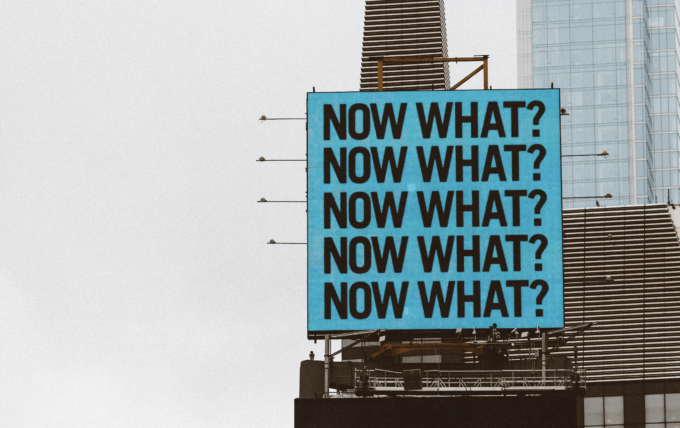
The Democrats might win Congress in November. They might even win convincingly. But without a coherent governing agenda, they risk discovering that defeating Trump politically is far easier than addressing the economic and institutional conditions that made his political success possible. This brings to mind the closing scene of the 1972 film The Candidate, starring Robert Redford. After unexpectedly winning a Senate election, Redford’s character, Bill McKay, suddenly confronts the reality of victory. Looking bewildered, he asks his campaign manager, “What do we do now?”
That may well be the question Democrats will be asking themselves on November 4.


