A hundred years ago, in November of 1926, a group of the younger Harlem Renaissance luminaries put together a transgressive little magazine they called Fire!! The magazine was supposed to be something of a firebrand in response to demands from their more respectable elders that Black artists always portray Black life at its most estimable. These artists, among whom were Langston Hughes, Zora Neale Hurston, Wallace Thurman (who was the magazine’s main editor), Countee Cullen, Bruce Nugent, and many others, were interested in everyday Black life and Fire!! was a celebration of that. The publication was a remarkable achievement. In its slender forty-eight pages, Bruce Nugent would publish the first openly gay story in the Black canon, Zora Neale Hurston would challenge theater conventions with a short play on colorism in the Black community, Lewis Alexander would explore the possibilities of the Black haiku and all the poets included would help develop a new Black Imagism, one also often in tune with the rhythms of everyday speech, as is perhaps exemplified in Helene Johnson’s deeply disturbing “A Southern Road,” a haunting poem about a lynching that anticipates the equally haunting “Strange Fruit,” so famously rendered by Billie Holiday. These younger Harlem Renaissance writers and artists were taking aim at a wide number of targets in this often satirical, often poignant production. But there was one highly respectable Black personage who would have been most prominent in their minds: W.E.B. Du Bois.
The recent broadcast of a fascinating PBS documentary on Du Bois, Rebel with a Cause offers a new opportunity to revisit questions of art and politics that Du Bois found so central to the years of the Harlem Renaissance. After all, Fire!! sometimes reads like a response to Du Bois’ famous proclamation that all “Art is propaganda and ever must be, despite the wailing of the purists.” The younger writers were, of course, on some level falling into Du Bois’ trap, in that the transgressive publication of Fire!! was itself a political statement, being a propaganda product calling for politically and morally freewheeling cultural freedom. Nonetheless, in the process, these younger Black artists placed themselves at the forefront of modern Black literary satire; in a very real sense, they catalyzed it. Thus, even though Fire!! was not commercially successful at the time, and remained a one-issue venture, it has since become one of the most famous and discussed Black literary products. Ironically, even most copies of this first issue were lost to posterity when they were destroyed in a fire. Because of this history, it reads as something like a subversive anthology, in fact the only subversive anthology to exclusively feature younger Harlem Renaissance writers at their most aesthetically unbridled. 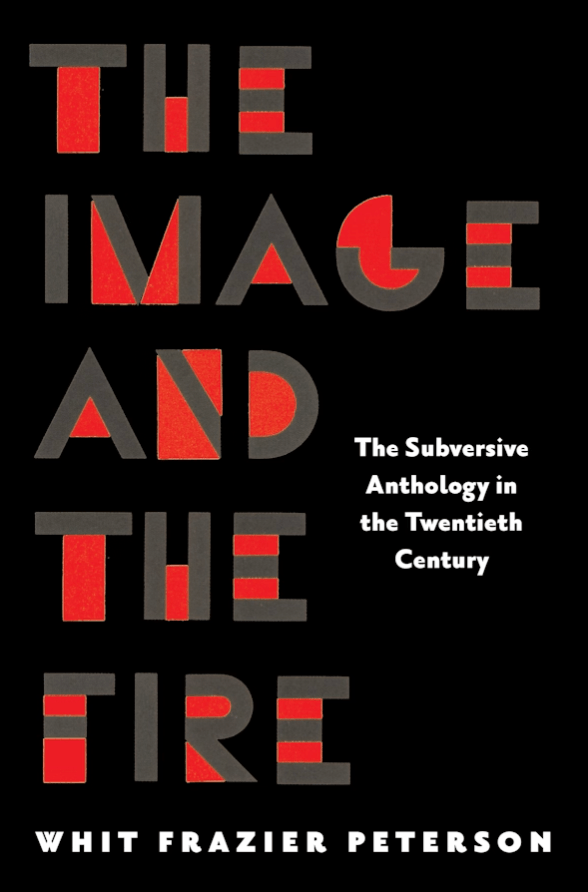
The Harlem Renaissance was a very self-conscious literary movement, one which even had “midwives,” as Langston Hughes referred to Black philosopher Alain Locke and Crisis magazine editor Jessie Fauset. Alain Locke actively sought and recruited Black talent during the 1920s, and Jessie Fauset, as literary editor for The Crisis magazine, the flagship publication of the NAACP, published some of the most important writers from the Harlem Renaissance for the first time, including Langston Hughes, whose “The Negro Speaks of Rivers” appeared in its pages in 1921, when Hughes was just nineteen years old. By creating a deeply self-conscious Black literary movement, the Harlem Renaissance brought questions of a Black American literary aesthetic to the fore, and ever since, it has been impossible to deny a Black literary cultural tradition in which Black writers have been talking to each other and developing their work based on this self-consciously Black conversation. At the heart of this conversation, ultimately, the question remains as to the Black artist’s relationship with politics and culture, and how these two intersect.
Also pertinent today are questions not just about personal aesthetics, but also about Black literary and cultural movements. Most prominent today are the social and cultural discussions surrounding Afropessimism and Afrofuturism. Afropessimism argues that Blackness is the nadir of Western valuation, the negative that defines the positive as such; and Afrofuturism, on the other hand, argues that Black people themselves will define Blackness for the past, present, and future. That both of these movements (which although at times are clearly opposed to each other, also arguably have points of convergence) are able to look to past Black cultural traditions and develop them into new and penetrating modes of examining these Black cultural traditions, while also furthering them, speaks to the way that resonances from the Harlem Renaissance remain part of the cultural conversation Black Americans are still having today.
1926 was an instrumental year for the Harlem Renaissance and, arguably, for Black literature in general. For the first time, Black writers began to hold public discussions in the pages of Black publications about what a Black aesthetic might look like and how to develop it. As can be expected, there was far from universal agreement about the issue: the famous debate between Langston Hughes’ calls for a Black blues cultural tradition as a cornerstone of a Black literary aesthetic, and George Schuyler’s insistence that “the Aframerican is merely a lampblacked Anglo-Saxon” comes to mind. These questions would arise again in the pages of Negro Digest in January 1968, when editor Hoyt Fuller, at the height of the militant Black Arts Movement, would reopen the question as to a “Black aesthetic,” inviting Black writers, young and old, well-known and lesser-known, to respond.
Now, a hundred years after Du Bois’ initial article, “Criteria of Negro Art,” we are in a particularly productive moment to assess the place of the Black artist in American culture, especially as the nation celebrates its two-hundred fiftieth anniversary, and at the same time watches constant challenges to American democracy, not least of which involves setbacks in voting rights for Black Americans that turn the clock back sixty years.