It makes sense that I would meet Gaku Tsutaja at a protest against the War on Iran in front of Hiroshima’s Atomic Bomb Dome, the preserved relic of total obliteration. It was June 2025 and the world was witnessing Israel’s surprise attacks on Iran’s nuclear facilities in the Twelve-Day War. Tsutaja was in town for the exhibition opening of Between Memories and Objects at Hiroshima City Museum of Contemporary Art. It seemed absurd to think of art commemorating 80 years since the bomb while uranium enrichment facilities were simultaneously being bombed in Iran… yet these are the conditions of absurdity in which we live. Eight months later, as the 2026 War on Iran escalated to new levels of violence and closer to nuclear disaster, we worked through these interview questions, two artists meeting across time zones, in the mess of the past and present.
Tsutaja’s work is, regrettably, more relevant than ever as the horrific possibility of nuclear disaster hangs on every earthly moment. She excels at synthesizing the twisted and torturous chapters of the American nuclear program into metaphor, motif, and manga-style drawings, animations, and sculptural installations. Her work covers some of the rawest and most intentionally obscured aspects of American and Japanese Imperialism: uranium mining and its legacy on Congo and American Indian lands; Unit 731 of Imperial Japanese Army and its human medical experimentation; Japanese-American incarceration; the hydrogen bomb tests in the Marshall Islands; Nishiyama Dam in Nagasaki filled with the highest level of radiation black rain; Monsanto’s plutonium bomb detonators, Agent Orange, bovine growth hormone, white phosphorus bombs…among many other human environmental atrocities.
Barely a century beyond these crimes, Japan’s crescendoing fascism is now conducted by the first female prime minister, Takaichi, who insidiously mirrors Trumpian policies on immigration, increased defense spending, and closer ties with Israel. This “best friends” plotline with Japan as lapdog to the Trump regime has been cultivated over years with Hiroshima as the backdrop. From the Obama-hibakusha hug, to the Hiroshima Peace Park and Pearl Harbor National Memorial Sister Park Agreement (brokered by former U.S. Ambassador to Japan, Rahm Emmanuel), Japan’s role as wartime enemy has been officially relegated to the past. Tsutaja’s work holds a mirror up to this fascist alliance, recalling the nightmares of past imperialist wars that seem to be fading faster than ever.
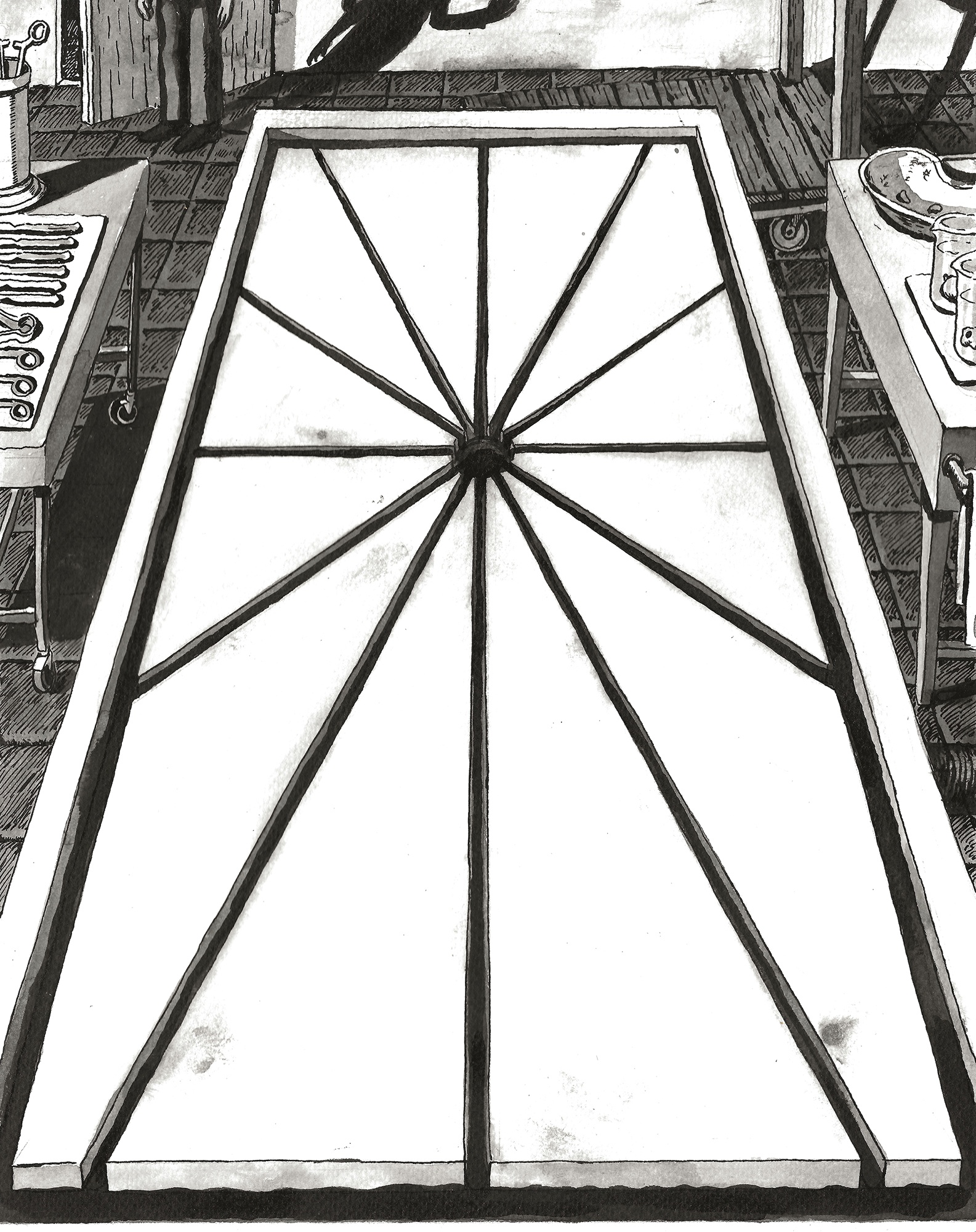
Memory Bug: Blood Bed, 2023 Sumi ink and graphite on paper 14 x 11 inches (35.6 x 27.9 cm). © Gaku Tsutaja; Courtesy of Ulterior Gallery, New York
Her recent back-to-back exhibitions at the 80th anniversary exhibition of WWII at the Taro Okamoto Museum of Art, in Kawasaki, Japan, and at Ulterior Gallery in Manhattan, brought her audience into an alternative land where parakeets in lab coats conduct their studies and crank radios spew propaganda. Inside a giant bamboo birdcage structure, viewers watch a video of Pidgingo-no-Inko, featuring “Sisak,” a robot with a young boy’s voice, modeled after a prototype of the Norden bombsight—the world’s first high-altitude aiming device, which was used for the atomic bombings. He discusses the history of weapons development, targeting and surveillance systems as weapons of “eyes,” including the internet and AI. Another masked character modeled after a Palestinian-American friend, speaks about the political oppression he experienced as both an activist and a citizen. Those two stories unfold simultaneously, while other voices chat and mimic each other about wars and suffering, revealing methods and patterns of empire and ruling class violence repeated and accumulating on a global scale over time.
Viewers are invited to explore the cage, both inside and out, and to renew their perception of it. Non-human figures—birds, insects, mammals, fish, plants, objects, and weapons—are engaged as storytellers, their heads replaced with other creatures or objects, their human bodies dressed as historical figures. They are inhabitants of hypotheses that push the boundaries of the unseen world, and narrators who question humanity.
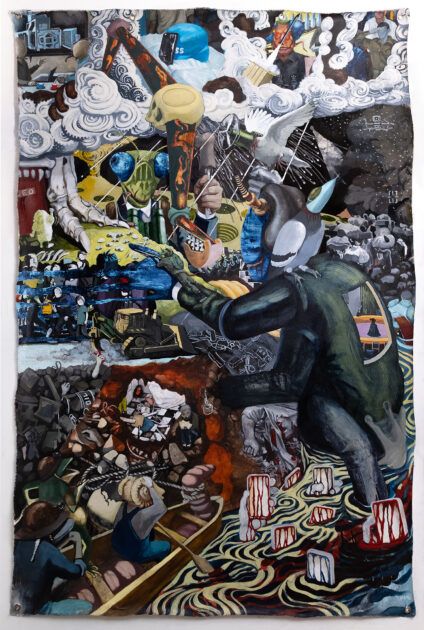
Near the entrance of the cage hangs, ONITAIJI: Fall, a painting depicting the Press Code gag order put in place on Japan under the American General Headquarters (GHQ) occupation after the war; the establishment and legacy of the Atomic Bomb Casualty Commission (ABCC) that researched the Hibakusha and conducted autopsies on 50,000+ bodies; and the anti-war movements that emerged in Hiroshima at the outbreak of the Korean War.
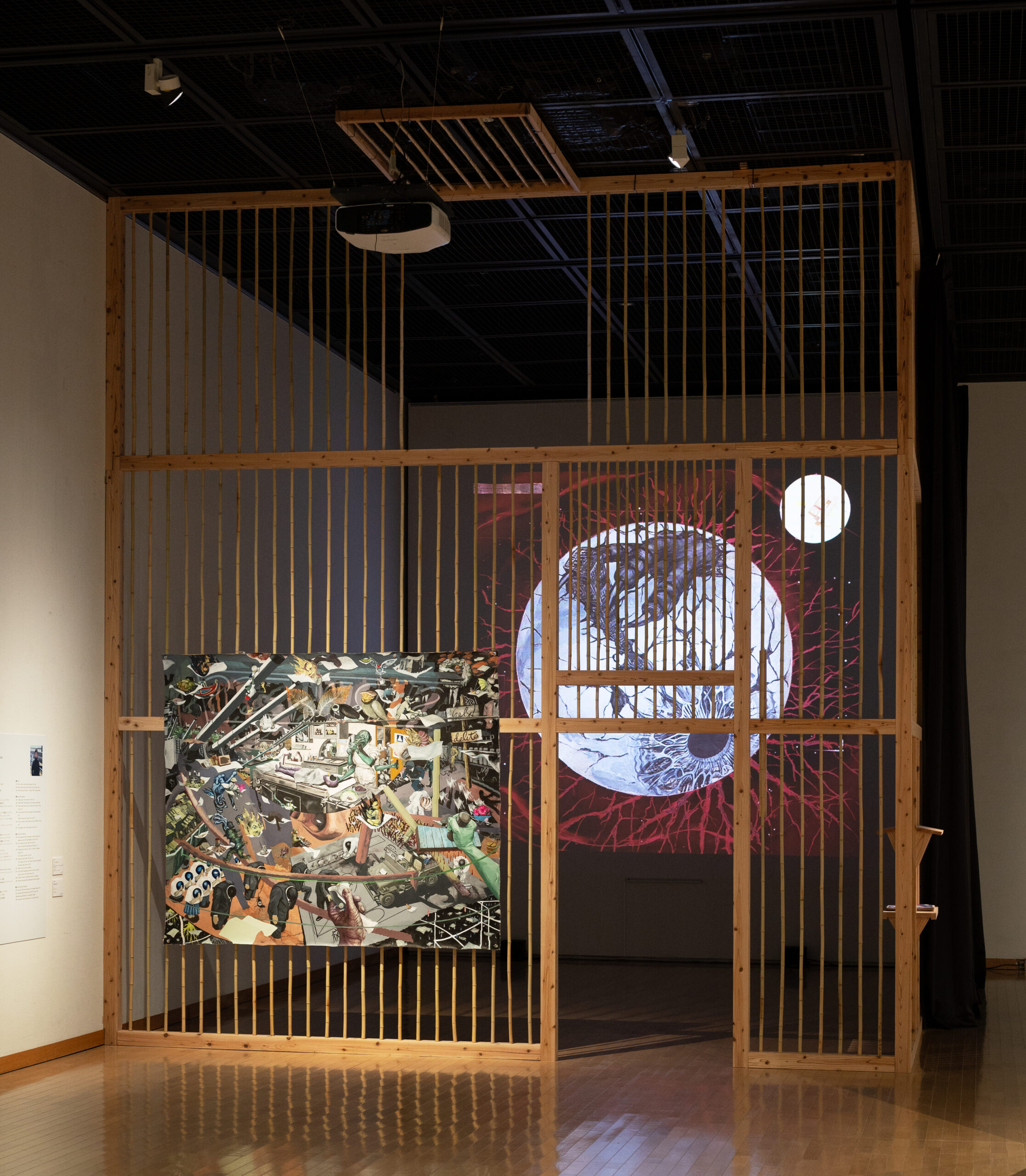
Pidgingo-no-Inko, 2025, video 20 min, structure as a set, and Risograph Print. Photo by Makoto Matsuno © Gaku Tsutaja; Courtesy of Taro Okamoto Museum of Art, Kawasaki and Ulterior Gallery, New York Onitaiji: Fall, 2024. Acrylic on cotton canvas. 72 x 83 inches / 182.9 x 210.8 cm Private Collection © Gaku Tsutaja; Courtesy of Taro Okamoto Museum of Art, Kawasaki and Ulterior Gallery, New York
I had a lot of questions for Tsutaja, who has spent hours listening to testimonies of global Hibakusha, visiting nuclear sites and archives. Most recently, her work has made reference to the genocide in Gaza and the occupation of Palestine. While working on a scene depicting anti-war activists during the Korean War risking their lives to scatter anti-war leaflets, evacuation warning leaflets issued by Israel began raining down over Gaza. The censorship surrounding Hiroshima was originally the center of her painting series, Onitaiji, but she felt it necessary to include the events unfolding in real time in Palestine.
“Having been aware of the history of propaganda and repression perpetrated by both the Japanese and U.S. governments against Hibakusha, I could immediately recognize the absurdity of the U.S. government’s and mass media’s coverage of the Palestinian issue,” she shared. But after referencing Palestine in her work, Tsutaja began to experience her first layer of censorship, when viewers complained about her political statements. “I hadn’t experienced that for the nuclear theme. Perhaps the taboo surrounding the nuclear issue only applies to those involved in the military or government. But the taboo surrounding the Palestinian issue seems to apply to everyone, especially those in the art world.” She sees this edge of control and containment of creative expression as the stark reality of the role that culture plays in the United States: “Faced with silence, self-censorship, and the ‘public execution’ of artistic careers, I believe those of us working in the cultural sphere are confronting a terrifying reality: the decline of culture’s power. Now, more than ever, we need to see a surge of artworks that actively challenge this situation.”
Your work contains a mind-boggling array of references to nuclear history and military science. How did you first become interested in the nuclear issue?
My interest in nuclear issues began in 2016, when my father, a former civil engineer, was called to supervise the restoration of a major road near the Fukushima Daiichi Nuclear Power Plant. Five years had passed since the devastating meltdowns, fear and anxiety, and I was shocked to realize how little I cared about the current situation in Fukushima. I realized the fear of forgetting the fear. As I researched the issue out of concern for my father’s health, I realized how unreliable the mass media and government information was, and how much would remain hidden if we didn’t investigate ourselves. This marked the beginning of my research-based work, mindful of the invisibility, both physical and political, of radiation and the nuclear industry. At the time, I was a first-year student in the MFA program at SUNY Purchase College and the campus was in constant turmoil because of the first inauguration of the Trump administration, While my classmates and professors were in lively discussions about politics and anxiety, I was worrying about Fukushima.
I usually start to research historical archives, especially photographs, then visit the locations, including military and nuclear facilities and former sites. This was significant to me, as I hadn’t really seen these facilities in my life. I also visit museums to confirm the “official” narratives. The most exciting research is meeting and interviewing survivors to uncover untold stories. I encountered their unique words describing their extreme experiences, which made me want to draw. Also, I got advice from Robert Jacobs, the historian of nuclear technologies, and other experts so as not to miss the newest aspect and analysis to discuss.
Regarding Palestine, I began speaking with individuals and families in Gaza and Egypt via DM. I noted their words about harsh condition. Most were students and told their dreams. They sent me photos of destroyed house and sounds of bombings and drones. A Palestinian-American activist I met at a protest became a significant figure to me; he embodied the very “reality of the Palestinian issue” that transcends national borders. Interviewing a Japanese journalist who has visited Palestine more than 70 times helped me to analyze the ongoing situation. The most influential book for me was Necropolitics by Achille Mbembe. I had read it to understand the nuclear colonial issue, and later I noticed that Mbembe wrote a lot about Palestine.
Before I become overwhelmed by the immense volume of information, I encourage myself to move my hands and eyes—working on paper, canvas, or wood. Even after much research, many things remain unclear until I actually attempt to build with the materials. And when I draw, my vision becomes much more acute. It compels me to gaze intently at—and imagine—those vague, nebulous areas and regions of indistinct outline, urging me to comprehend what is unfolding within them. In the process, I seek unexpected ideas that transform the work and the direction of my next research. Through this practice, I engage with information and the world in a manner entirely unique to me.
I constantly investigate how storytelling—films, manga, novels, poetry, art—depicts nuclear weapons and war. I have developed my perspectives and ideas as an artist between growing up in post-war Tokyo and living in the U.S. I have a simple doubt: many manga and films I adored depict a world ravaged by radiation, post-World War III, and interstellar warfare. So why do Japanese tend to be indifferent to the realities of actual war and nuclear issues, including me? Pop culture plays a pivotal role as propaganda in imperialism, like how Hollywood has been working with the government since WWII. Critical inquiry into culture and how our collective consciousness has been shaped by it is a significant layer of my work.

Window, 2024. Sumi ink on paper, 14 x 11 inches (35.6 x 27.9 cm). Private Collection. © Gaku Tsutaja; Courtesy of Ulterior Gallery, New York
As a Japanese artist living in New York for the past 20 years, do you see a difference between how your art is received in Japan versus in the United States? Are there themes or ideas in your work that a Japanese audience is willing to address but an American audience isn’t — and vice versa?
For my work—which depicts political themes—the differences between Japan and the U.S. are inextricably linked to the relationship between art and society. I create multiple “entry points” to engage a broad spectrum of viewers. Some Japanese people are not familiar with contemporary art. In Japan, manga and anime are far more effective as media for raising conversation and collective consciousness; this reality in my home country is a significant element of my hybrid artistic forms. I don’t simplify my expression to cater to the masses; I try to create work that subverts expectations, provokes astonishment, and stimulates the imagination.
My use of animal characters—intended to transcend the category of nationality and race—and the inclusion of global Hibakusha, were for both American and Japanese viewers. In Japan, there is a tendency to question the legitimacy of anyone speaking about the atomic bombings if they do not hail from the affected regions. Both the government and the people create a deliberate distance to avoid confronting the reality of the bombings. An artist friend from Hiroshima encouraged me, “Unless people outside of Hiroshima also speak up, it is difficult to change.” These are words I have cherished ever since. My work seeks to carve out new breakthroughs for connecting with “others,” and sometimes, those “others” are Japanese.
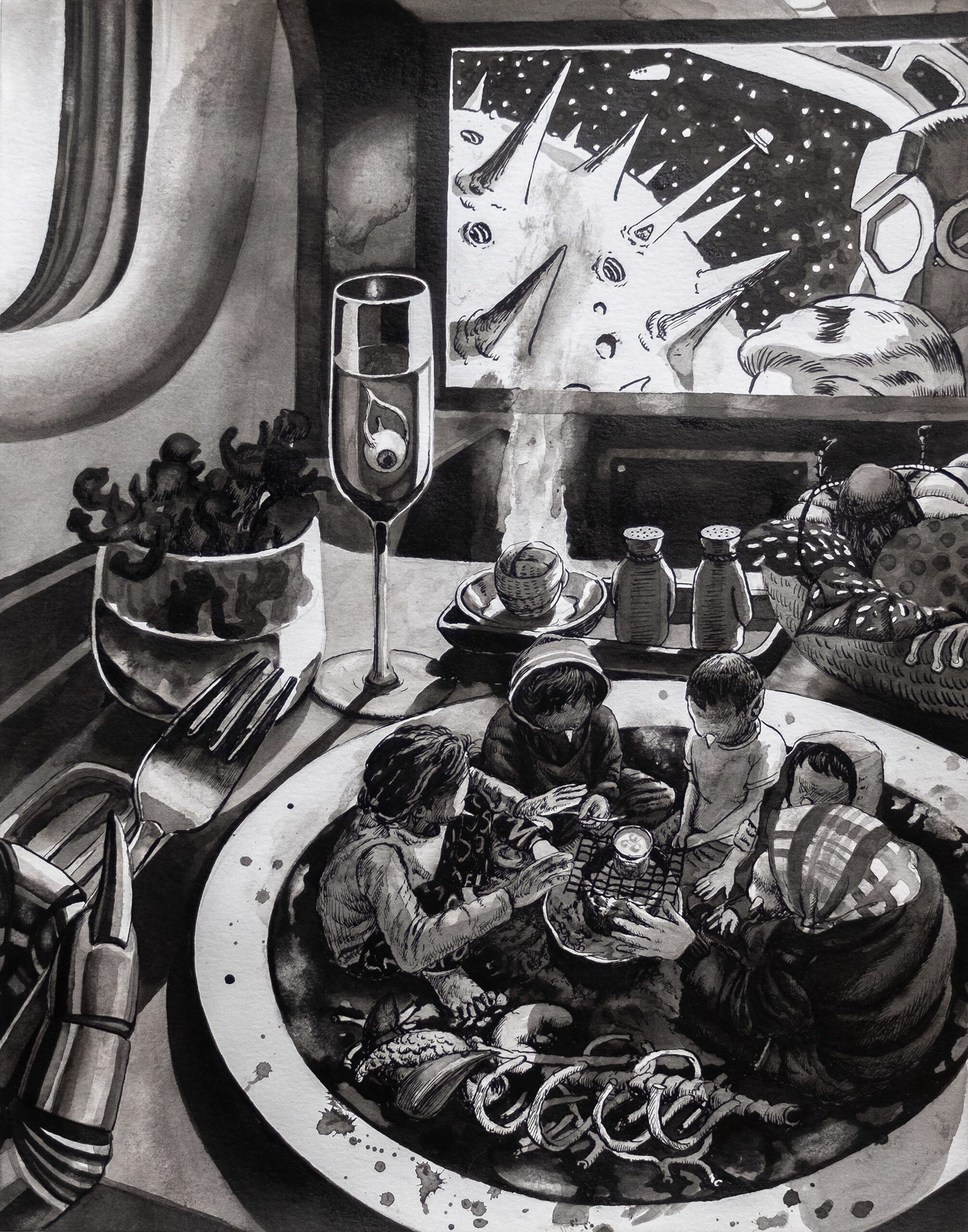
First Class, 2024. Sumi ink on paper, 14 x 11 inches (35.6 x 27.9 cm). Private Collection © Gaku Tsutaja; Courtesy of Ulterior Gallery, New York
In contrast, in the U.S., contemporary art is the strongest genre and wields immense influence on people and society. Consequently, there has been an abundance of politically charged artwork. I also believe that if a work is well-crafted and persuasive, my work with a controversial theme could find its way.
In 2020, I received a commission from the Stanlee and Gerald Rubin Center at the University of Texas at El Paso. ENOLA’S HEAD is a project centered on a life-sized replica of the Enola Gay’s nose cone, made of metal, wood, and fabric, transformed into a theater for a 56-min animation video. The video consists of 47 drawings, sculptures, and performances with 14 protagonist masks about nuclear history. The masks were made using the Gigaku mask technique. Gigaku is an ancient masked theater performance form whose hybrid nature reached Japan via the Silk Road and eventually fell out of practice 14,000 years ago. By drawing upon this cultural heritage, which, despite once vanishing, has been preserved into the modern era, I have crafted a narrative set in a “future” in which humanity has already gone extinct. Through a critical examination of the fact that rival nations have historically concealed the true extent of radiation damage, the work explores the underlying causes of the human race’s extinction. With nonhuman protagonists, this work seeks to reveal that war is not merely a conflict between nations, but rather a struggle between the state and its citizens, or between capital and the people; in doing so, it challenges and rewrites the “narrative of victory” symbolized by the Enola Gay. I received great responses at the Rubin Center and the 2022 Hawaiʻi Triennale, both locations with large military bases. A week later, Russia launched a full-scale invasion of Ukraine and the curator featured my work as an anti-war symbol. ENOLA’S HEAD was supposed to travel to Maruki Gallery after the Hawaiʻi Triennale. But because the Ukraine war started, shipping was delayed and I had to make a last-minute change for the installation. It was the first time that war had directly prevented my exhibition.
But over the past two years, as I began incorporating elements related to Palestine and Israel, different tensions have arisen in response to my anti-war works.
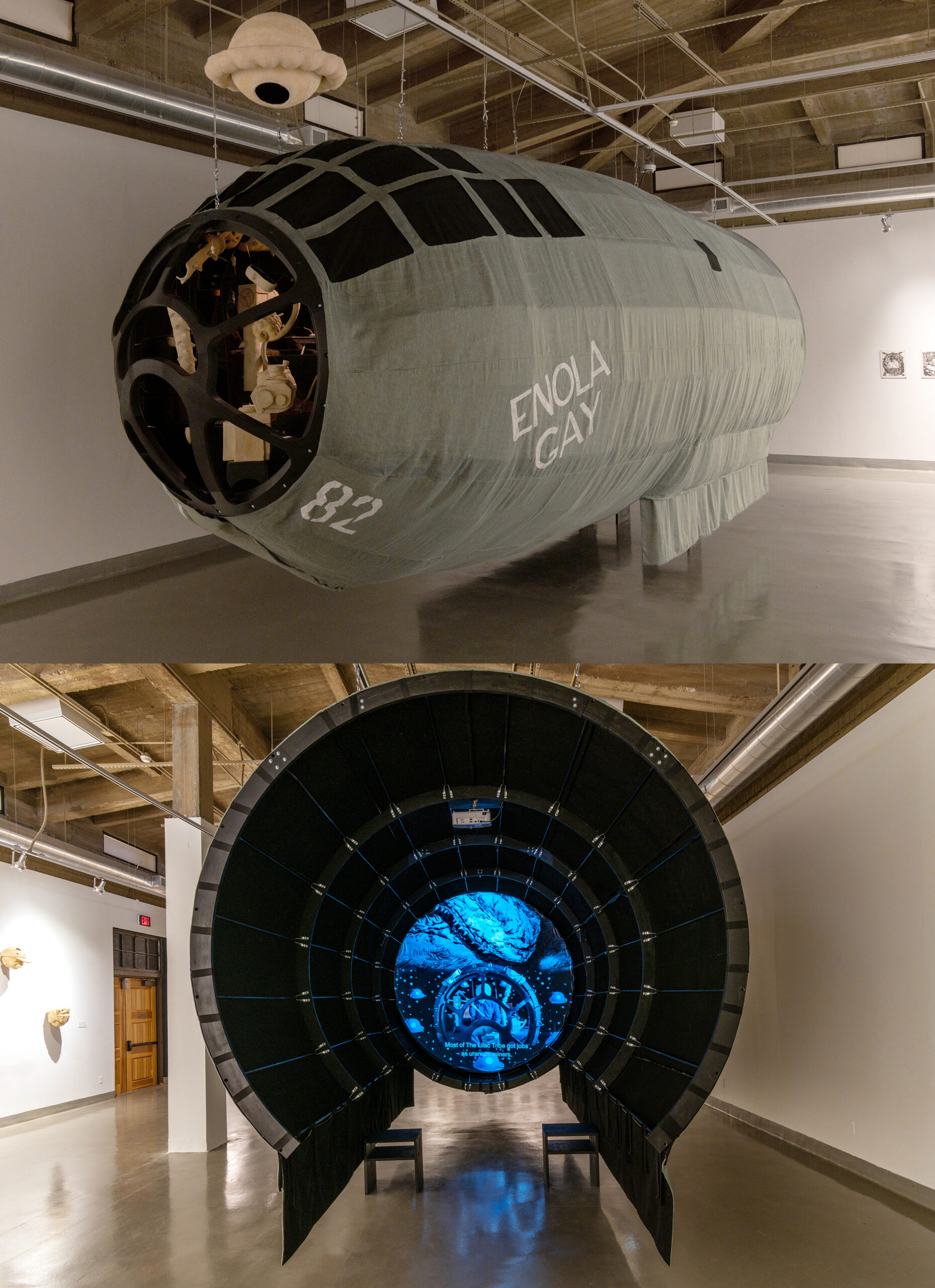
ENOLA’S HEAD, 2021-22 Linen fabric, blackout fabric, wood, electric conduit, plastic, vintage lump shade, vintage bomber seat belts, vintage protected hood, vintage backpack, vintage canteen, glass bottles, bamboo, legless seat backs, turtle shell, Elk’s horns, wood powder, wheat flour, wood glue, hemp cloth, paper clay, projector, amplifier, speakers, video 9′ 6″ x 24’ 5″ x 10′ 9 5/8″ (This work is installed 12” above the floor) Photo by Edgar Picazo Merino. ©Gaku Tsutaja; Courtesy of Stanlee & Gerald Rubin Center for the Visual Arts at University of Texas at El Paso, and Ulterior Gallery, New York
You have been publicly vocal about the genocide in Gaza and have included references to Palestine in your most recent sculptural works, specifically a cardboard sign painted with the word “Rafah” — the southernmost city in Gaza at the border with Egypt that has been completely obliterated by the Israeli military. How has your support for Palestine been received in the art world?
I usually create fictional names for nations or places, keeping the nonfictional name for projects or weapons. But “Rafah” was part of my sign which I had used at protests. It was one of the rain-soaked, tattered protest signs I’d peeled off and scattered as part of the sculpture. There’s also a torn-off poster of Netanyahu’s face hanging from a branch, a souvenir from my Palestinian American friend. This sculpture is a strategic diorama in which imaginary monk parakeets simulate exterminating the giant spider that has taken up residence in the human brain. Incorporating real-world actions or elements into my fictional narrative is one of my favorite methods. I always want to challenge the border between different layers to shake the stable territories. At the opening, I spoke with many people who were passionate about the issues, but I saw some clouded expressions and heard later, indirectly, that someone felt that my political statements ruined the work. These ranges of reaction reflect the state of our division. I let my work talk, but as I am not an observer, it is natural for me to engage the audience in conversations through the work. And “Rafah,” situated within an acceptable theatrical space teeming with animals, insects, allegories, and symbols, served as an element that could remind us of a parallel world, our reality.
In the art, film, or music industries, we have a surprising level of silence for political statements, consciously or unconsciously, surrounding Israel. What kind of situation is it when we CAN express in our art form about the genocidal civilization that has had such a profound impact on our emotions, thinking, human rights, and economy, but better NOT to do it in political words?Express yourself through art—but keep your mouth shut? Is there a territory where artists must stay?
When someone tells me I shouldn’t talk about it, it just shows our society is imprisoning our souls right now. My political statements should not damage my work. My words simply came out as I shouldered the weight of creation: its motivation, its journey, and its current reality of continuous crimes against humanity.
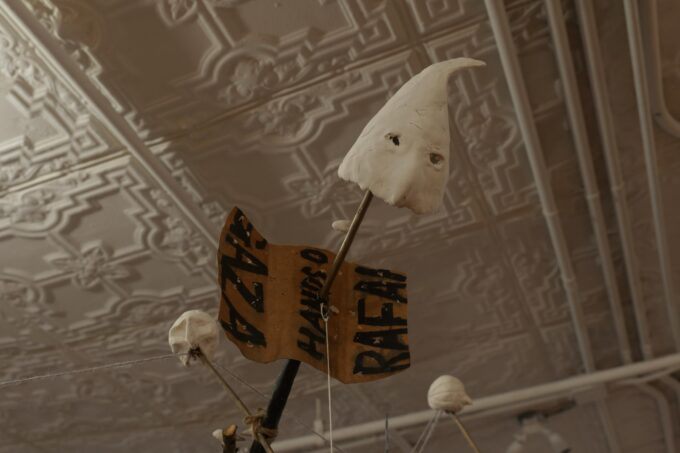
Details of Pidgingo-no-Inko: Project Head, 2025. © Gaku Tsutaja; Courtesy of Ulterior Gallery, New York
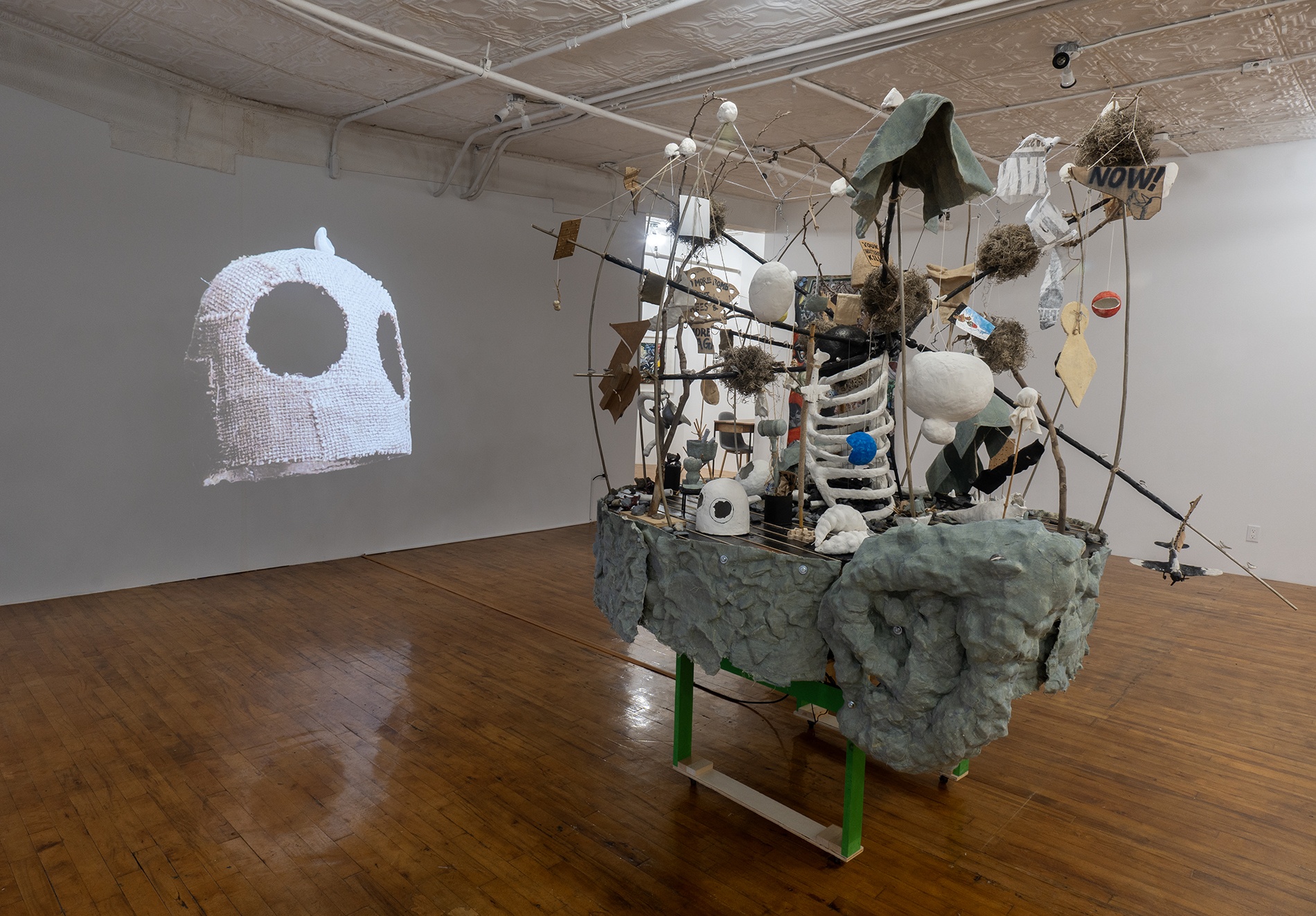
Pidgingo-no-Inko: Project Head, 2025. Mixed media, video 20 min. 7 feet x 7 feet x 4 feet and 2 inches. © Gaku Tsutaja; Courtesy of Ulterior Gallery, New York
Do you consider yourself an anti-war or anti-nuclear activist?
I call myself an artist and hesitate to call myself an activist. But meeting and following activists’ actions is significant for me as an artist because the responsibility of being an artist lies in questioning existing power structures and dismantling the rituals that reinforce them. Since learning about the concealment of nuclear disasters, my interest has been if or how we can really stop the wars. I cannot portray the structural nature of war and its potential dismantling without understanding activism.
My first anti-nuclear and anti-war activists were Hibakusha. I was profoundly influenced by a second-generation Hibakusha in Hiroshima who is a lifelong activist. She taught me so much about the backstory of Japanese anti-war activism history. In the U.S., I have met with and listened to the stories of various activists: a Spokane tribal activist leader and former uranium miner; the director of “Hanford Challenge,” a watchdog organization monitoring the Hanford Site; a former worker and a downwinder of the Hanford Site; and a Marshallese activist from Bikini Atoll. In the process of transforming their stories into artistic form, considering their heavy experiences and legacies, my work and soul have been tempered and strengthened.
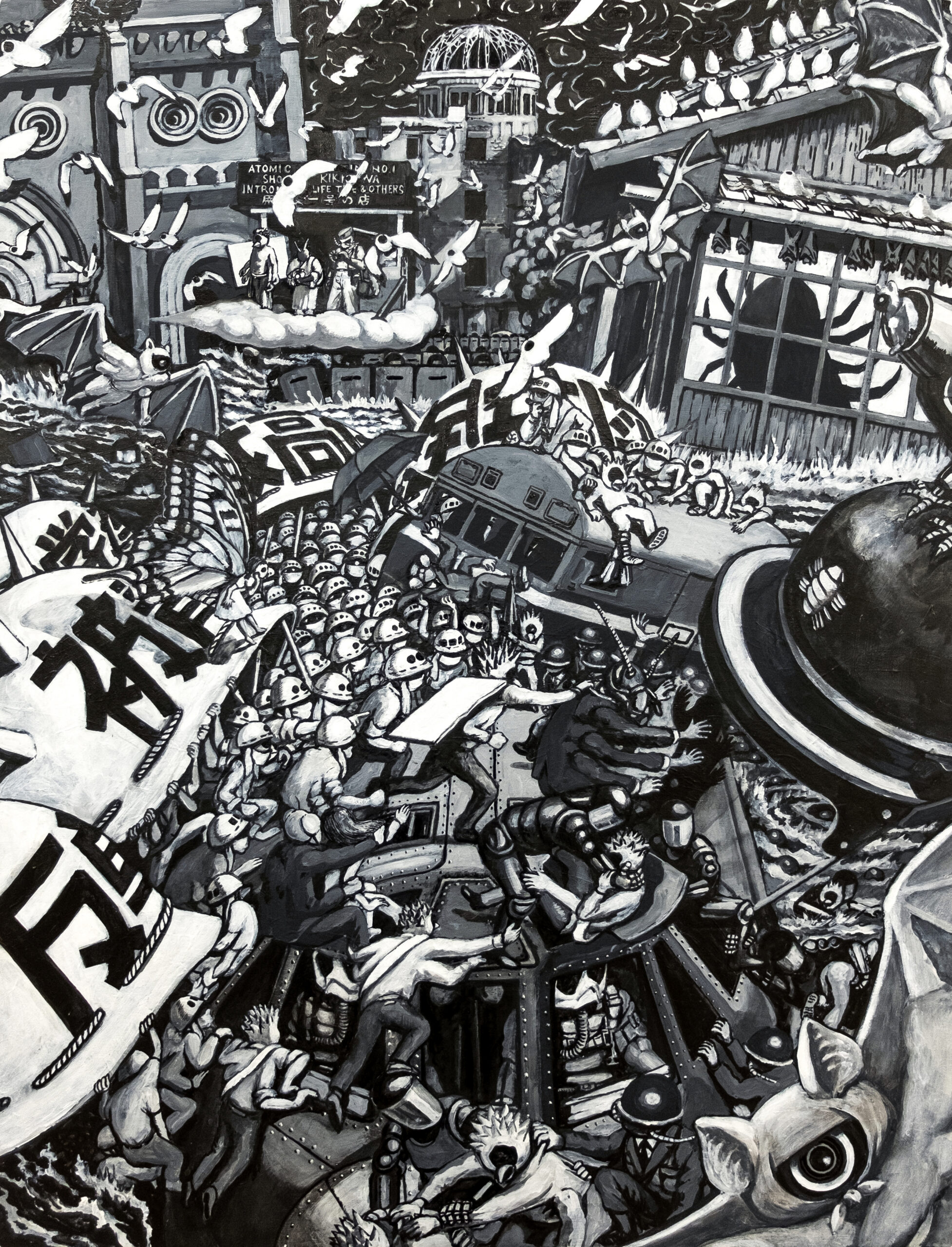
Memory Bug: Peace Memorial Day, 2023 Sumi ink and gesso on wood panel 33 3/4 x 25 7/8 x 1 5/8 in (85.7 x 65.7 x 4.1 cm) © Gaku Tsutaja; Courtesy of Ulterior Gallery, New York
As an artist whose work overtly addresses issues of militarization, nuclear weapons, and endless imperial wars, do you ever find it challenging to be in your studio? What keeps you coming back to making artwork despite the terrifying scenarios of war that we are witnessing daily?
I often feel impatient. I want to share my ideas as quickly as possible. But we are currently confronted with a stark reality: despite the countless historical expressions and social movements that have emerged to challenge issues such as state power and the military-industrial complex, the world continues to be drawn inexorably toward ill. For this reason—while acknowledging that activism is essential as a “frontline” of resistance—I need to think and take action about what art and culture have done for this world. Since I began engaging with nuclear issues, I have been preoccupied with the relationship between war and culture. When I encounter well-twisted propaganda, I feel so shocked. The crisis in Palestine has exposed a regrettable truth: it is not only Hollywood but the art world—a realm that ought to be a bastion of the avant-garde—that plays a role in this dynamic.
Japanese manga and anime industry has helped “normalize” nuclear weapons and wars; in response, I created a series titled Memory Bug. Since 2023, I have been conducting research into the manipulation of consciousness through American culture. My work Pidgingo-no-Inko features scenes exploring various themes: the pitfalls of anti-imperialist critique found in H.G. Wells’s “The War of the Worlds”; the “double propaganda” embedded in the jazz music and radio programs—such as “This is the Truth”—broadcast during the American occupation of Japan; and the controversy surrounding the producer of “Oppenheimer” for having disseminated the hashtag #killthemall.
Culture has, in capitalism, transformed into a formidable weapon—one that constructs collective consciousness by mass-producing and disseminating narratives that serve to uphold and reinforce imperialism.
Our reality currently stands in a critical state, imperiled by the military-industrial complex and nuclear weapons. At this very moment, Iran has been attacked and is fighting back against the U.S. and Israel, continuing bombing and starving Palestinians, and the crackdown on immigrants and activists within the U.S. itself has intensified. AI is escalating the speed of production, propaganda, surveillance, targeting systems, and the energy war increasing nuclear power, pollution, and water consumption—at every level it has infiltrated our daily lives. The world is teetering on the brink of collapse, accelerating at a terrifying pace. My central theme has always been ‘transformation,’ and right now, I feel a profound need for it.
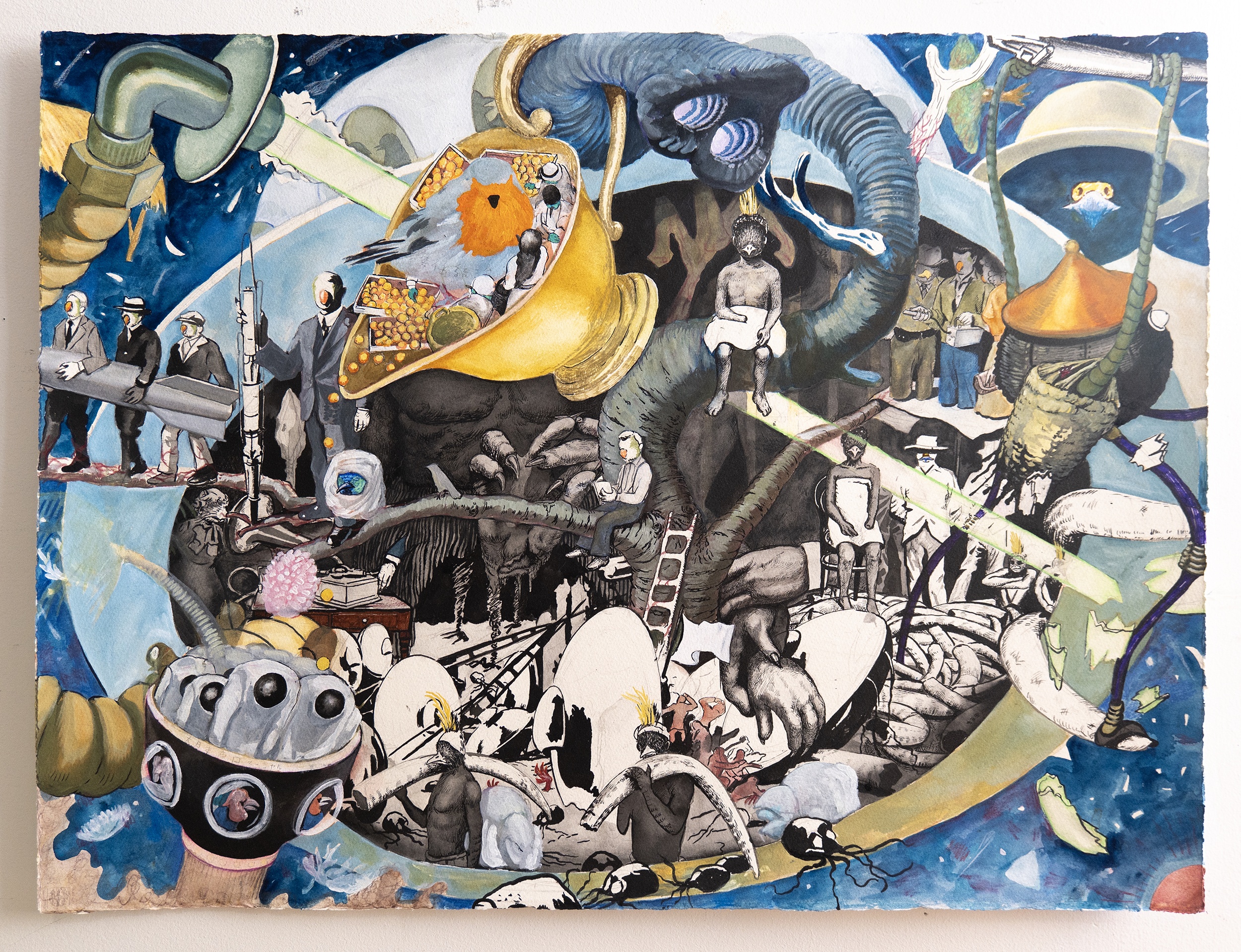
Conqueror Hat, 2025 Sumi ink, Gouache, and color pencil on paper 22 5/8 x 30 1/8 inches (57.5 x 76.5 cm) © Gaku Tsutaja; Courtesy of Ulterior Gallery, New York
How have you been inspired by the global movement for Palestinian Liberation?
I felt hope that perhaps, this time, state violence might finally be brought to an end by the international solidarity movement for Palestinian liberation. In New York, anti-Zionist Jewish groups were strong and clearly articulated the distinction between Zionism and Judaism, which the mass media tried to trap us in. In front of the Atomic Bomb Dome in Hiroshima, Rebecca, you raised your voice with unwavering conviction; the social media posts by the Hiroshima group have encouraged me so much. I was truly happy that I was able to participate there.
In my work Pidgingo-no-Inko, by montaging images from various eras and locations, I aimed to express how the overlapping histories of oppression forge an unshakable bond of solidarity. On social media, I received backlash from Asian users because of my comments connecting the tragedy for Hibakusha and Palestinians. When I talked with American friends in person, I naturally mentioned the history of Imperial Japan and its postwar complicity with American diplomacy, and their faces lit up, and their eyes met mine. But still, I often felt I stuck out.
The stronger our solidarity, the stronger the collusion between capital, state power, mass media, and online manipulation. It has not been easy to bridge the divides between people close to me over historical perceptions and political participation. Of paramount importance to me was to depict these recurring situations—to portray the fact that the seeds of war could lie within ourselves.
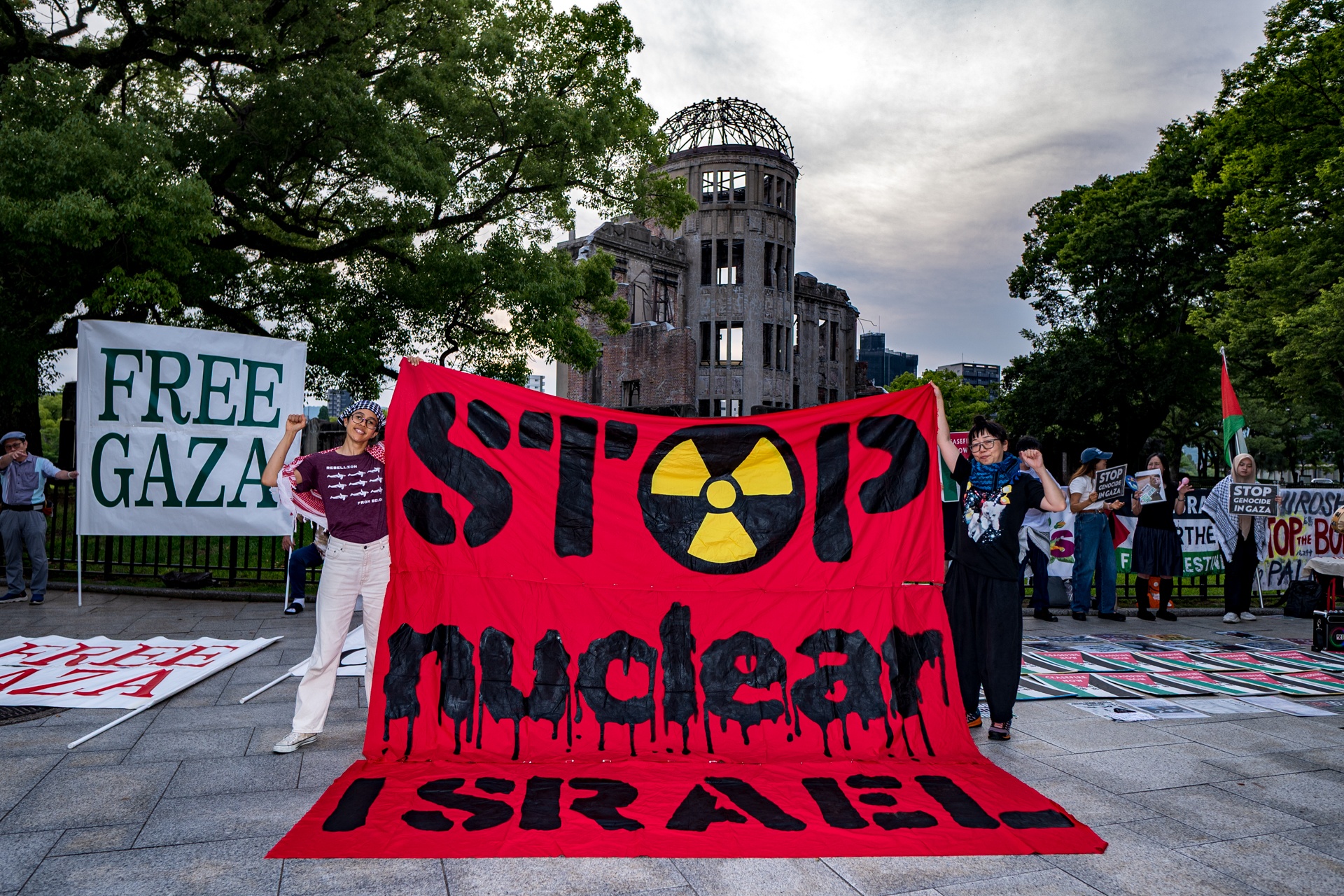
The author & Gaku Tsutaja at the Hiroshima Atomic Bomb Dome, June 2025. Photo by Nakaoku Takeo.
At the family party on Christmas, I couldn’t stop talking about the genocide after they asked me, “How are you?” As my brain was full of thoughts and work, my machine-gun talk destroyed the atmosphere. Later, I drew a satire of this scene, portraying myself in a kamikaze pilot uniform. I am living in the empire again. What stirred my complexity of emotions even more than the fear of state surveillance has been the divergence of opinions and levels of concern among the people closest to me. It engendered a sense of isolation and fear.
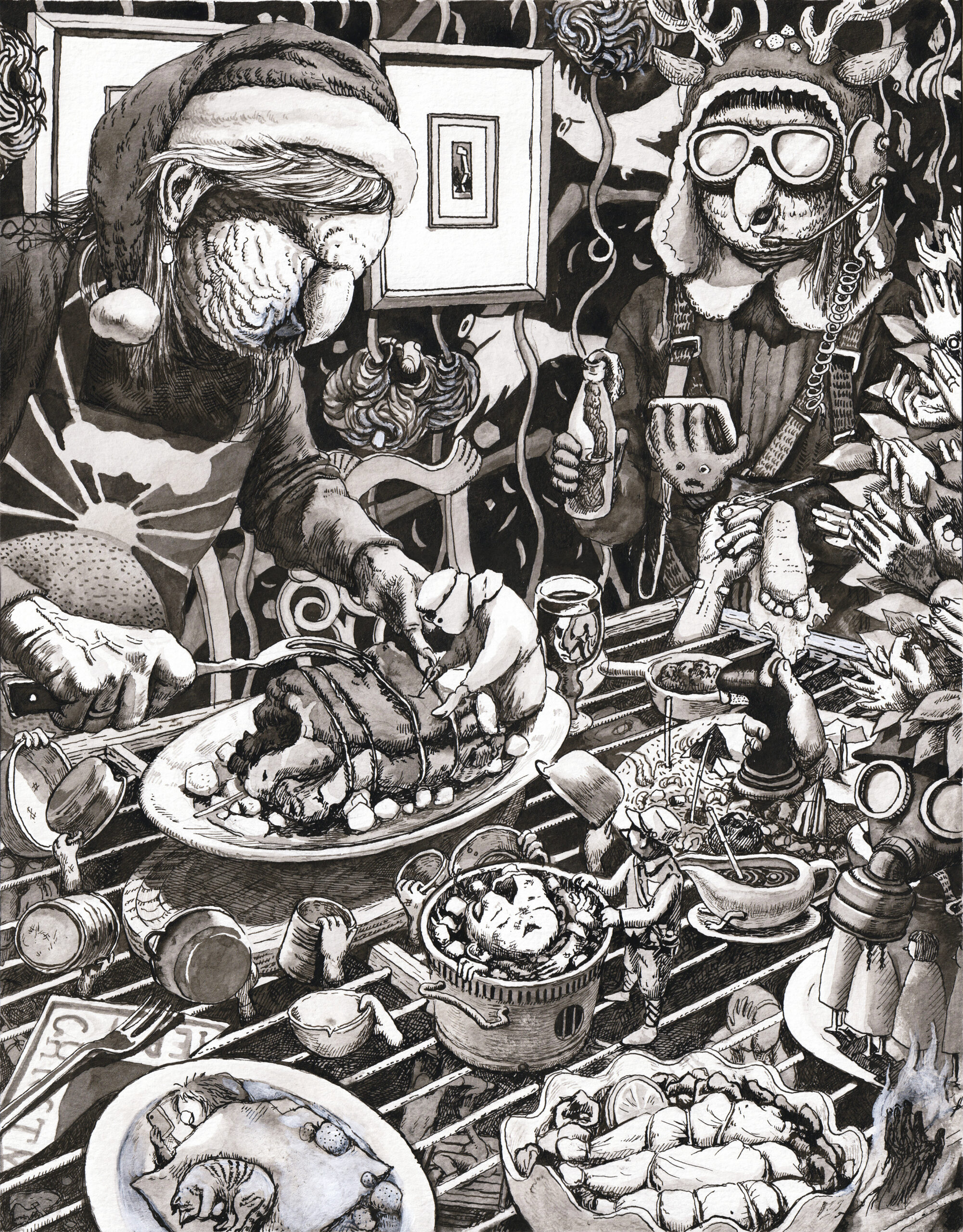
Holiday, 2024, Sumi ink and acrylic on paper 14×11 inches (35.6 x 27.9 cm). ©Gaku Tsutaja; Courtesy of Ulterior Gallery, New York
Silence will only help the oppressor and destroy us in the end. But still, the brain has a way of ignoring and forgetting to maintain our “peace.” The oppressor uses it. In the world of capitalism, genocide, stealing, and imprisonment have always been a parallel world of our “democracy.” They killed so many journalists in Gaza because they haven’t given up on reporting what is going on. When violence escalates to divide us, resistance must escalate to connect as well. Since the State and Capital have always executed their violence with meticulous preparation and vision, those on the side of resistance must prepare ourselves to stand with our visions. Historically and right now, they have accumulated techniques and strategies of mass murder. Breaking through the divisions among people requires trial and error; the direct actions, such as the physical dismantling of weapons factories were remarkable acts. Activists are taking action at great personal risk, and have been killed by the IOF, ICE, state troopers, Border Patrol agents. The anti-nuclear activists whom I interviewed continued their activism for their communities despite battling Parkinson’s disease and cancers; three of them passed away. They were killed by governments that had concealed the true reality of radiation exposure. When I interviewed them, I felt that the stories of their lives with deformed children, sheep born with extra legs, and threats from the government were even more harrowing than any sci-fi dystopia. And I have seen the similar level situation in Gaza in real time. There is a report of a cluster of rare cancers around the AI data center. All survivors are still in hell. Witnessing so many deaths, the eyes, minds, and hearts of those who still care have been damaged. The current situation has escalated to the point of disrupting the daily lives of the majority of people, but still, we cannot stop this madness.
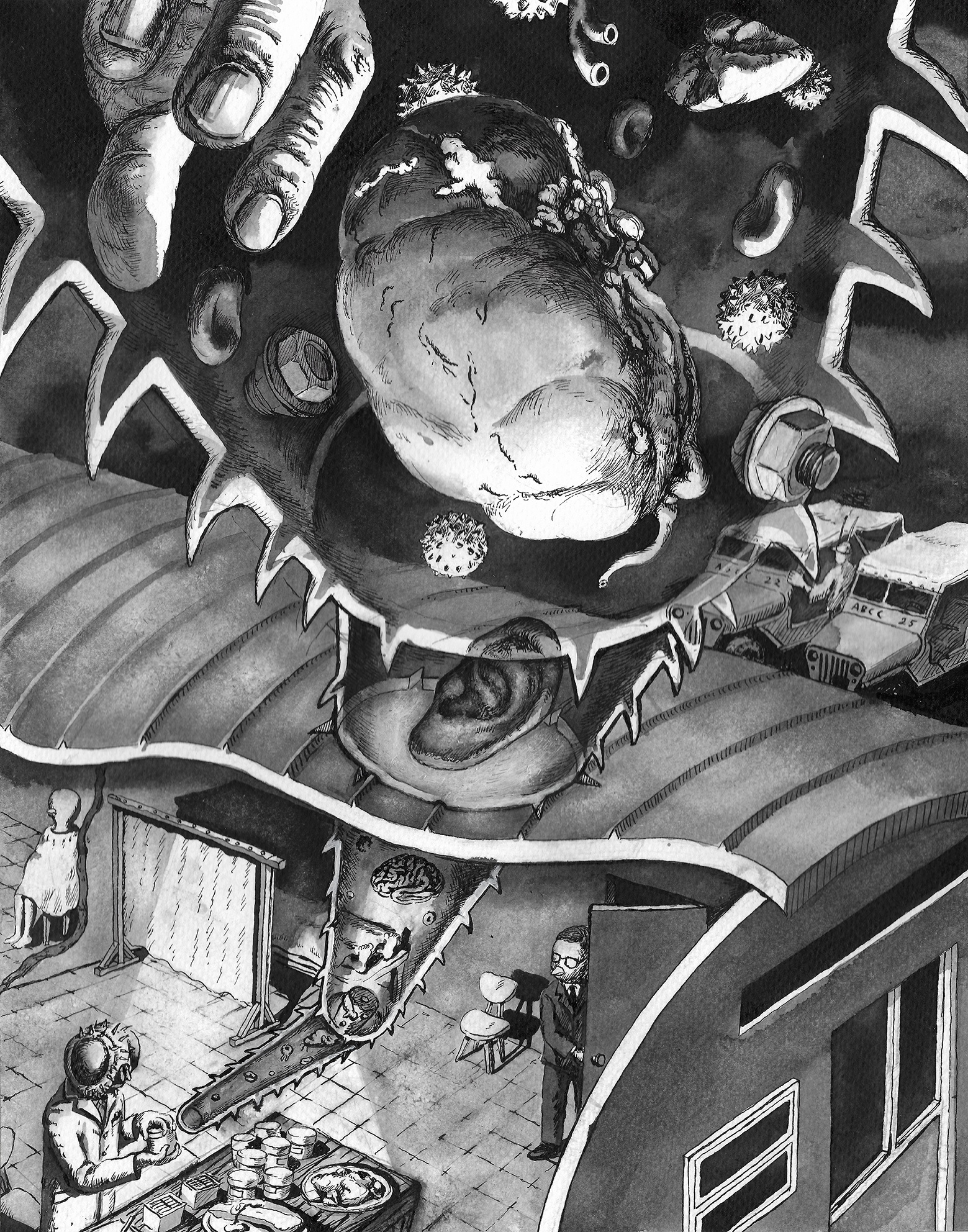
Daily Drawings: Spider’s Thread Day 36, Classified Specimens, 2020, Sumi ink and acrylic on paper 14×11 inches (35.6 x 27.9 cm). Private Collection ©Gaku Tsutaja; Courtesy of Ulterior Gallery, New York
In this “civilization” that has long harbored genocide deep within its structure and is now laying bare its true nature, artists also should face it and work desperately harder on the creation and development of a unique language that can dismantle our own existence as one held captive by the system and can take us to the outside. Artists play a role as a countermeasure against desolation and against the normalization of our condition, of silence, and of the casting aside of “parallel worlds” as a way to survive. “Surviving” and “living” are two distinct things. Alongside those who strive to bring about the ethical evolution, shifting between despair and hope in this transforming era, I will continue to dig tunnels yet unknown and question.
Pidgingo-no-Inko ends with the line narrated by the protagonist, who was arrested for burning the flag of the Nation of Ikai: “Who is really in the cage?”
Gaku Tsutaja’s work can be found at gakutsutaja.net or on Instagram at @monkparakeets