Image by Jeff Kingma.
Historically speaking, consider it strange beyond compare. There may, in fact, be nothing like it in the imperial history of this planet. The United States, the greatest power on Earth from the moment it defeated Nazi Germany and imperial Japan in World War II, has never again actually won a war of any significance (or even come close). And that’s true despite the fact that it’s distinctly been the numero uno power on this planet for the last century-plus, with by far the most powerful and wildly over-funded military that has fought any number of wars during these decades, always against seemingly far less powerful adversaries.
Of course, in the atomic age, wars between imperial great powers, as in World War I and World War II, are no longer truly conceivable. Still, over more than a century of great-powerdom, my country has certainly fought a remarkable number of wars, some for endless years, without a single victory (not one!), which is no small… well, I can’t use the word “accomplishment” (but feel free to add whatever word you think might be appropriate).
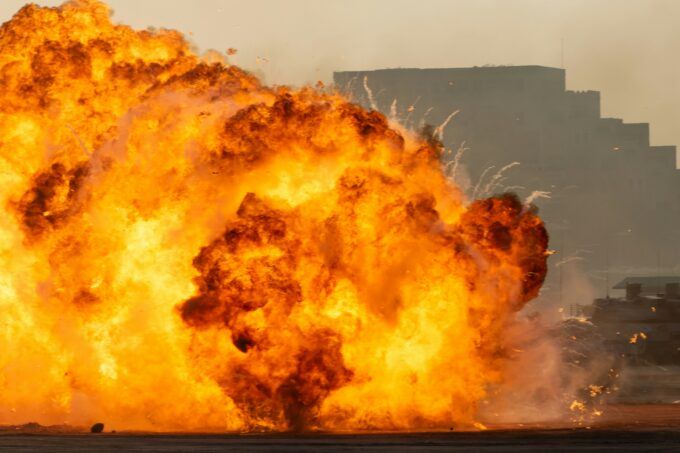
From the Korean War in the early 1950s (at best a draw) to Vietnam (Cambodia and Laos) in the 1960s and 1970s, a distinct loss (despite the slaughter of literally millions of Vietnamese, Cambodians, and Laotians, and 58,000 Americans); from the invasion of Afghanistan in October 2001 in the wake of the 9/11 attacks on New York City and Washington D.C., to the invasion of Iraq in 2003, both of which ended in dismal defeat (Afghanistan after 20 years of combat!), as did the full-scale Global War on Terror launched by President George W. Bush; and, in the era of Donald Trump, from the Caribbean Sea and eastern Pacific Ocean (where more than 60 random boats have been blasted out of the water) to the bombing of Somalia and Nigeria, and now the devastating air and naval war on Iran, the United States, despite its weaponry, has proven incapable of actually impressing its will on lesser powers in what might by now be considered an all-American militaristic tradition.
Phew! I’m already out of breath!
And mind you, all of those anything-but-victories happened while the Pentagon budget rose to nearly the trillion-dollar mark, almost three times the military budget of China, the next great power on this planet of ours. (And keep in mind that Donald Trump has been demanding Congress add another half-trillion dollars to that budget, which, if the senators and representatives were ever to agree, would put the U.S. in another universe of military expenditures from any other country on Earth). And yet, you wouldn’t be wrong if you pointed out that the more this country has spent on its military, the more disastrous its war-making has become. (Go figure!)
So, don’t think there’s anything new or particularly striking about Donald Trump’s visibly failing war against Iran. In fact, the present situation there couldn’t have been more predictable (not that anyone bothered to tell that to the president). Once upon a time, it seemed as if Donald Trump knew something about the dangers of imperial war-making. After all, in his first term in office, other than a brief military fling in Syria against Islamic State fighters, which he quickly pulled out of, declaring ISIS defeated (which, of course, it wasn’t), he stayed remarkably clear of war-making. And within months of returning to office in 2025, he was already claiming that he had ended eight wars. (He didn’t.) And yet today, from the Caribbean (with Cuba now seemingly in his gunsights) to the Middle East, King Trump seems to be a committed war-maker through and through.
And perhaps it’s not just the United States anymore that seems so capable of making but never winning a war. After all, Russia’s more than four-year-long war in Ukraine is by now a first-class disaster for Vladimir Putin with hundreds of thousands of dead Russian soldiers and increasing devastation delivered by Ukrainian drones to Russian oil facilities and the like. (Of course, it’s also a full-scale calamity for the Ukrainians!)
In that context, consider China the smartest imperial power on planet Earth today. Other than a few border clashes with India years ago, it has grown in power in every way without having to make war a significant part of its arsenal (so to speak). Yes, it has indeed built up that military arsenal (including its nuclear one) in a significant fashion, as any great power on this planet would undoubtedly do. But despite its threats against the island of Taiwan and those brief clashes with India, unlike so many imperial powers of the past (and present), it has generally stayed remarkably clear of war-making.
Its leaders, it seems, have learned the necessary lesson about such conflicts (at least in our present version of an imperial age). In an era when lesser powers can nonetheless arm themselves effectively with the most modern drones and missiles, among other things, war-making simply never seems to work out well. And, oddly enough, in his first round as president, Donald Trump indeed seemed to have learned just such a lesson. In those years, the U.S. engaged in no significant war-making, but explain it as you will, he came back to power in January 2024 in a different mood entirely (and moods are the Trumpian reality in a big-time fashion).
As “our” president took on Iran recently, I couldn’t help thinking about that antiwar song of the Vietnam era that began with the phrase “War, what is it good for?Absolutely nothin’.”
Someone should tell “our” president that before… well, who knows what, but nothing good happens, that’s for sure! In the context of his war with Iran, consider him, in fact, the president of decline and, of course, confusion. The only question really is what exactly he’s likely to take down with him.
This piece first appeared on Tom’s new Substack page.