Screengrab from the Laura Flanders Show.
Thousands of people in the U.S. die from extreme heat, cold, and lack of care every year, including many of our unhoused neighbors. As climate change exacerbates extreme weather and states prepare for deadly heat waves this summer, it’s important to ask what government officials will do to protect the most vulnerable — and if it’s enough.
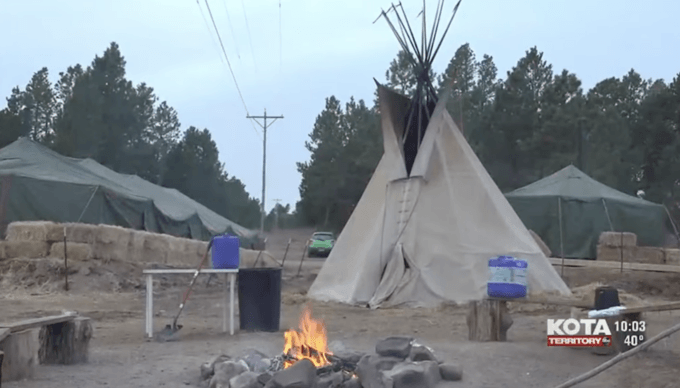
Back in 2012, I visited organizers in “He Sapa,’’ the sacred Black Hills of South Dakota, who had taken matters into their own hands and cared for unhoused people (their “relatives”) in the Rapid City area in the dead of winter. The story of Camp Mniluzahan is a powerful example of community care, healing, cultural revival, and the reciprocal value of the #LANDBACK movement.
#LANDBACK the hashtag took off in the late 2010s. I met with members of the NDN Collective about a year after they launched an official campaign on Indigenous Peoples’ Day. They say #LANDBACK is about reclaiming ancestral lands, but also a whole lot more.
“Through the public lands that the federal government has stolen from Native people, they have mismanaged those lands and have made them playgrounds for transnational corporations to profiteer off of these public lands,” says Nick Tilsen, the President and CEO of NDN Collective.
“The first thing is we’re going to stop the extractive industry model. The question is then what can we do to restore?”
To address criminalization, violence and police harassment, NDN’s volunteers formed a “Creek Patrol” to check in on their unhoused neighbors, and later they established a tipi village called Camp Mniluzahan where those people could be safe, cared-for and fed in a culturally affirming environment. Hermus Bettelyoun, Racial Equity Organizer at NDN Collective, told me that about half of the people they served at the camp got sober, and many found new family and new homes.
“We’ve learned that when our relatives, even those that are deep into addiction, and deep into trauma, when they get back on the land, they heal,” says Krystal Two Bulls, Director of the LANDBACK Campaign. “They find purpose and they find their identity in that that leads to more healing, and then they want to do more on the land. So it’s like this cycle that feeds itself, of healing and growth and purpose.”
This summer will put our cities to the test. Our weather preparedness plans must include the unhoused and traumatized population, and it’s up to all of us to demand that all our relatives receive food, water, care, and shelter. Governments can create Camp Mniluzahans just about anywhere, but do they have the will? Tune in on public television and radio this week, and stay until the end for my closing commentary on the contrast between how South Dakota is currently using its resources (to offer a tax haven for the ultra rich) — and how it could — as modeled by NDN.