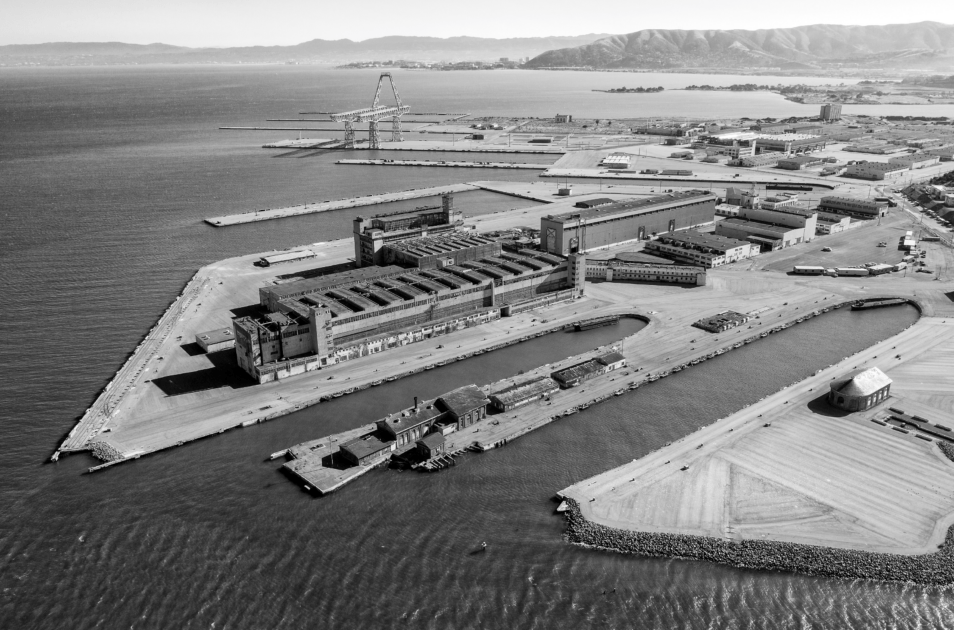
The cleanup at the former Hunters Point Naval Shipyard along the bay in San Francisco’s southeast corner remains a huge headache for the Navy, the City, and the citizens of the Bayview/Hunters Point neighborhood. The shipyard was listed as an EPA Superfund site in 1989 due to the radioactive mess left behind by the Navy, including the Naval Radiological Defense Lab that operated from 1946-69. Superfund designation means it’s one of the most toxic sites in the country and that the parties responsible for the pollution are tasked with paying for the cleanup, with the EPA as the ostensible overseer.
Longtime, bi-partisan regulatory capture of EPA management has, however, made such cleanups a nebulous proposition at sites across the country. How clean is clean enough? What level of scientific rigor is applied to sampling and testing of soil, air and/or groundwater samples? Who in the local community is in a position to challenge Big Polluters and the EPA when things look bad? In this case, the Navy reports periodically with updates to the Hunters Point Shipyard Citizens Advisory Committee (HPSCAC). The members of the Committee often express skeptical concerns about the Navy’s actions, yet like most people, they lack the scientific background to hold the Navy and EPA accountable. It seems the same is true for local news media in San Francisco, which rarely challenge the Navy or EPA on anything anymore.
Local trust in the Navy has been low ever since the Tetra Tech eco-fraud scandal played out from 2012 to 2018, when two supervisors of a Navy contractor named Tetra Tech EC were convicted and sent to prison for falsifying records in a fraudulent remediation of radioactive soil samples. Tetra Tech Inc. claimed the convicted supervisors were “rogue employees” acting on their own, a narrative that the Nuclear Regulatory Commission even supported (after what some observers deemed a superficial investigation). Yet it wasn’t the first time that a Tetra Tech subsidiary had been in the middle of radiological sampling disputes at a controversial Superfund site.
Tetra Tech EM (formerly PRC) was involved in a series of questionable incidents at the Industrial Excess Landfill (IEL) site near Canton, Ohio, years earlier (both before and after PRC was acquired by Tetra Tech Inc.) It’s a site where citizen activists believe a “too big to fail” cover-up utilizing crooked science and data manipulation was put in place, after secret dumping of Cold War era nuclear weapons waste. The IEL was in fact deemed “a case in point” by the EPA in the ‘90s for a “blue ribbon” Science Advisory Board to make recommendations on how to deal with radiation problems at other Superfund sites. Tetra Tech is out of the picture at Hunters Point now, yet eerie parallels with controversies at the IEL in Ohio continue to pop up.
Scapegoating a lab that detected radioactivity – at HPS in 2026, at the IEL in the ‘90s.
At the HPSCAC Environmental & Reuse Subcommittee meeting on April 27, Navy BRAC Environmental Coordinator Michael Pound issued another apology for the fall 2025 controversy in which the Navy admitted that an air sample from Parcel C had detected Plutonium-239 (the same isotope found in nuclear weapons) above the established action level in November of 2024. Yet the Navy waited 11 months to inform the City. “I admit it, we apologize, because we messed up [again],” Pound said, blaming the suspicious delay on “a likely lab analysis error”.
The beleaguered Navy frontman, who typically appears like a sleepy-looking version of late actor Wilford Brimley, found himself apologizing for another incident in the same meeting. Pound announced there’d been another lab issue just the previous month of March when contaminants of concern had been detected by another contractor lab, yet the results had been deemed invalid due to an allegedly “inappropriate quality control method” with data from air and soil samples taken at Parcels B and C. The regular need for increasingly hollow apologies has Pound coming off like BP’s CEO in the classic 2010 South Park trilogy that satirized the oil company’s responses to the disastrous Deepwater Horizon oil spill in the Gulf of Mexico.
Pound went on to say the soil samples were being sent to another lab for re-testing and that the Navy wasn’t going to use the lab in question again. Curiously, the air samples were lost permanently since they were “consumed by the processing required to create the sample for the analytical method” (as detailed in the powerpoint presentation.) The handout at the meeting didn’t identify which radiological isotopes were detected per se, yet when asked during the Q&A session, Pound indicated they were among those listed in another handout about air monitoring during Parcel G demolition activities for Cesium-137, Plutonium-239/40, Radium-226, Strontium-90, Thorium-232, Uranium-235, Mercury, and PCBs.
EPA Remedial Project Manager Mike Collins spoke as well and tried to assuage the CAC and attendees by noting there had recently been a similar data quality issue “at another site back east”, suggesting that such things happen from time to time at commercial labs. The Navy and EPA are rarely forthcoming at CAC meetings about the names of the contractors involved when things go wrong. When asked directly by this reporter if he was referring to the incident involving a Tetra Tech subcontractor in East Palestine, Ohio, Collins acknowledged that he was.
In a much-ballyhooed press release on March 2, “The Trump EPA” announced it had alerted Tetra Tech Inc. that its subcontractor, ALS Houston, had failed to meet data quality standards in groundwater sampling conducted at the East Palestine trainwreck chemical disaster site last fall. Claiming “zero tolerance for shortcuts by a lab that could result in inaccurate data”, the EPA stated that two analysts from ALS Houston had altered measurements that resulted in false detection of a toxic solvent and were terminated for failure to follow standard operating procedures. “The Trump EPA has never stopped fighting for the East Palestine community and those impacted by this disaster,” EPA Administrator Lee Zeldin boasted.
Zeldin isn’t viewed so admirably by environmental protection organizations like the National Resources Defense Council, though, with the NRDC calling out the Zeldin EPA earlier this year for “systematically dismantling protections for the environment and human health…” Whether there’s more than meets the eye with ALS Houston being scapegoated in East Palestine, Ohio remains unclear. The alleged devotion to transparency is already in question, though, due to how the EPA has been stonewalling a Freedom of Information Act (FOIA) request from the Government Accountability Project (GAP) in D.C., which sought records and communications surrounding the lab incident.
“The reason I filed the FOIA is that I suspected EPA wasn’t telling the public the full story. The public deserves transparency about what EPA and Tetra Tech knew, when it knew it, and whether testing results that communities rely upon can be trusted,” GAP Senior Environmental Officer Lesley Pacey said by email, further explaining how the allegations against ALS Houston sounded “eerily familiar” to another scandal. “We’ve seen this before at Hunters Point, where two Tetra Tech supervisors went to prison for fraudulent environmental sampling practices. Here, we had another large-scale environmental contamination event where EPA and its contractor Tetra Tech were accusing two lab employees of falsely elevating detections of a dangerous contaminant.”
Pacey added that her knowledge of increasing dioxin contamination and the recent proliferation of chronic disease and cancers in East Palestine, Ohio, led the complaint against Tetra Tech’s subcontractor to raise her suspicions. The fact that EPA’s Mike Collins compared the March 2026 data quality control issue at the Navy’s contractor lab with the ALS Houston incident likewise raised this reporter’s suspicions in a similar fashion.
As to the identity of that Navy contractor lab incident with the Hunters Point samples, the Navy’s Pound eventually revealed that it was ARS (American Radiation Services). ARS is billed as “a premier radiological laboratory providing analyses for commercial and government customers across the U.S.” A phone call to the ARS lab in Louisiana to try to get their side of the story led to a very brief chat with general manager Keith Greene, who said the lab had been advised “by corporate and legal” not to speak about it to the public. Multiple queries to TFE Inc., and the mysterious Heal Group (of which ARS is a subsidiary) for comment have gone unanswered.
The situation with ARS and ALS Houston, both being blamed for detecting contaminants of concern, is curiously reminiscent of a similar incident in the early ‘90s at the IEL in Ohio, when groundwater samples tested by a New Mexico lab named Controls for Environmental Pollution (CEP) detected Plutonium and Tritium. The EPA blamed CEP, though in that case the lab dissented against being scapegoated.
“We were right and they were wrong,” CEP’s James Mueller later told this reporter in 2005. “They [management] gave us the methods they wanted us to use, and we didn’t agree, but did it anyway. They weren’t approved EPA methods … and so we put a disclaimer on it, and then got blamed when they said the results weren’t right, because we found positive test results [of plutonium].”
A 1991 letter from CEP to EPA’s Region V office explained how “none of the… samples analyzed in support of the analysis met the required Quality Assurance acceptance criteria.” The letter also noted how the procedure for the project specified an unusual alcohol ignition process that caused “spewing of particulates” that led to a “negative method bias.” Curiously, it was EPA’s contractor PRC that collected those groundwater samples in December of 1990. Ironically, EPA’s own Chief of Field Studies Gregg Dempsey noted in an earlier letter that “The EPA contractor who collected the samples in the field made numerous mistakes in the chain-of-custody forms, among them duplications, mark-outs, and write-overs.This is not permitted and brings into reasonable uncertainty chain-of-custody on those samples.”
This criticism would be echoed back to EPA in 1998 when the Project on Government Oversight (POGO) questioned why EPA was rehiring “PRC/Tetra Tech” at the IEL after having made numerous “mistakes” in field sampling protocols. The impermissible chain-of-custody violations would later be repeated by Tetra Tech EC at Hunters Point.
With the Navy and EPA now again scapegoating contractor labs for detecting contaminants inconvenient to cleanups – in samples from both Hunters Point and East Palestine, Ohio – it becomes imperative for the public to be able to view the records of the results and procedures in question at both labs. Former DOE official Thomas Grumbly cited the importance of being able to access such lab records in 1994, yet the EPA and Navy are still allowed to play hide and seek three decades later. Withholding these documents makes a mockery of claims about transparency from both the Navy at Hunters Point and the Trump EPA in East Palestine, Ohio.
The ongoing question of “transparency and gold standard science” at Hunters Point
Michael Pound and the Navy keep suggesting they’re dedicated to winning back the trust of the San Francisco community after the Tetra Tech scandal, which Public Employees for Environmental Responsibility (PEER) deemed “the biggest case of eco-fraud in U.S. history.” But a series of troubling actions from the Navy and the EPA over the past few years tells another story. PEER continued to cook the Navy in 2023 for false statements that downplayed the presence of Strontium-90 (Sr-90) at Parcel G, a fission isotope that causes bone cancer. The critique highlighted internal emails from EPA objecting to the Navy’s attempts to declare the Sr-90 detections weren’t based on valid data (a now recurring theme).
At a CAC meeting last September, Pound said all soil retesting fieldwork at Parcel G had been completed as of July 31, 2025 and that no radiological contamination had been found. He noted that “laboratory data validation” was still in process, however, with split samples being analyzed by “a third party”. When questioned as to who the alleged third party was, Pound revealed it to be the EPA’s National Analytical Radiation Environmental Laboratory (NAREL) in Alabama.
Observers of the controversies at the IEL in Ohio have long been wary of NAREL, since it was NAREL’s Chief of Monitoring and Analytical Services John Griggs who performed mental gymnastics for the press in 2001 that helped enable contractors to get away with short count times on groundwater samples. Expert DOE radiochemist Dave Sill – who consulted for local activists Concerned Citizens of Lake Township (CCLT) – would later deem those short count times to be “crooked as shit”. Sill said it avoided what looked like to him would become a statistically positive hit for Plutonium-239, if a certain sample had been counted overnight (the DOE standard) instead of just for three hours. NAREL now happens to be the entity that deemed the ARS lab’s Quality Control method to have “likely overestimated results”.
An email query to Pound and the EPA in April seeking the NAREL split sample review data from Parcel G garnered a response from the EPA’s national press office with a document of “interim data” that was mostly samples from 2020-21, with some from 2023 but nothing from 2025. The EPA noted that the 13-page document contained “all currently available interim data that includes all split sample data EPA has received to date (as compared to the Navy’s data).” Whether the public is to believe NAREL and the Navy are so backed up that they haven’t been able to get to the 2025 samples yet was a follow-up question that went unanswered.
Pound also stated at the September meeting that another so-called “third party” was conducting a review of the 2025 quality control fieldwork at Parcel G, done by Jacobs Engineering and/or APTIM. Once again, not forthcoming about who that third party was until asked, Pound revealed it to be Battelle out of Columbus, Ohio (a longtime partner of both the Navy and Department of Energy). When queried for the Battelle report, the EPA Press Office said, “This is a Navy report that has not been submitted to EPA or finalized. As such, EPA defers to the Navy for response.”
Yet when this reporter attended the Navy’s open house bus tour of the Hunters Point Shipyard site on April 25 and asked Pound about it, he said he didn’t understand the EPA’s response because “the info” had been shared with them. This repeated passing of the buck between the Navy and EPA was immersed in synchronistic irony at the Shipyard Open Studios event that same day, when local psychedelic rock band Wall of Fog performed outside of the ornamental plaster shop building on Parcel B. The band sounded great, yet the irony was as thick as a classic San Francisco fog since there’s been a metaphorical wall of fog surrounding the Navy’s explanations about the series of screw ups at Hunters Point ever since the Tetra Tech scandal.
Getting a handle on what’s going on at Hunters Point now borders on farce, with the Navy, EPA, and California Department of Toxic Substances Control (DTSC) often acting out what feels like a feature-length episode of The Three Stooges. “Our agencies have not been able to participate in the Navy’s review to date,” DTSC’s Michael Howley said after the Pu-239 incident. “We have prepared our own information request to make sure we can validate the Navy’s analysis.”
U.S. District Judge Vince Chhabria is among local observers who have expressed puzzlement over the Navy’s handling of the remediation at the Shipyard. “What is going on?” Chhabria asked the Navy and Department of Justice (DOJ) during a February court hearing for a lawsuit filed against the Navy by GreenAction for Health and Environmental Justice. “We are now in the year 2026. You had a five-year report published in 2019 that said we need to do retesting, and then you have another report five years later that says we need to do retesting. Why didn’t retesting start before 2025 if we discovered in 2018 that Tetra Tech had falsified its test results?”
In a revealing comment about why the Navy continues trying to test for air and soil samples below regulatory levels of concern rather than actually clean up the site to unrestricted residential use levels – as the citizens of San Francisco voted for by an overwhelming margin when Proposition P was passed in the year 2000 – the DOJ’s David Mitchell suggested to the judge that it was about resources.
“Hauling all the soil is very, very expensive and it would be a lot of money,” Mitchell said. “So what the Navy is doing now, and the regulatory agencies have agreed to, is to say let’s find out if the site is safe before we decide to invest that money in the extra response actions.”
The explanation from the DOJ was deja vu all over again for longtime observers of the EPA’s actions at the IEL in Ohio, where the DOJ and a federal judge also intervened with a secret probe in 2001 to discount the testimony of landfill owner Charles Kittinger after he’d come forward to recount the secret dumping of plutonium “eggs” at the landfill decades earlier. In the dispute over sample analysis methods in 2000-01, it was NAREL’s John Griggs who offered an explanation similar to the one DOJ’s Mitchell would use about why the EPA and his lab were reluctant to apply a stronger level of scientific rigor.
“There ought to be some reason to do that… It is resource-intensive. To do it for no reason would not be a good use of resources,” Griggs rationalized to the Canton Repository in December 2001. The EPA has long argued that there’s no reason to suspect man-made radioactive isotopes are present at the IEL, since it wasn’t officially known as a depository for such materials.
The Navy and EPA have no such contrived excuse at Hunters Point, though, since the Navy’s radiological activities are a matter of public record. Yet avoiding a proactive cleanup with extensive soil removal gets the Navy that much closer to handing off the Hunters Point Shipyard to the City of San Francisco for lucrative yet long-delayed real estate development.