I spent approximately eight and a half years as a one-on-one caregiver to my mother after she developed vascular dementia. In her years as an independent retired teacher, she had visited and fallen in love with Cuba, returning multiple times with her brother (as well as with me after her brother’s death). After she passed, I both donated her ambulatory items (two different walkers and one wheelchair) to Cuban veterans retired and living in care, as well as spreading her ashes (with her brothers) on the beach, both in the village of Playa Giron, Cuba– where the revolution defeated the American invasion of April, 1961, and where I had visited along with my living mother during the year of the 50th Anniversary of the great victory of “The Bay of Pigs,” in 2011.
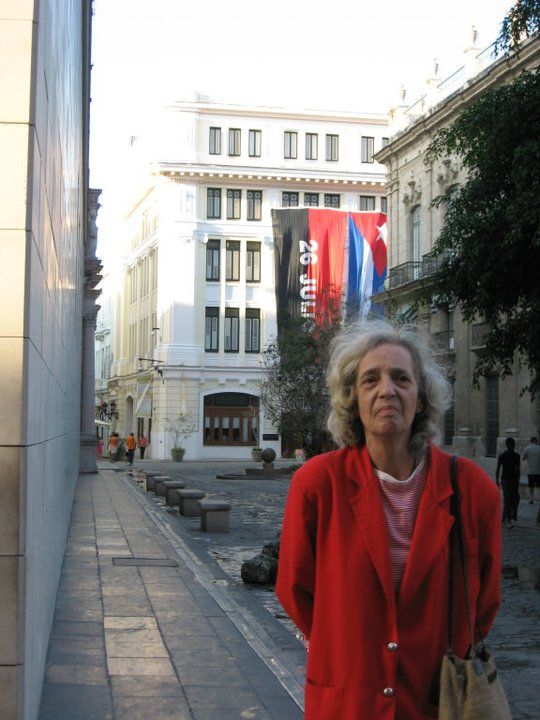
Donna Stainsby in Old Havana, 2011
To spread family ashes in revolutionary Cuba was an easy decision; To take care of my mother when she first had developing vascular dementia in 2014 was not.
There has never been something that more people tried to prepare me for, and failed more absolutely, than being a full time caregiver to one of the most important people in my life. So, if you have never experienced a situation where someone close to you in your life developed dementia, you will be like I was and appreciate my words while not really understanding them.
The ways people try to prepare you are deep and immense. The darkness and stress of it. They try to impart the utter relentlessness of someone’s needs when they can’t fully take care of themselves. That’s the real destroyer of health for the caregiver: I literally begged my mother more than once to “not be nuts” for ten minutes so I could catch my breath.
Caregiver wisdom talks about the unpredictable nature of it all; How one minute you are talking to the same person you have known for so long, and the end of the same moment has them utterly forgetting who you are, or where they are physically.
You will be warned about their personality changing to seemingly another person (though I dispute that; I believe they become exactly who they would be like with dementia– “Oh, that’s how mom deals with dementia…” etc.), and how painful those changes are.
And, most impossibly? The warning to your psyché that no caregiver can really accept.
That no matter what you do, no matter which regimen you follow, how well you set up their environment, no matter how exceptional your ability to give care is?
They will keep getting worse, there is little you can do to even slow it down, and the quality of your care is about the here and now– with no guarantee in the future. The future is bleak, and a certainty.
That is, it was a bleak certainty until the Cuban Revolution got involved.
Now? We are potentially in an entirely different place.
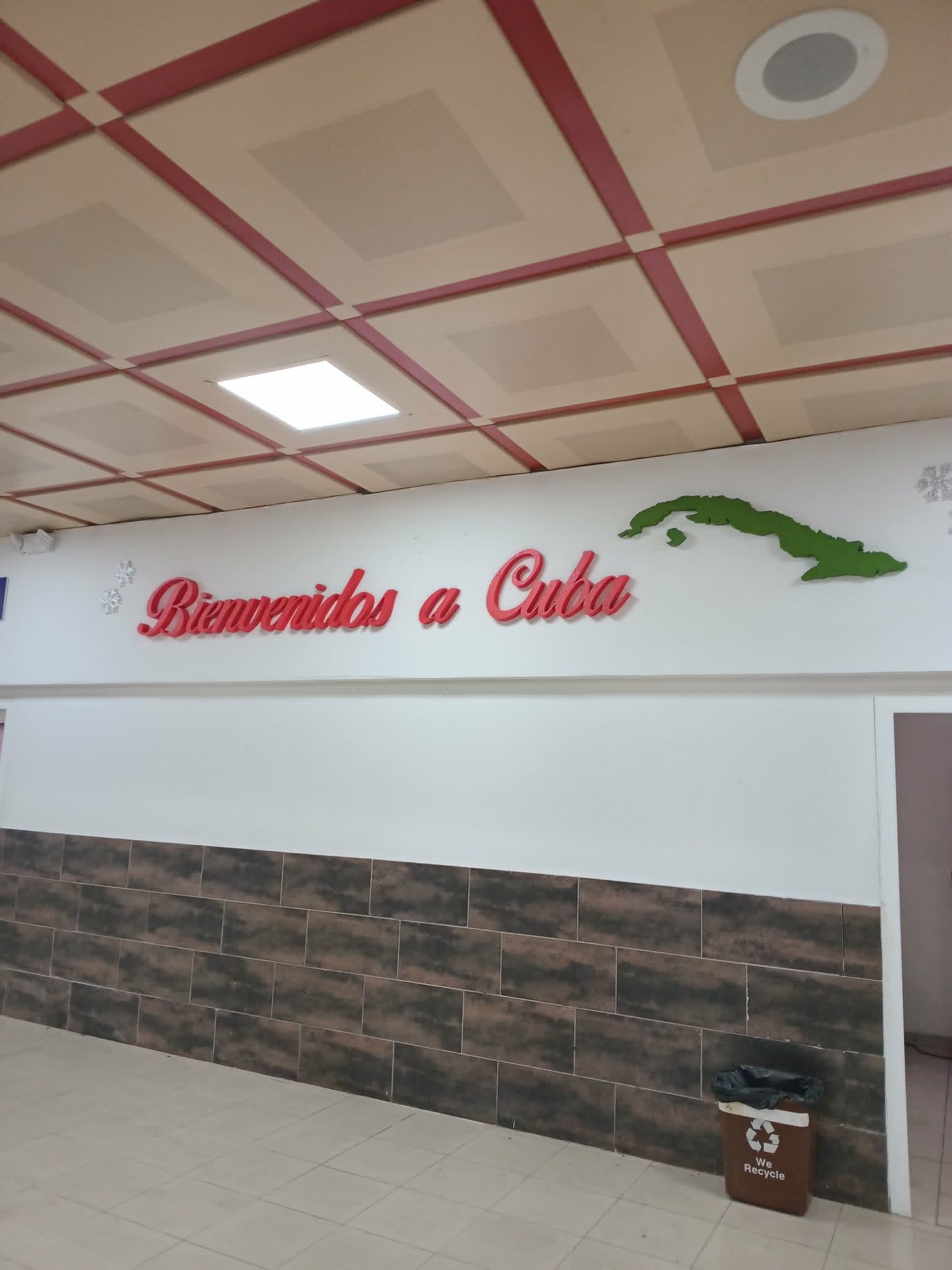
Greeting at the José Marti International Airport, April 4, 2026
Cuba’s medical system is world renowned, beyond the amazing doctors who work in the most adverse conditions to bring basic health to people who have never been seen by a doctor in the decades of their lives.
The large Cuban research facility called Centro de Immunología Molecular (CIM) has been conducting research into drugs for treating dementia in general– and Alzheimer’s specifically, as well as Parkinson’s.
I heard about this, and wanted to know more. Among the people I have spoken with is Doctor Bill Blanchet, an internal medicine physician in private practice in Boulder, Colorado. Before we even got to speaking about the treatments for dementia, he started off by telling me about cancer vaccine treatments and even Covid vaccines. All from Cuba, all from this centre.
First he spoke about a patient of his, dying from cancer, who decided to try a ‘hail mary’ in an attempt to survive and had heard about Cuban cancer treatments.
They decided to go together; If it worked, the doctor needed to know about it, and if it didn’t the patient needed to have someone to be blunt with him about it. He explained to me what happened:
So we go to Cuba in 2017 [and] he gets started on a monoclonal antibody for lung cancer, and he has multiple metastases in his chest, multiple metastases [in his] abdomen. Nine months later, doing nothing else but adding this drug, all his cancer is gone. He has no detectable cancer by any means of detection. So at this point in time, I’m forced to conclude Cuba knows stuff.
It didn’t wear off, and his patient returned to a non-cancer life. Then Donald Trump was elected for the first time, and did away with the opening to Cuba of the Obama administration:
[His patient had] exercised, he worked full time, he ran the ‘BOLDERBoulder.’ He did fine. He did great for a year and a half, and then the US administration increased the embargo to Cuba. He lost access to the drug and his lung cancer comes back.
He gets three rounds of chemotherapy. Each one makes him sicker than the one before. And a year and a half later, he dies. So this drug worked really well for a year and a half, until it was taken away from him.
So that was how this Colorado based doctor ended up involved with Cuban medical research. But he continued, still not yet discussing the NeuralCIM medications and protocol for dementia.
Shortly after that, covid was a thing, and with covid, we couldn’t go to Cuba anymore, and I hear that Cuba is making their own covid vaccine. And it’s like, once again, still stuck in my egocentric world. I was like, oh God, why are they doing that? Why don’t they use one that works? Why don’t they use the one that we’re developing? Well, as it turns out, the Cuban covid vaccine is the world’s best covid vaccine.
I personally blinked more than a wee bit at him on the other end of my zoom call, as I have been a ‘mask-vaccine-listen to your doctor’ proponent on the question of Covid19 up until and including today in April of 2026. These ideas below are beyond startling, they seem impossible:
Cuba has not had a covid death in three years, United States had 40,000 covid deaths last year [2025]. I know of two people who died last year from covid. Covid is no longer a disease of clinic, of medical import in Cuban public health [any] longer. Covid is just not something to worry about, and they’re still working on the same vaccine they had initially, and it gives immunity that lasts in terms of years.
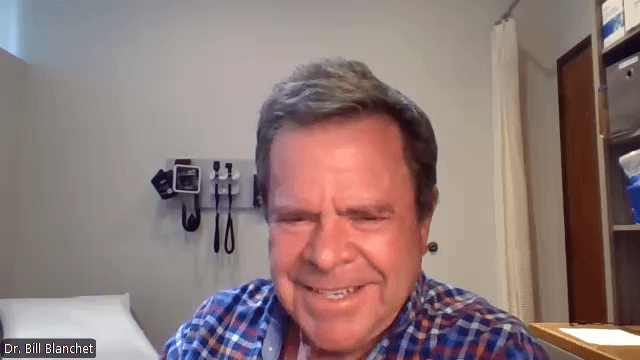
Screen capture of Dr Blanchet during May Zoom interview
The vaccine in [the United States] gives minimal immunity that lasts in terms of months. Cubans vaccine gives over 90% protection that lasts in terms of years. So the country of Cuba has herd immunity right now.
I should note that boosters have been provided to the elderly and similarly vulnerable populations as a measure of extra precaution.
I took my initial knowledge in about Covid19 in the exact same manner I am attempting to in terms of NeuralCIM for dementia: I’m no doctor, but does it improve the quality and duration of life for elders who are borderline and far too often deemed expendable? On that basis, this data about Covid vaccines is utterly amazing. So that was my set-up for being told about how to possibly reverse dementia.
Before I do, I just want to say as a caregiver in particular– and as someone living in a desperate age as well– those who peddle cures, answers to questions that really have no answers, fake ways to end terminal diseases, etc are the very worst. The idea of being even close to or sort of adjacent to such snake oil sales hurts me on the same level as Holocaust denial: It’s a dark, evil place to pretend these things, and worse: The goals that they attempt to enact are beyond the values of any legitimate sector of humanity. “Faith healers” and similar scum belong on the same historical lists of people as those who protect pedophilia. Exploitation of the desperate and the vulnerable is the very worst practice of humanity.
So what of NeuralCIM and the newer treatments of Alzheimer’s?
I was invited to go to a vaccine Congress in Cuba a couple of years ago, and I went and at that Congress, I was talking to people that I heard were working on a drug for Parkinson’s and dementia. I have a brother with Parkinson’s, and I was very interested in this. My mother had dementia, my father had dementia, two of my grandparents had dementia, and so I was very interested in what this drug would be, and so I kind of kept up with it. When I found out that the study was published, I was actually working with Cuba on another cancer study [….] I see that this ATHENEA trial is published, so I contact them and say, Can, can I meet with the people involved with the ATHENEA trial? Turns out to be the same people. CIM does a cancer therapy. CIM also did the neuralCIM. And so I go in there, and I go to the conference room with CIM, and 14 people walk in, half of them talking about the cancer. The other half give me a presentation on neuralCIM.
And basically as I’m learning this my jaw is dropping, because nothing could be this good. This is incredible. But I know these people. I’ve been working with these people for years. I know that they are credible. I know that what they’re telling me is real, and these numbers, this is going to be a world changing drug. This is amazing, [these are] world changing statistics. And so that got me interested.
This is the personal tale of what also got me interested. I had seen a short video from The Belly of the Beast, who are also releasing a full length documentary about the same (called “Teresita’s Dream”), and when I realized the scale of the discovery it almost blew my mind.
See, I believe that dementia is clearly a medical condition, but during my nearly 9 years as my mother’s primary care person, I realized that slowing down decline and maintaining mental capacity often has a lot more to do with providing the correct environment: One with love, familiarity, tasks and hobbies that are very much within the realm of the possible, locations that hold memories, and a lot more.
For me, the thing that slowed down my mother’s decline the most was using her piano almost nightly, and playing well. Similar to our beloved animals, establishing routine was key. Later on, what caused her decline to spiral was the lockdown of the pandemic, not being able to go outside, see others, or live anything like a normal life.
Having seen the most important person in my life go through those two markers of her years with dementia was more powerful to me than any study ever would or could be. When I imagine Donna being able to play the piano and again be the one who knew the name of the song? Who would then revert to a teacher and explain the history of the song, for example?
Sometimes the beauty of what was not is too strong to think on for very long, and it becomes depressing– but that’s a result of the work of most of a decade trying to provide space for exactly those types of moments. Just like in a research lab, a caregiver swears by trial and error.
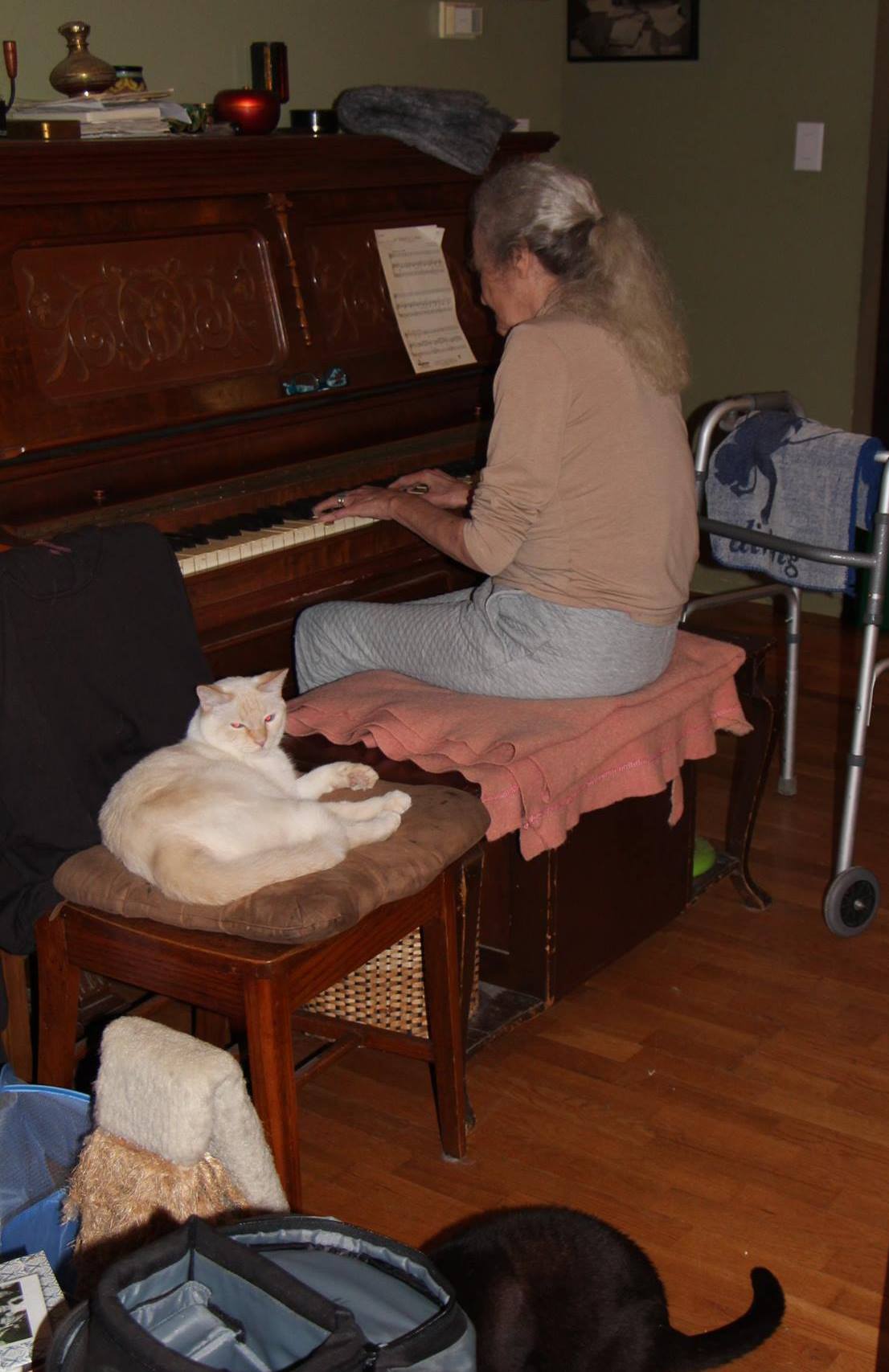
Donna playing piano at home, circa 2018.
In this current day and era, there is every reason to believe that the only thing denying hundreds of thousands of people in just the US alone– never mind the many millions globally—from this help towards long term recovery of their passions and their lives, are the cruel policies driven by The United States government, currently led by Donald Trump and his Secretary of State Marco Rubio.
So I also had a chance to speak directly with the producers of this nasal spray, at the Centro de Immunología Molecular [CIM]. First, the location is in Playa– a distance west of Vedado that required figuring out how to get to the location for the appointment. When I contacted solidarity organizations in Cuba, hopeful with my intentions to learn more about neuralCIM, I was immediately told that they would make all the arrangements, that I could have full access and more but that given the current American blockade of all oil to Cuba, I would need to find my own transportation to the site.
I managed to find a local electric 3 wheeled ride and driver, and the trip was more than affordable without gasoline (or shocks on wooden benches). Taking a little longer to wind through the streets of western Havana was not an issue, either.
When we arrived, I was shown around and introduced to about a dozen of their top researchers and was blown away by the presentation they made for me. I was first shown their history of ground breaking developments in fighting cancers, and then I was given a serious amount of information about NeuralCIM and how it has already begun transforming lives.
First, let me note that the presenters were nearly all women, from close to a dozen. This is of note for me specifically: It gave me deja vu from receiving important dental work from a large, almost exclusively female operated Cuban dental office when I was uninsured for a few hundred whereas Canada’s dental offices wanted many thousands.
Mentioning this to Cubanas, I have had it pointed out to myself that 80% of Cuba’s top scientists– in all fields of study, across the board– are women.
Essentially to my layman’s eyes, I learned about both the solid nature of CIM’s trial experiments and how they are better than standard, and that the results are enough to leave any medical researcher beyond hopeful. The numbers, given the rigors of their tests, are demands for further exploration.
In the next part, I’ll go through what lead presenter and specialist (among many) in the development of new drugs, Dr Belinda Sanchez was able to elucidate for me (along with several of her colleagues) at the CIM building itself.