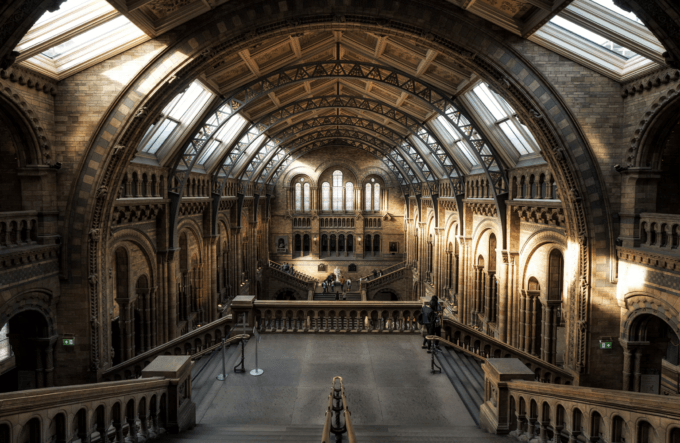
Photo by Claudio Testa
Museums, galleries, and foundations have sought to conceal or ignore the culpable origins of certain works in their collections, including those received during the colonial era, those acquired opportunistically between 1933 and 1945, and those obtained during conflicts or civil wars, as well as those benefited from through bequests and donations. These institutions should have entrusted art historians or an independent commission of experts to examine their provenance, particularly by facilitating access to their archives. They did not do this for clearly indefensible reasons, likely encouraged by a form of unforgivable complicity from public authorities, who perhaps believed that time heals all wounds. However, some wounds are so deep that they transcend generations, and we inherit them despite ourselves, like a grief we would have preferred to be spared but which we are obligated to bear and ensure is respected.
Aurélie Filipetti, former French Minister of Culture (2012-2014), writes in the preface of a book about the Nazi camp of Dora, where two of her relatives lost their lives: “Traumas are transmitted from generation to generation in silences and unspoken truths”. This transmission is no different for the people who were looted, repressed, and abused during the 19th century. One should not harbor illusions about a supposed resignation or omission on the part of their descendants. “The disturbance of untold histories is woven with dramas and unresolved conflicts that call for resolutions,” warns Martinican writer Édouard Glissant in his work Mémoires des Esclavages (Remembrances of Slavery), 2007.
Restitution claims made by countries whose artistic and memorial heritage has been plundered by colonial powers face different types of argument. This involves the concept of “universal heritage”, which is often used to justify maintaining the status quo. Additionally, there is the notion of the “universal museum” as a space that provides broader access to beauty and knowledge. This perspective criticizes the restitution efforts as selfish acts by a country, tribe, or family seeking to reclaim possessions that were stolen and rightfully belong to them. The same historical amnesia is observed regarding the crimes generated and fueled by collaboration and antisemitism in countries occupied by the German army during World War II, as well as concerning fraudulent archaeological excavations, misleading archaeological interpretations driven by a specific political agenda, in  short, what we recognize today as the travesty of history.
One discovers, underlying this situation, the legislative maneuvers aimed at establishing a moratorium or a statute of limitations to put an end to all these claims on a legal level, as it is clear that they are unacceptable and embarrassing from a moral standpoint; a statute of limitations that corresponds to the decrees of inalienability that the legislator has hastened to adopt to protect colonial collections from legitimate claims, which also applies to artworks looted by the Nazis despite they official adhesion to the Washington principles, a non-binding text adopted in 1998 by forty-four countries on Holocaust-Era Assets.
Alongside the Royal Collection, the British Museum served as the primary repository for countless plundered artifacts that embodied the spirituality and pantheons of Indigenous populations who suffered under colonial violence, a “Chor Bazaar” (thieves’ market) according to Sashi Tharoor, the Indian parliamentarian, former Deputy Secretary-General of the United-Nations and former Minister of Foreign Affairs of India. For families, tribes, and nations, these are sacred objects—symbols of odysseys, historical narratives, tributes to leaders, dignitaries, and the deceased. In October 2024, the British Museum’s Great Court Gallery presented an exhibition that feels more like a disrespectful bazaar inventory, shockingly displaying a mix of Native American feathered headdresses, African drums, Tibetan Buddhas, and Edo sculptures—symbols of cultural destruction, the erasure of societies and beliefs, and the enslavement of entire peoples. At the heart of this display, in a chilling tribute, a flight of arrows hovers over a replica of a Maxim machine gun—a weapon invented by Sir Hiram Maxim that killed, among other global victims, thousands of Tibetans armed with swords during the British invasion of Tibet in 1904-1905. Accompanying that invasion were two British Museum representatives, tasked with selecting manuscripts, scrolls, thankas and works of art.
Just after the Second World War, certain states took advantage of the distress faced by Jewish communities to unscrupulously sell artworks belonging to Jewish collectors—still unidentified at the time—that had been returned to them by the Allied Commissions from Germany (France, Netherlands, Latvia, Belgium). In the same way that colonial loot was auctioned off in situ, at the very sites where massacres occurred, as well as through auction houses and private sales in London, Paris, or Berlin. Norway did not hesitate to incorporate into its national heritage, during the war, the looted property of deported Jews, convinced of the fate reserved for their owners. Various states nationalized and simply integrated these properties into their national collections (Soviet Union, Czechoslovakia, Poland, Austria, Hungary). Czechoslovakia, referring to the masterworks as “national monuments,” claimed the right to keep them and, to avoid excessive claims, recognized the heritage for looted works only in direct line. The Bavarian Länder did not return artworks entrusted to them by the Allied Commission to Jewish families but instead secretly sold them back to their former Nazi looters. The Dutch state set April 4, 2007, as the deadline for claims regarding artworks looted during the war. Beyond this date, the state would appropriate the 4,500 artworks, primarily from Jewish victims, classified as NK (Nederlands Kunstbezit-collectie), without taking the necessary steps to deeply search for their legitimate owners. In 1947-1948 France hastily decide to sell off 3,649 works through auctions and private sales among the works returned by the Allied Commissions, an affair largely swept under the rug, and the veil of silence is a present and ongoing issue. Polish legislation (decree of March 8, 1946) explicitly provides for the integration of unclaimed artworks within the specified period (ten years) into the national heritage.
By what right and with what ethical justification can a country claim these works that do not belong to it? The idea that the national heritage of countries, several of which were actively collaborationist, could be enriched with the looted property of Jewish families who were victims of the immense tragedy that was the Holocaust is not shocking? French President Jacques Chirac, in his memorable speech on July 16, 1995, mentioned “an inalienable debt”. And this debt, now acknowledged, must be repaid, one way or another.
The only morally acceptable alternatives would be to deposit these works in museums of Jewish art and history: at the Israel Museum in Jerusalem, at the Museum of Art and History of Judaism at the Hôtel de Saint-Aignan in Paris, at the Jewish Historical Museum (Joods Historisch Museum) in Amsterdam and at the Museum of the History of Polish Jews in Warsaw, where artworks by Jewish artists who perished in German camps were collected in September 1949 by Josef Sandel, as well as at the Hecht Museum of the University of Haifa, which houses 137 paintings by eighteen artists who were victims of the Holocaust, a donation from collector Oscar Ghez.
The German philosopher Walter Benjamin (†1940), a victim of the Nazis and the French police, wrote shortly before his death: “How can one not shudder with dread when thinking of the origins of cultural assets? There is no document of culture that is not also a document of barbarism. And the same barbarism that stains them stains equally the process of their transmission”. Learning from the past, confronting it, and neither obscuring nor sugar-coating it should inspire an approach that acknowledges the suffering of victims, the oppression and humiliation inflicted upon them, and the legacy borne by their descendants, all in the spirit of a healthy reexamination of history.
Vergangenheitsbewältigung, or “coming to terms with the past”, has allowed Germany a relative rehabilitation in Europe. In recent years, the German government has established eight university chairs focused on provenance research, in Berlin, Bonn, Hamburg, Lüneburg, Munich, and Würzburg. In January 2019, it created a support fund for museums to finance provenance research. The fund’s allocation is overseen by two expert committees, whose members are appointed by the Federal Minister of Culture. These investigations have been significantly broadened. They are conducted through the Lost Art Foundation (Deutsches Zentrum Kulturgutverluste), to encompass not only Nazi-era looting but also colonial-era plundering. This expansion is based on the principle that a stolen object remains a stolen object, regardless of location or era, and as such, should be returned or be the subject of an agreed-upon form of restitution.
In this way, the effort contributes to restoring dignity and memory to the victims, often anonymous, who were sometimes stripped even of their own names. Examples include Indigenous people subjected to evangelization who, despite their cultural traditions, bear the names of Christian saints, African slaves who were forced to adopt the names of their masters, traders, or owners, Jewish deportees who were reduced to a tattooed number on their forearms, Palestinian victims — children, women, and men — whose names and identities are not permitted to be publicly acknowledged in the very country responsible for their deaths. All were – or are – viewed as subhuman (or Untermenschen, to use the Nazi term), labeled with pejorative terms such as savage, negro, schlitzauge, niakoué, judensau, moro, bougnoule, chintok, métèque, youpin, makak, zwarte, zigeuner, gele gevaar, Arabush(ערבוש) and others from the colonial era. Yet the cultural heritage plundered from these peoples, insofar as it has escaped destruction, is now celebrated as part of the so-called “dialogue of civilizations”.
Members of the Committee on “Nazi-Confiscated Art” (Förderbeirat NS-Raubgut) and those of the committee on “Colonial Contexts” (Förderbeirat Koloniale Kontexte) are appointed by the Federal Minister of Culture, though their representation remains imbalanced: only one Jewish member and one African member. Their mandate seems largely symbolic, as it remains doubtful that the German government, after so many years of denial, would recognize the plundering of works that have been the pride of its museums and foundations for generations. These artifacts come from Egypt, Turkey, Greece, and Italy, and further provenance research would only underscore the illegitimacy of their appropriation.
Notably, the German government has chosen to unite the issues of Nazi and colonial plunder within a single administrative framework. These are two facets, though perhaps differing in degree and method, of the same historical phenomenon: a military supremacy deployed in service of an overreaching nationalism, in which a nation claims a “civilizing mission”, or adheres to an ideology that deems one race or religion superior. This ultimately leads to the armed plunder, extermination, and displacement of peoples, sects, minorities, and tribes, as well as the systematic seizure, destruction, or appropriation of their heritage, cultural symbols, and religious landmarks. At Documenta in Kassel, Germany, two installations once conveyed a same message: one by artist Maria Eichhorn (“Rose Valland Institute”) and another by Congolese artist Samy Baloji, respectively addressing Nazi and colonial plunder. Four conferences co- corganized between 2017 and 2019 at Germany’s initiative with the Smithsonian Institution and the Stiftung Preußischer Kulturbesitz, in partnership with four major museums and research institutes in the US and Germany placed research into colonial and Nazi provenance side by side.
It is a slow evolution with an uncertain future. An initiative that appeared to point the way towards a gradual, albeit slow, shift in attitudes, but whose future now seems increasingly uncertain in light of the measures taken by the Trump administration against the Smithsonian Institution, and the continuing indifference of the art market and auction houses, which still offer for sale works of art whose provenance raises serious and well-documented concerns.