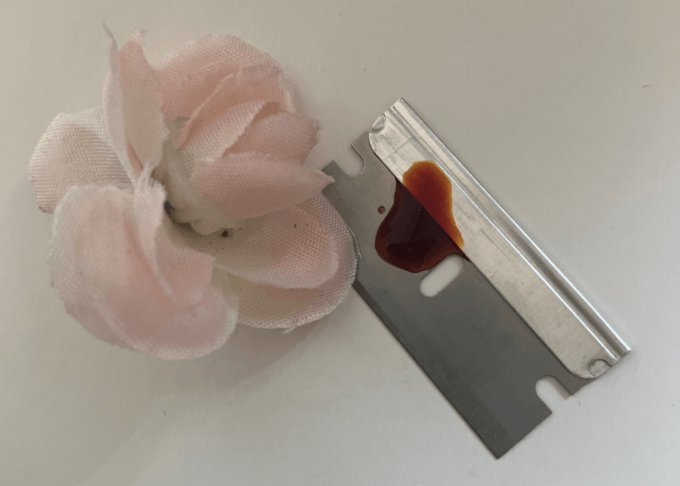
Illustration by Cesar Chelala.
Female genital mutilation or cutting (FGM/C) is often treated as a distant problem, something that happens far from American shores. But that illusion collapses the moment one looks at the data. In the United States, hundreds of thousands of women and girls are believed to be affected or at risk. Despite its serious consequences, the practice remains almost entirely unknown to the general public.
FGM/C—a violent procedure involving the partial or total removal of external female genitalia—is sustained by a dense web of cultural identity, social pressure and misconstrued religious belief. For many families, it is framed as a rite of passage. Some turn to it to avoid stigma, protect honor or control girls’ sexuality. Local leaders may defend it as a path to purity, even though no major religion mandates it.
The procedure is most often carried out on girls between infancy and adolescence, though adult women may also be affected. It can cause immediate complications such as extreme pain, hemorrhage and infection. Frequently performed by non‑medical personnel, it has no health benefits and inflicts lasting physical and psychological harm. Because it removes or injures tissue vital to sexual sensation and arousal, it can also diminish or permanently eliminate sexual pleasure.
In the United States, federal law prohibits FGM/C, and most states have enacted their own bans. Congress has also criminalized “vacation cutting,” the practice of taking girls abroad during school breaks to undergo the procedure. Yet legislation, while necessary, has not significantly reduced its occurrence or improved care for survivors. Although federal law allows for penalties of up to 10 years in prison, there have been only two federal prosecutions in U.S. history.
FGM/C is illegal in many countries and condemned by the World Health Organization, UNICEF, UNFPA and major medical and human rights organizations worldwide. Still, it persists. The practice primarily affects girls and women from certain African countries, the Middle East and Asia, and has expanded into the industrialized world. It is now found in the U.S. and several European countries, particularly within communities originating from sub‑Saharan Africa.
The Centers for Disease Control and Prevention estimates that up to 513,000 women and girls in the U.S. have undergone or are at risk of FGM/C. Cases are concentrated in Minnesota, California, New York, Texas, Washington and Virginia—states with large diaspora communities from countries where the practice is traditionally carried out. Numbers are rising, driven by the growth of those communities.
Although prevalence in the U.S. is lower in percentage terms than in countries such as France and the United Kingdom, the absolute numbers are large because of population size. And unlike France, the U.S. lacks a national surveillance system, dedicated FGM/C clinics and systematic obstetric screening—blind spots that hinder detection and prevention.
Compounding these gaps, many U.S. physicians lack training to identify or treat FGM/C, and hospitals frequently under‑document cases. Survivors often enter emergency rooms only to encounter clinicians unfamiliar with what they are seeing. Medical schools devote little time to teaching future doctors how to care for these patients.
This is not a failure of individual physicians but of a system that has not kept pace with demographic and cultural realities. The U.S. has welcomed communities from countries where FGM/C remains an everyday concern. While these communities have enriched American life in countless ways, the medical system has not adapted to their needs.
Addressing this problem effectively requires strengthening and enforcing the legal framework; training medical personnel to understand and respond to FGM/C; incorporating it into medical, nursing, midwifery and social work curricula; and providing clinical guidelines on sexual and reproductive health complications, reconstruction options and psychological support. Survivors should have guaranteed access to sexual and reproductive health care and mental health services.
Many men and women from practicing countries have become informed about the issue and now oppose it. They are natural allies in these efforts, alongside religious leaders within local communities.
To end FGM/C in the United States, we must stop treating it as an “imported” problem and confront it for what it is: a form of gender‑based violence affecting thousands of girls and women on American soil.
As Aissata Camara, a young participant in an event on the role that governments and civil society can play to empower young people to end FGM/C said, “We want to stress the fact that youth cannot and will not be ignored. We may be young, but we have experienced female genital mutilation. We know how it feels. We understand it. Ending it is a battle we can win. It can end with us. We are ready for action.”