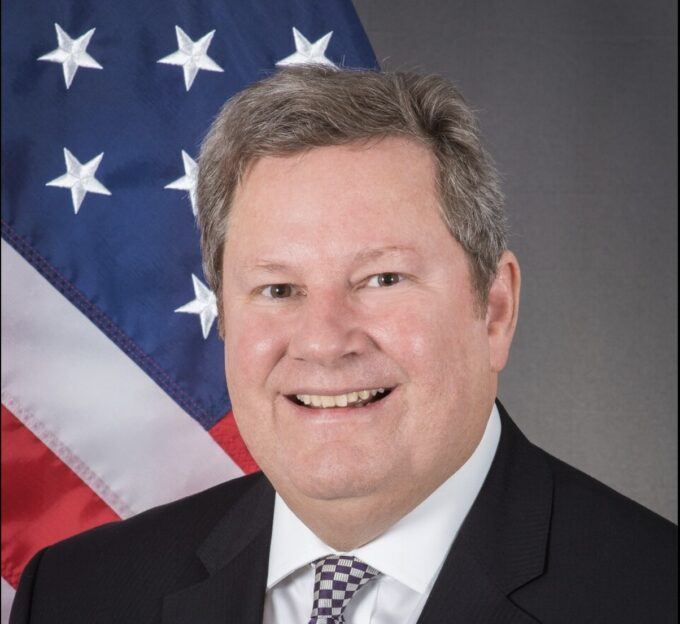
Mike Hammer. Photo: US State Department.
Mike Hammer is not your average diplomat. Built more like an SEC football coach than a statesman, Hammer sticks out like a sore thumb on his trips across the island. He was appointed as the ad interim Chargé d’affaires under Biden but has since grown close with Marco Rubio. Hammer’s resumé includes positions at the National Security Council, Bureau of Public Affairs, National Defense University, State Department Operations Center, along with several diplomatic posts.
Hammer demonstrates a continuity in Cuba policy between the Biden and Trump regimes: in soothing tones of compassion for the “Cuban people,” he has advocated choking the island through tightening the blockade during both. He has recently felt emboldened to directly call for regime change. He openly meets with opposition groups and dissidents and flaunts his activities on social media, fanning the flames of a Cuban color revolution.
United States-Cuba relations are at their tensest point since perhaps the invasion of Playa Girón (aka Bay of Pigs). This tension has brought more stipulations for US diplomats in Cuba and vice-versa. Under the grip of the current US regime, Cuban diplomats are required to notify and be approved by the Department of State to visit anywhere from a local government official’s office to an agricultural facility.
Rubio announced this new requirement last year, the latest in a long line of restrictions constraining Cuban diplomats (during the “Interests Section period” (1977-2015), Cuban diplomats had to notify the State Department if they left the Capital Beltway). In Cuba, however, Hammer enjoys the luxuries afforded to the average diplomat in a friendly country.
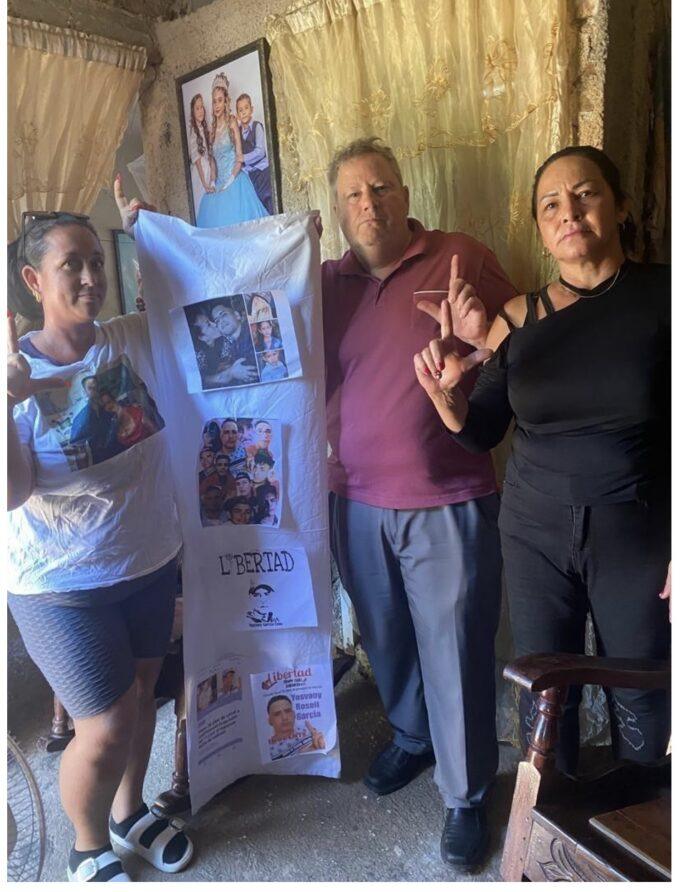
Hammer (center) meeting with family members of Yosvany Garcia and Ramon Zamora, both dissidents arrested during the 2021 Cuban protests. Taken from Latin American Reports, which got the image from the US Embassy Instagram account.
He is what one can call an instigating victim, a dominant trend in the global right-wing hellscape; he creates conflict and then cries foul when he is condemned or rejected by Cubans. Hammer travels the island from Pinar del Río to Guantanamo encouraging dissidents and sowing division. He has also often been seen flashing an “L” hand signal representing “Libertad,” a gesture signalling support for regime change commonly used by right-wing exile communities. He is treated like a celebrity in Miami’s Cuban communities, but has also been permitted to parade around Cuba freely. At a Fourth of July Celebration in Havana last year, Hammer said he was praying “for Cuba to soon be free.”
When Colombian President Gustavo Petro called on US troops not to obey Trump’s orders last year, the US revoked his visa. Meanwhile, “unfree” Cuba permits Hammer to serve as a facilitator for Miami and Cuban dissident communities. It has warned him against supporting armed insurrectionist groups, but has no plans to expel him for continually ignoring its warnings. Article 41 of the Vienna Convention states, “Without prejudice to their privileges and immunities, it is the duty of all persons enjoying such privileges and immunities to respect the laws and regulations of the receiving State. They also have a duty not to interfere in the internal affairs of that State.” Hammer frequently violates these terms, but is left unpunished by Cuba. The most severe pushback he’s received came in the form of the following cartoon published in Granma
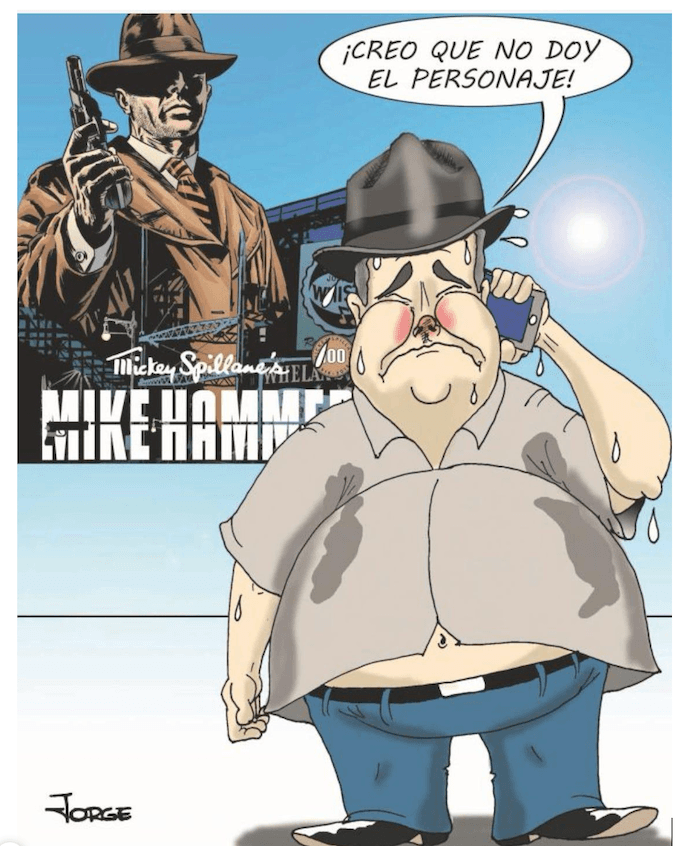
Titled “A Tale of Two Hammers,” the cartoon contrasts the fictional Private Investigator Mike Hammer with the sweaty, overweight diplomat. He is shown saying “I don’t think I’m right for the role!” Taken from Granma, June 2025.
Along with his support for repressive sanctions, Hammer’s blatant hostility toward the Cuban government also involves efforts to sabotage its international relations. In late February, Hammer visited Italy’s Calabrian region to pressure Region President Roberto Occhiuto to terminate its arrangement with the Cuban government, which has sent several hundred Cuban doctors in the last two years to help operate the region’s medical facilities. US efforts were futile; instead, Occhiuto pointed out that “the Cuban doctors who are making it possible to keep Calabria’s hospitals and emergency rooms open are still a necessity for our Region.” In fact, he added, 600 more doctors are needed, whether they be from Cuba, the US, or anywhere else.
While Cuba offers a vision of mutual progress, the US offers one of decay. Cuba exports health care professionals in exchange for cash and basic goods, while the US not only refused to help Calabria with its doctor shortage but worked to exacerbate it. The wealthiest country in the world maintains its status through intimidation and fear, while the blockaded island 90 miles to its south has designed its survival on a shared commitment to human development.
Hammer continues to rise as a star in Cuba’s “dissident” community. Anti-Communist activists describe him in saint-like terms as a brave man of the people who dares to visit parts of Cuba that even Cuban authorities disregard.
Exile media outlets like the Miami Herald and CiberCuba have obsessively covered what they claim are reprimands by the Cuban government against Hammer. In reality, these outlets underestimate the unpopularity of US-led regime change on the island. He facilitates exchange between exile groups accused of treason and publicly expresses support for US intervention, but plays the victim when the Cuban people publicly shame him. Most Cubans do not see themselves in the pale-faced gringo who claims to speak on behalf of their homeland.
Hammer also prioritizes meetings with Christian groups, such as the quickly growing Evangelical movement. These groups tend to be hubs for anti-Communist activities and have long had extensive links to Miami’s exile community. Former CIA agent and Cuban-American terrorist Luis Posada Carriles claimed Cuban American National Foundation leader Jorge Mas Canosa used the Church as cover for money transfers for Carriles’ Havana bombings during the 1990s. During the early 2000s, the Catholic Church served as a recognized partner in dialogue on human rights by the Cuban government, but the preceding 40-year history of animosity between organized Christianity and the Cuban Communist Party created “dissident” networks that still often see churches serving as hubs. Since late 2025, the Cuban Catholic Church has received more than $9 million in humanitarian aid from the United States, which serves to attract more Cubans into these networks. I do not mean to homogenize the Catholic Church and its presence on the island – in fact, the Catholic Church has been fairly neutral in its public statements on Cuba, and has long condemned the severity of the US blockade. Nevertheless, the US intends to curb the influence of the Cuban Communist Party and encourage right-wing actors in the Church. Hammer helped to oversee aid distribution and ensure the Cuban state was isolated from the process.
In March, Hammer was honored with the Cuban American Bar Association’s (CABA) Humanitarian Award, a mere two days after 10 exiles took a speedboat full of automatic weapons into Cuban waters. Maritza Lugo Fernández, the apparent “mastermind” behind the boat attacks, was honored at the same CABA gala in 2024. Last month’s terrorist attack by Miami exiles once again exposed the proximity of Cuban exile terror networks to the US State Department.
Hammer embodies the arrogance Cuba has grown accustomed to when dealing with the US. In 1901, following the independence of Cuba from Spain and the subsequent occupation of Cuba by the US, an amendment was added to the new Constitution that would become known as the Platt Amendment. The amendment granted the US the right to intervene in Cuban politics whenever it deemed necessary, allowed it to establish permanent military bases, forbade Cuba from signing sovereign treaties, and delegated authority over public finances to Washington. Over a century later, the US continues to wedge itself into Cuban affairs and strip away its sovereignty.
Rubio has argued Hammer represents the voice of the Cuban people. As Foreign Minister Bruno Rodriguez Parrilla fired back, “He doesn’t even represent the voice of the American people.” The majority of Americans oppose US regime change, with less than a quarter wanting to use military force against Cuba. He represents the American ruling class and its quest to turn Cuba into a playground for US business interests, or perhaps another Little Saint James.
Don’t let Hammer’s photo ops fool you; he is no victim or ally of “Cuban self-determination.” He is but another lackey of a desperate empire.