
Image by Getty and Unsplash+.
The small town of Gillette, Wyoming, sits smack dab in the heart of the Powder River Basin. It’s a beautiful name for a scenic yet troubled place. This vast swath of land has been drilled and fracked. It’s been overgrazed and mined for coal, and now it’s a prime testing ground for the great hope of carbon capture and storage (CCS), a foolhardy effort to put a lid on emissions from fossil-fuel-burning power plants.
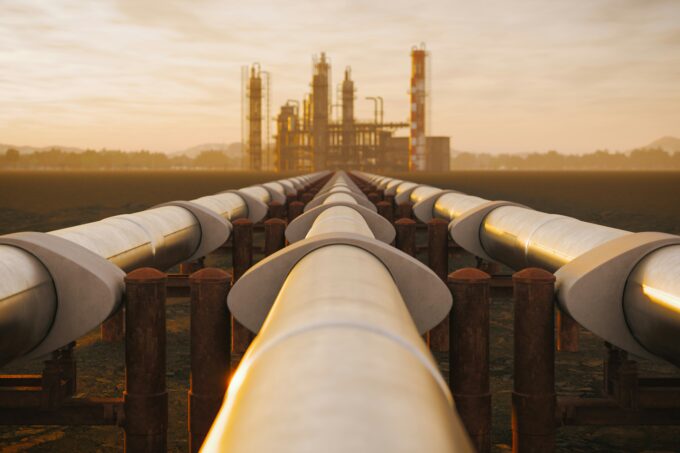
The Wyoming Integrated Test Center (WITC) is a $21 million project that removes carbon from coal-derived flue gas at the Dry Fork Station, a 422 MW coal-fired plant. A separate installation at Dry Fork, the proposed carbon-capture facility, alongside the Wyoming CarbonSAFE storage project, aims to capture millions of tons of CO2 emitted each year using membrane technology and store it in deep deposits 10,000 feet underground. The plan will require 27 miles of pipeline, funneling CO2 through ten injection wells at five sites. 
Keeping this industrial operation running is projected to cost $56 million per year by 2029, based on capturing only 70% of the plant’s carbon emissions. Even though WITC holds promise for the engineers behind it, carbon capture isn’t nearly as cost-effective as shutting down coal altogether. In the US, coal production has dropped 43% over the last ten years alone, and Wyoming’s industry has been hit especially hard. The state’s coal production declined approximately 49% between 2015 and 2024. Capturing carbon from the state’s remaining coal-fired power won’t resurrect the coal industry. It’s also arguably not even viable.
Here’s the problem, at least one of them: no commercial CCS project connected to a coal-fired power plant can remove all the carbon from its waste stream, and no test facility has yet demonstrated the ability to capture 100% of emissions. This raises the question of why we are testing a solution to a problem when easier fixes exist, such as rooftop solar, which has helped phase out coal-fired electricity in favor of renewables from Australia to California.
We need a range of technological solutions to address carbon pollution, but CCS is being used to justify keeping climate polluters operating, exactly what the fossil fuel industry wants.
The reality is that these underground storage facilities, their cost, and their complexity are, as my dad would say, all sizzle and no steak. These huge industrial machines will end fossil fuel emissions. This hasn’t stopped Big Tech from promoting them to assuage concerns about data centers’ carbon footprints, which are only growing.
AI data centers are building their own power plants, and, according to Earth Justice, 80% of them will be powered by natural gas.
“In total, we identify 177 GW of planned gas capacity, equivalent to 23% of the entire U.S.’s peak demand in 2025 and enough to power 65% of all U.S. homes,” Earth Justice notes. “Altogether, the current 177 GW of gas proposals would emit over 400 million metric tons of carbon dioxide equivalent (mtCO2e) annually, increasing the U.S. power sector’s total emissions by 23%.”
One of these Big Tech climate offenders, Google, recently signed an agreement to source power from a natural gas plant in Decatur, Illinois, that will capture and store carbon emissions. Google has also announced a $17 billion CCS project to accompany a proposed data center near Cheyenne, Wyoming.
“It’s a match made in hell,” claims a recent, scathing report from Food and Water Watch. “Combining data centers with CCS won’t save the climate or make projects less harmful. It’ll only mean less water, dirtier air, higher electricity bills, and more money for Big Oil.”
CCS projects have repeatedly failed to live up to the hype, with billions of taxpayer dollars poured into a scheme that has yielded lousy results. It was billions of dollars wasted (in this case thanks to Obama and Biden) on a Big Oil-backed scam.
Hooking up CCS to data center power plants won’t offset the environmental destruction that trails these thousands of projects. Local opposition will. As Food and Water Watch highlights, in the first few months of this year alone, activists banded together to cancel or delay AI data centers worth more than $100 billion across the U.S., with local bans exceeding 500.
No matter how much Big Tech tries to obscure the fact that their data centers are disasters, we aren’t buying it, nor are we buying into their greenwashed carbon capture and storage deception.


