
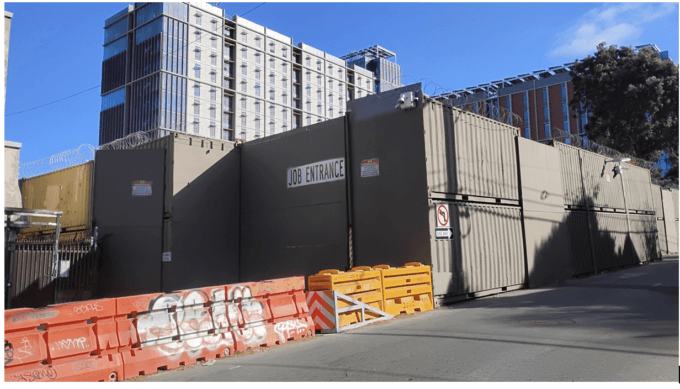
They paved People’s Park and put up a high-rise, Berkeley 2026.
I just returned from a journey to the West Coast of the United States. The weather was mostly warm and sunny. The outlook was less so. Coming into San Francisco on the BART train from San Francisco airport, I was besieged by advertisements regarding the upcoming elections across the United States. I couldn’t help but notice the number of pleas demanding California voters reject the one-time extra taxation of billionaires—pleas paid for by the very billionaires who would remain billionaires should this nominal extra tax be approved. Taking a glance at the daily news, I couldn’t help but notice that Gavin Newsom—the rich Democrats’ latest pretender to the White House—opposed the tax.
As a person who’s been following the slimy trail of Mr. Newsom since his time as mayor of San Francisco—a trail that has made the lives many working-class people worse off in its wake and garnered Mr. Newsom a hefty bank account—I won’t pretend his opposition to the tax surprised me. I will note that some of his supporters claiming to be surprised at his opposition to the measure seemed to think that Newsom has their best interests in mind, when in fact it’s his portfolio that matters most. I mean, Newsom is the guy who called for homeless camps to be destroyed while he closed on a multimillion-dollar home. Taxing the rich versus eating them is becoming less of a joke in 2026.
The news over the weekend was all about the gang rape of a woman a few years ago at Cornell University. Let’s be clear, frat boys aren’t the only university folks involved in rape; university administrators are raping the land, Mother Earth herself. One of the most graphic examples of this is occurring on the site of People’s Park on Berkeley’s Southside, where a modern version of brutalist architecture is being erected where trees and other plants once flourished. After decades of the denizens of the park and the neighborhood it was part of saying no and fighting back, the university sent in heavily armed police in 2024 and began cutting trees and excavating a hole, while beating and arresting the park’s protectors. Together with various developers and some residents, the city of Berkeley cheered them on, watching the destruction in lustful approval. Of course, Berkeley is not alone. From Columbia University’s attempt in the 1960s to build a gym in the Morningside Heights section of Manhattan to UC Berkeley’s decades-long battle to build in the once-liberated zone called People’s Park (and countless other examples in every state), the legacy of the US university system is one ripe with the rape of the land and the destruction of working-class neighborhoods. And sexual assault.
Although these institutions may have slowed down in their appropriation of property in 2026, they continue to try and balance their books on the backs of those who work for them—the people actually educating the students and maintaining the campuses. This takes the form of refusing to negotiate contracts, ignoring the contracts already negotiated and, in the case of Portland State University, disbanding entire departments.
While I was visiting the city, I hung out with a friend who is losing her job by May 2027. If it weren’t for the most recent contract the union signed that put a notification clause into the agreement, her department would already be eliminated. Instead, the faculty and staff in the department have seven more months to negotiate their demise. Interestingly, the department is one dedicated to providing working-class and other individuals underrepresented in the US system of higher education with an entry into the supposed promise that system provides. It’s almost as if the managers of US capitalism know the future is one where better-educated humans will not be required (or desired) to run their data centers and AI systems of profit and control.
Speaking of unions and higher education, the University of Vermont administration was finally forced to sign a contract with the union representing over two thousand staff and technical workers in its hospital. The administration had been dragging its feet on for six months and only signed after the majority of workers voted to strike. Not to be too cynical, but I wonder how long it will be before the administration announces layoffs for the workers while enhancing their own incomes.
Other than the beautiful weather and the music I heard at the Hardly Strictly Bluegrass festival this year, the most impressive thing I saw up and down the coast was the price of gasoline and diesel. The highest prices I saw were in San Francisco, not far from Golden Gate Park: $6.19 for gasoline and above seven dollars for diesel. The least expensive fuel for sale that I noticed was in Washington state; their regular gasoline was around five dollars a gallon and diesel was over six dollars. Even though I don’t drive, the prices affected me; the train and airplane rides substantially increased in price from the time I looked at them in February before the Iran war began, with my original train ride being cancelled and the fare almost doubling when I rescheduled a week or two before I headed west.
Regarding Iran and the war, the only place I saw more than the occasional piece of graffiti or antiwar posters was in Portland, Oregon, which seems to have now replaced Berkeley as the West Coast city with the most active Left/anarchist scene. After several discussions with left-leaning folks on the coast, it seems that it is the actions of the immigration machinery that have caused the most movement-like activity in the United States.
My earlier visit to Minneapolis confirmed this, as do the protests in Vermont and around the nation. As the threats increase regarding war overseas after the election, it seems that the war on US residents by immigration enforcers is taking a darker turn already. Perhaps the Republicans think it’s a good look for them.
I question whether the Democrats will do much to stop it should they win in November. That being said, it’s most important that we don’t depend on them to do so without making it clear in the streets of the country that both the internal and external war must not go on.
As for that music festival. I think my favorite performance of the weekend was by Los Lobos, at least in today’s recollection.


