
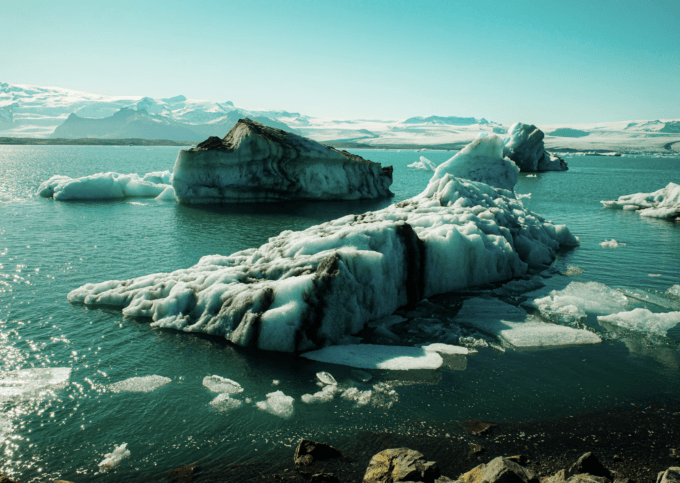
Photo by Liosha Shyp
The nightmare scenario
It is the nightmare climate scenario, the one that causes some to throw up their hands with a sense of inevitable doom. The hothouse Earth, where climate tipping points have been triggered and forces unleashed that drive global heating beyond human control. Where Earth’s temperature remains at levels not seen for millions of years for centuries, disrupting human civilization and possibly collapsing it. In the more extreme versions, the human species goes extinct or suffers dramatic population dieback.
But how likely is it? How close are we to the climate point of return? Have we already crossed the line? If not, how do we stop it? These rank as the most important questions facing humanity now. So I reached out to the lead author of a peer-reviewed scientific article published this past February that received too little attention, as is typical for this whole topic, “The risk of a hothouse Earth trajectory,” William J. Ripple, a professor of ecology at Oregon State University. Ripple is known as the lead author of the November 2017, “World Scientists’ Warning to Humanity: A Second Notice” signed by over 15,000, and the “World Scientists’ Warning of a Climate Emergency” in 2019 and 2021. He is currently seeking sign-ons for a new declaration, including one that can be signed by ordinary people. Link at end of article.
I put this question to Ripple: “If I might ask a personal question, from one who has grappled with these difficult issues to another, how do you sustain hope? I know people who have been crushed by these realities, who believe we are inevitably on track to the hothouse, who have basically given up. I regard that as a self-fulfilling prophecy. You obviously have not given up, and are calling to action. Why are you not a doomist?”
Key points from the article
Before I give Ripple’s answer, let me review the warning in his recent article. First, the abstract: “Earth’s climate is now departing from the stable conditions that supported human civilization for millennia. Crossing critical temperature thresholds may trigger self-reinforcing feedbacks and tipping dynamics that amplify warming and destabilize distant Earth system components. Uncertain tipping thresholds make precaution essential, as crossing them could commit the planet to a hothouse trajectory with long-lasting and potentially irreversible consequences.”
Ripple and his co-authors go on to explain that from around 1.2 million years ago, the Earth moved between ice ages and interglacial periods. Through that time, temperatures hovered around a mean of 14C, dipping as low as 6C below and rising as high as 2C above. The last 11,700 years have seen a relatively stable climate that allowed the rise of agriculture, cities and complex societies, civilization as we know it. But over the last 250 years, humanity has been spewing heat trapping gases in the atmosphere primarily from burning coal, oil and gas, primarily carbon dioxide. That has elevated temperatures to levels not seen in 125,000 years, the last period between ice ages. They are already bumping up against the 1.5C limit set at the 2015 Paris Climate Summit, and could hit 2C by 2050 or sooner. That would go beyond the boundaries of that 1.2-million-year period.
As discussed in my last post, the range beyond 1.5C significantly elevates risks of triggering tipping points. Many scientists believe it is likely that the Greenland ice cap and the West Antarctic Ice Shelf hit tipping points around 1C. Greenland ice loss is already being spurred by the disproportionate heating of the Arctic, itself a feedback loop caused by replacement of reflective sea ice surface with heat-absorbing blue ocean. This ice melt is freshening North Atlantic waters, diminishing the saltiness that weighs down currents glowing from the south. This heaviness causes waters to sink, thus keeping currents going by pulling them north.
Fresher waters are already causing slowing in the two major currents, the Atlantic Meridional Overturning Circulation and the Subpolar Gyre. The concern is that slowing and shutdown will cause major disruptions in Earth’s climate. One of those is diminished rainfall in the Amazon rainforest, causing further deterioration of one of the planet’s major carbon soakers. Because heat movement to the north is limited, shutdown of the currents feeds back to the other pole, warming waters around Antarctica and pushing ice shelves beyond the brink. Carbon releases from the Southern Ocean are also feared. Meanwhile, that warming Arctic is working to unlock carbon from permafrost.
It is these kind of tipping points cascades that worry scientists the most. One tipping point tips the next one, creating climate runaways. Today humanity has some control over the amount of heat-trapping gases added to the atmosphere, through some methane is already coming from permafrost, peat bogs and other natural sources. But if a tipping points cascade gets going, all bets are off. Here are some of the key statements from the article.
The scientists note that while the 1.5C target was based on a 20-year average, recent temperature spikes indicate we may be at or near that point already. “Despite decades of research and sophisticated computational climate modeling, the magnitude and pace of these events have surprised scientists, raising questions about how well current climate projections capture risk. At the same time, research on climate tipping points, amplifying feedbacks, and cascading interactions shows that several Earth system components may be closer to destabilizing than once believed. These processes are thought to be the precursors of a potential ‘hothouse trajectory’: a pathway in which self-reinforcing feedbacks push the climate system past a point of no return, committing the planet to substantially higher long-term temperatures, even if emissions are later reduced.”
“Tipping may already be underway or could occur soon for the Greenland and West Antarctic ice sheets, boreal permafrost, mountain glaciers, and parts of the Amazon rainforest. These processes could raise global temperatures, accelerate sea-level rise, release vast stores of carbon, and destabilize ecosystems. The precise threshold temperatures remain uncertain, but research shows that crossing one or more of these thresholds could trigger self-reinforcing processes that propel the Earth system onto a hothouse trajectory with long-lasting and potentially irreversible consequences . . . If one element tips, it can trigger a cascade effect, pushing other systems past their thresholds. Such tipping cascades have the potential to drive self-sustaining climate change adding to the risk of triggering a hothouse Earth trajectory.”
The scientists note we are likely to overshoot the 1.5C target. The hope is that this will be temporary, and humanity can act to bring it back below that mark. But the scientists who wrote this article offer a caution.
“We do not yet know the exact thresholds for many tipping elements, how feedbacks will interact with climate sensitivity, or how quickly tipping cascades might unfold. Evidence nevertheless shows that overshooting 1.5C or even the current temperatures increases their probability. Uncertainty about where tipping thresholds lie is therefore not a reason for delay, but a compelling reason for immediate precautionary action. In short, we may be approaching a perilous threshold, with rapidly dwindling opportunities to prevent dangerous and unmanageable climate outcomes.”
Ripple’s answer
“I understand the temptation toward doomism. I have worked on these issues for a long time and some of the trends are deeply troubling. But I don’t think the science says that hothouse Earth is inevitable. Climate change is not an all-or-nothing problem. Every fraction of a degree that we avoid matters, and every tipping element that remains stable matters. We are also seeing remarkable growth in renewable energy, storage and electrification. It isn’t happening fast enough, but it shows that large changes are possible. For me, hope does not mean assuming things will turn out well. It means recognizing that there is still a very large difference between the futures available to us. As long as what we do can influence which future we get, I see no scientific reason to give up.”
And that is the key. We still have a wide range of futures open to us, some far worse than others. Ripple and his fellow scientists, who understand the dangers as well as anyone, are not giving up. Every tenth of a degree makes a difference. We are clearly moving into a danger zone, but we don’t know where the crossover points are located. Even if we have tipped some of the points, slowing down the rate of heating makes a huge difference. For instance, it can reduce the amount of Greenland ice melting into the Atlantic, thus reducing the risk of currents being shut down.
It is a hard moment in climate. Policy reversals are taking place in the U.S. and Europe while other issues seem to occupy the foreground. Perhaps the monster El Nino, already the largest on record, will stir action with the disruptions it will cause around the world. In any event, though many crucial issues face us, it is vitally important we re-focus on climate, and bring to the fore the peril of tipping points cascading to hothouse Earth. This is not a legacy we want to leave for future generations.
This first appeared on Patrick Mazza’s Substack page, The Raven.


