Cairo, January 28, 2013.
The smoke everywhere, tear gas, riot police with light and heavy weapons, protesters, religious cadres, even common thugs. Passionate speeches and confusion: I spoke to dozens of people and nobody knows what to do. Where are the protests supposed to lead? Dozens are dying in Port Said; hundreds may soon die in Cairo: the atmosphere is tense.
“Go away!” I am screamed at by one of the protesters. “They will soon start shooting.”
My eyes are watery – I had no time to buy gas mask.
The walls separate the city from the US Embassy and block at least 3 streets. I call it “Cairo Wall”. People are climbing it to get to safety. But where is safety? Climbing goes on in both directions. Around the wall, the stores get looted. There are thugs hiding in the ranks of protesters. There is misery, scavengers and beggars, all around the Tahrir Square.
I did not detect euphoria, this time: just a readiness to fight and to sacrifice. For what? I asked. “Against the government. Against the new constitution”, I was told. “Against what, that I understand. But for what?” No answer comes.
“Take my photo!” screams a kid. “I will soon fight.”
And the number of armed men keeps growing. And protesters are arriving, too. And the night is falling on the city. And Egypt is at the crossroad, ready to explode.
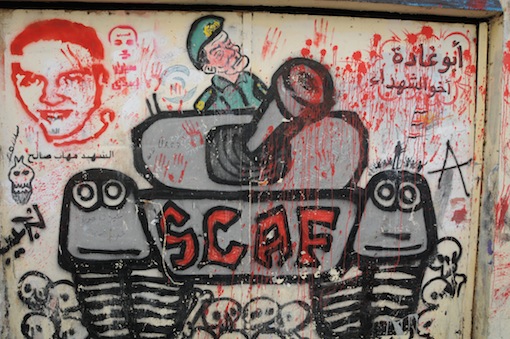
Cairo street art.

Guards at the US Embassy.
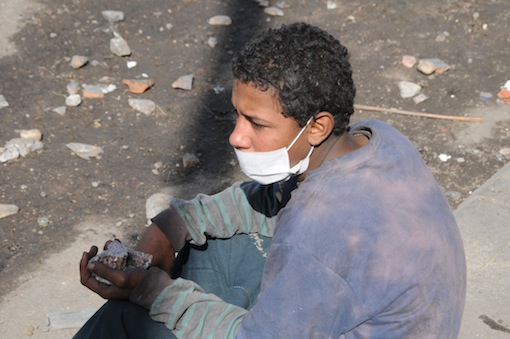
Ready to fight.

Riot police and a torched car.
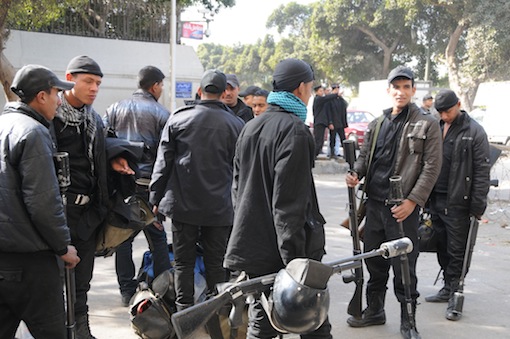
Breaking out the heavy stuff against the protesters.
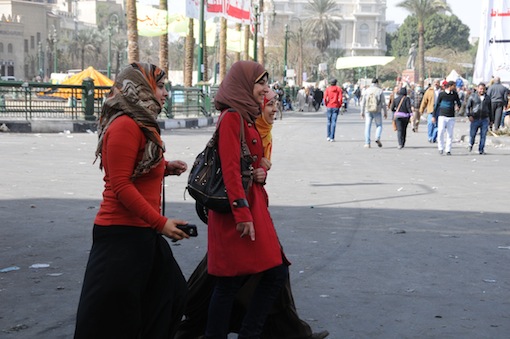
Some smiles in the middle of the chaos.
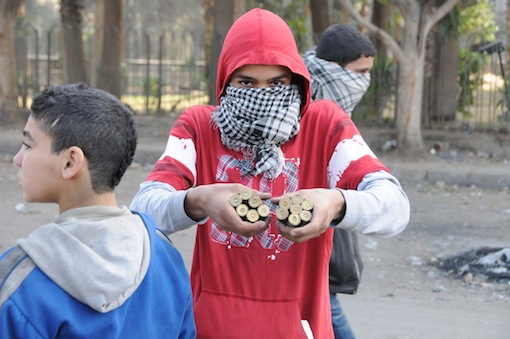
An offering of shells.
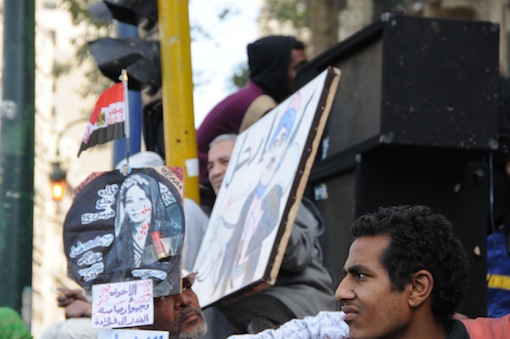
They think the President should go far away.
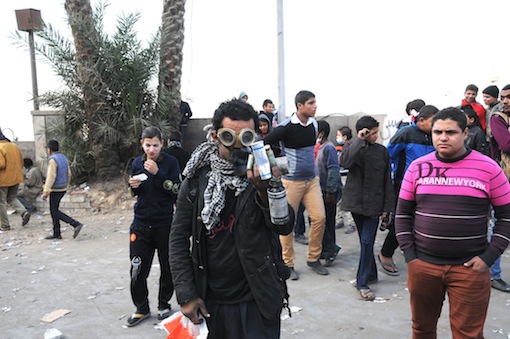
One way to go to war.
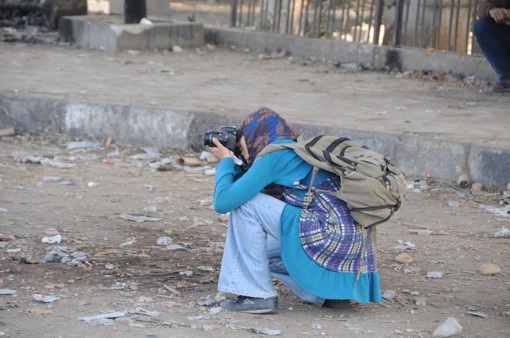
A brave local reporter.
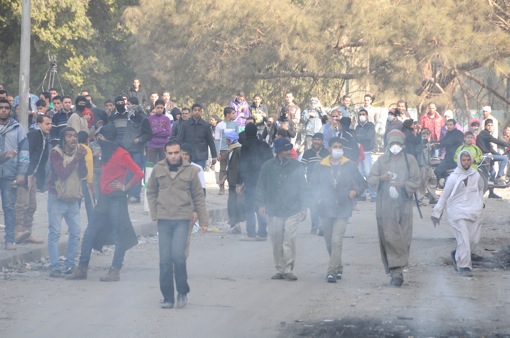
Advancing through tear gas.

An eager young man.
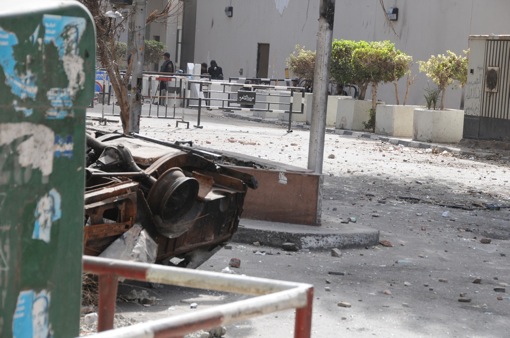
Behind the Cairo wall.

Climbing to safety.
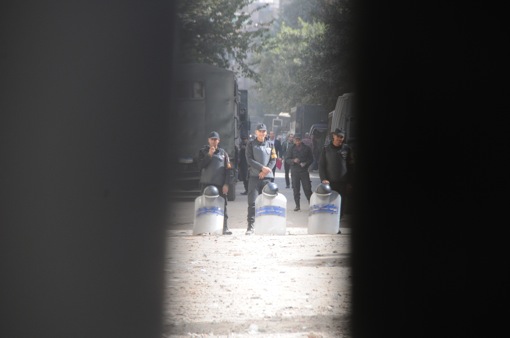
Through the pinhole.
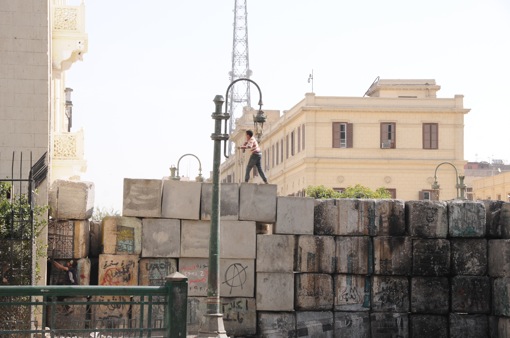
Throwing stones at armed forces.

Cairo Wall separating city from the US Embassy area.

Child in the rioting city.
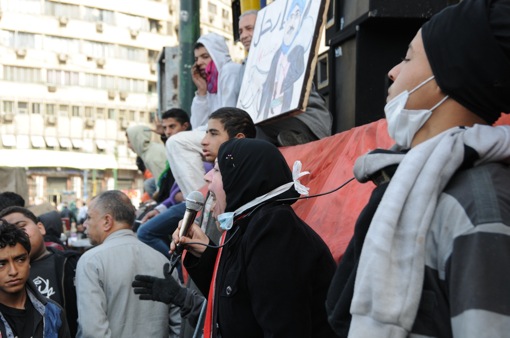
Determined anti-government voice.
Andre Vltchek is a novelist, filmmaker and investigative journalist. He covered wars and conflicts in dozens of countries. His book on Western imperialism in the South Pacific – Oceania – is published by Lulu. His provocative book about post-Suharto Indonesia and market-fundamentalist model is called “Indonesia – The Archipelago of Fear” (Pluto). After living for many years in Latin America and Oceania, Vltchek presently resides and works in East Asia and Africa. He can be reached through his website.
All photos by Andre Vltchek.