To those on the outside, that might sound like a pop-culture exaggeration, but anyone who’s survived a ten-year stretch or more behind those fences understands how accurate the comparison is. In literature, a horcrux is a hidden object where a dark wizard stores a fractured piece of his soul to keep himself immortal. The carceral state functions like that dark wizard. It doesn’t merely lock us in cages. No. It builds an entire regime of compliance designed to strip away agency, manufacture despair, and force us to bend entirely to its will. It relies on invisible spells of administrative routine to make people do its bidding, and it keeps the whole operation running with total, unyielding fear.
When people read my work or hear me speak on panels about compound violence and institutional cover-ups, they sometimes use the word brave. I don’t always feel brave. But if my refusal to stay quiet has to belong to a specific lineage, I claim Gryffindor. It’s the simple decision to speak and tell the truth when the dark forces demand silence.
The Department of Corrections works off the same spellbook. It presents itself to taxpayers as a permanent fixture of American justice that can’t be challenged. But its immortality is a fraud. It’s broken its own damaged soul and hidden those pieces in hundreds and thousands of administrative horcruxes. The dark wizard protects himself by ensuring the public looks away. The system stays alive by hiding pieces of its broken soul in everyday policies.
My writing aims to expose and destroy these objects.
The data masquerade
This is the illusion that the system’s doing its job. It lives in lopsided statistics, shifting definitions of recidivism from state to state, and delayed, scattered reporting. Every time investigators audit those numbers and expose real death-in-custody counts, we crack a horcrux.
The “pending investigation” tag
One of the darkest tools the state uses is leaving deaths in pending status for months or years. That trick keeps dead people on the books as if they’re still serving time, stalls civil rights probes, and helps avoid accountability. Showing the public how ‘pending investigation’ really works destroys the illusion that prison mortality is just natural causes.
The forced captive labor trap
This horcrux sits inside policies that sell unpaid, hazardous prison labor as rehabilitation. When men are forced to act as morgue orderlies or medical janitors, absorbing the physical and psychological costs of institutional healthcare and death work for free, the system saves money and dodges trauma-informed training. Writing openly about that reality shatters the myth of moral improvement and exposes the prison economy underneath. 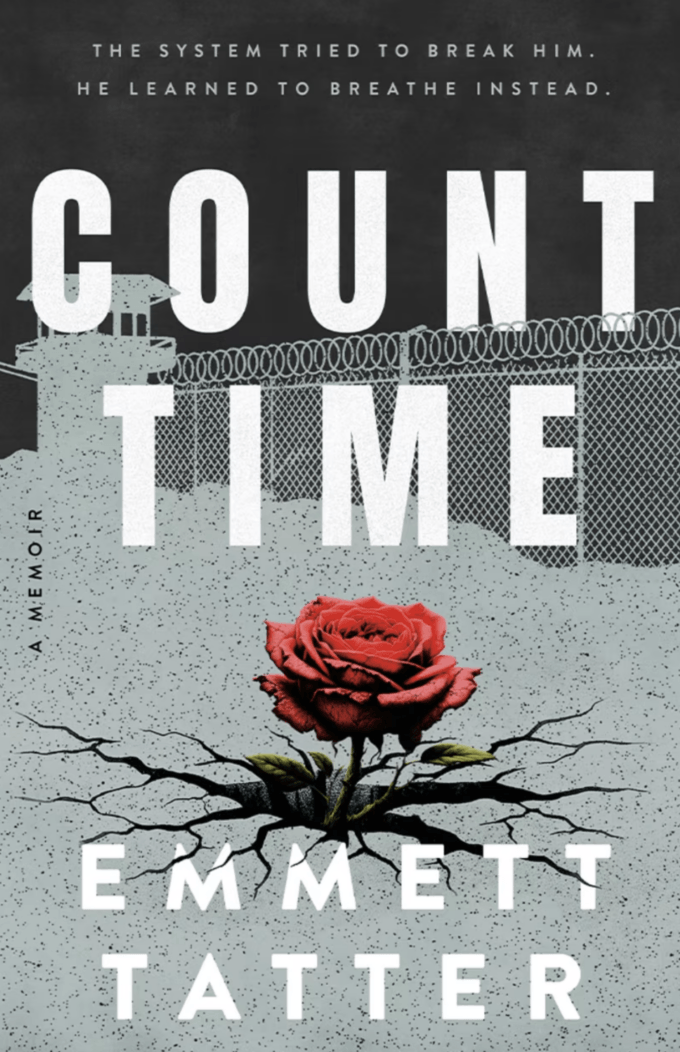
The culture of silence and coerced paperwork
The state maintains control by keeping its operations invisible. When officials push restrictive documents at whistleblowers and formerly incarcerated journalists, they’re using fear as a spell to enforce silence. Each feature, lecture, and article that refuses those terms strikes directly at this horcrux.
The felony record coda
This is the last layer of armor. The system releases people carrying felony records and built-in barriers to housing, insurance, and work. Those structural obstacles push many straight back through the revolving door. Showing how reentry’s rigged from the start dismantles the narrative that DOC’s actually correcting anyone.
Using the horcrux concept lets me turn dry, impenetrable prison data into a story people can feel. It helps students, editors, and families see that these aren’t random flukes or isolated tragedies. They’re the objects where the state hides its broken soul. Breaking them is necessary, but it’s not the whole story.
No dark wizard runs alone
There are other monsters feeding it from the edges. DOC grows out of systemic poverty, racism, and abandoned communities. In Florida, cages sit on top of a long history of Black Codes, chain gangs, convict leasing, Jim Crow, the War on Drugs, and mass incarceration. Most prisons are built in poor, rural, mostly white towns, and most of the men and women locked inside them are Black and brown. Violence becomes normal in places where the state’s decided that suffering’s acceptable as long as it happens far from public eye.
Hate groups and white supremacist culture run straight through the world of prison. Investigations in Florida have shown prison guards openly boasting about white supremacist affiliations, plotting violence against Black inmates, and operating with almost total impunity. In some institutions, staff violence, gang control, and racist abuse are so entrenched that people say it feels like the gangs and the guards run the place together. That’s the heart of the regime. That’s part of Voldemort’s army.
The communities around these prisons are hurt too. Towns built on prison jobs become dependent on cages. Families living in poverty watch their sons and daughters disappear into institutions that call themselves correctional while they quietly warehouse trauma. When those people come home carrying felony records and untreated PTSD, they return to neighborhoods already starved of housing, mental health care, and real work. Some fall straight back into DOC’s clutches. Others struggle for years just to stand upright.
The army expands its territories
Voldemort wants one thing above all: to control fear, and when that fear spreads beyond prison walls, the dark wizard grows stronger. The monster’s grown new tentacles and adopted new spells, extending its reach straight into immigrant detention through ICE and the private detention centers spreading across the country. They sell themselves as protective charms on the border, but in reality they function like another set of horcruxes, built for corporate profit and powered by fear.
The profit engine
The federal government spends enormous sums on immigration enforcement, paying private prison companies per person per day. Corporate revenues surge off detention contracts. Rural counties treat these centers as job programs and budget patches. Each contract and guaranteed minimum bed quota becomes an item where my Voldemort hides its greed.
The security spell
Detention’s sold as a necessary safety measure. Many people in ICE custody have no criminal record and are there because of civil immigration violations or asylum claims, yet the security language casts them as danger. That spell numbs the public to reports of abuse, medical neglect, and death behind those fences.
The shadow cages
Detention centers sit far from cities, run by private contractors, buried under layers of subcontracts for food, medical care, and transport. Distance and privatization make it harder for journalists, lawyers, families, and watchdogs to see what happens day to day. The cages hide in the shadows like invisibility cloaks, letting the monster keep feeding without real oversight.
The reentry trap for families
When someone’s locked in ICE custody, their whole family absorbs the punishment. Children lose parents. Partners lose income. Communities lose caregivers. Even when someone’s released, they face legal limbo, fear of re-arrest, and stigma. Detention carries a long shadow of damage that reaches into schools, churches, and neighborhoods, keeping fear alive and making it easier to justify the next round of detention.
Put together, these detention horcruxes show the same pattern I lived under in state prison. Fear, profit, distance, and paperwork are the spells. We, the inmates and ICE detainees, are the sacrifice.
Step back and you can see the hydra. State prisons, county jails, ICE detention centers, foster care and group homes, juvenile lockups, probation and parole offices, ankle monitors, and police fortresses are all pieces of the same carceral monster. Maybe there are multiple Voldemorts in this world, but they’re all related. My Voldemort is the Department of Corrections because that’s where I did my ten years and watched men die. That’s where I built my first yoga classes on bare concrete. That’s where I learned to see horcruxes.
The houses of resistance
The good news in this dark world is that we’re not alone. Different houses are part of this fight, forming an active, uncompromised Order of the Phoenix.
Gryffindor is the vanguard
That’s me and others like Ivan Kilgore, John J. Lennon, Kwaneta Harris, Christopher Blackwell, Tariq MaQbool, and Tomas Keen, along with the men inside Alabama’s prisons whose contraband footage helped make the documentary film The Alabama Solution, and other frontline whistleblowers who put their safety on the line to smuggle out truths, publish dispatches on the front pages of outlets like CounterPunch and beyond, and refuse to sign the state’s censorship papers.
I signed that media censorship paper when my probation officer pushed it across the table, and everyone who enters Florida’s prisons signs some version of it as soon as they come through the gate, but my work still lives in the cracks it cannot seal.
Ravenclaw is the architect
That’s intelligence, sharp data analysis, and ruthless research. Journalists, authors, and investigators like Dr. Baz Dreisinger, Keri Blakinger, Matthew Vernon Whalan, and Beth Shelburne, alongside platforms and organizations like The Marshall Project, Inquest, Truthout, The Emancipator, Equal Justice Initiative, The Guardian, and many more, decode cooked numbers and bureaucratic masks, audit corrupted death‑in‑custody metrics, and prove the science behind what people like me have lived in the flesh. They provide intellectual ammunition. Then there are the people who turn prison into law and language: poets and lawyers like Reginald Dwayne Betts, equal parts Gryffindor and Ravenclaw, who went from solitary confinement to Yale Law School and now builds Freedom Libraries inside prisons so others can read their way toward a different future.
Hufflepuff is the foundation
That’s loyalty, patience, hard work, and the refusal to abandon a comrade when the world turns its back. Professors like Dr. Kelly Vannan, who teaches criminology at Flagler College and brings me into her classes to lecture about life behind bars, and Allan Marcil, who told me I had to write a book, and Kim Bradley, who read my memoir COUNT TIME and told me to keep writing. Librarians, students, organizers, and readers packing out rooms, sharing my work, and building a platform brick by grout-covered brick. They’re the shield that keeps the vanguard alive.
Slytherin is the double agent
Everyone assumes Slytherin’s villains, but look at Snape. Look at Regulus. The ones who come out of the darkest places and understand the monster’s inner workings are often the ones who make the ultimate sacrifices to bring it tumbling down. In my world that’s incarcerated peers who saved my life when I lost it on an officer. It’s whistleblowers and rare honest staff or former officers who look at their lives and decide to change, like the ones who sat on a bench and chose not to escalate. On the surface they appear to be part of Voldemort’s regime, but they act for Harry and his friends. They pass files. They look out for someone up front. They break cycles of violence from inside the belly of the beast.
Lily’s spell
Underneath all of this sits the ultimate weapon.
Lily’s spell is love. My mother’s love has always been my protective ward. Voldemort could never comprehend that power, and the Florida DOC runs on the same blindness. It assumes that strip searches, transfers, beatings, cages, lockdowns, and solitary confinement can kill your humanity. It assumes that if it moves you enough times, writes you up enough times, buries you in enough paperwork and threats, you’ll eventually give up.
Love proved them wrong.
Truth is the sword. Never giving up is the shield. Love is the spell wrapped around all of it.
The unconditional love of my mother sending those early yoga articles. My parents standing by my side outside the jail gates after a beating. My fiancée refusing to let me slide into isolation, bringing our dog Bear into that life with me. Friends, professors, students, editors who risk their own platforms to print my unvarnished words. All of that’s ancient magic the state can never measure. They can cage a body, but they can’t cage a man backed by an army of love.
COUNT TIME
Facing the dark wizard doesn’t mean I never feel fear. It means I look directly at that fear, lace up my shoes, and step out onto the yard anyway. It means I take every rejection, every bureaucratic slap, every “your platform’s not strong enough” email and feed it straight into the furnace of my work. The agent who turned down my full manuscript yesterday didn’t see the whole picture. I didn’t accept her verdict. My platform is still alive and growing, and the fact that you’re reading these words at all is proof.
Traditional publishing gates and administrative papers can’t stop a Gryffindor once the blade’s sharpened and the shield’s up; they just make us fight smarter. Voldemort’s not invincible. The Department of Corrections isn’t invincible. My friends and I won’t stop until the horcruxes are destroyed.
Once the horcruxes are gone, facing Voldemort when he’s vulnerable won’t be an impossible myth. It’ll be a straight-up fight instead of a fantasy.
That’s what the dark wizard wants: to control fear so completely that nobody ever steps onto that battlefield. Fuck that.
It’s COUNT TIME.
Time is a fickle thing, and what we do now counts most.